Befrey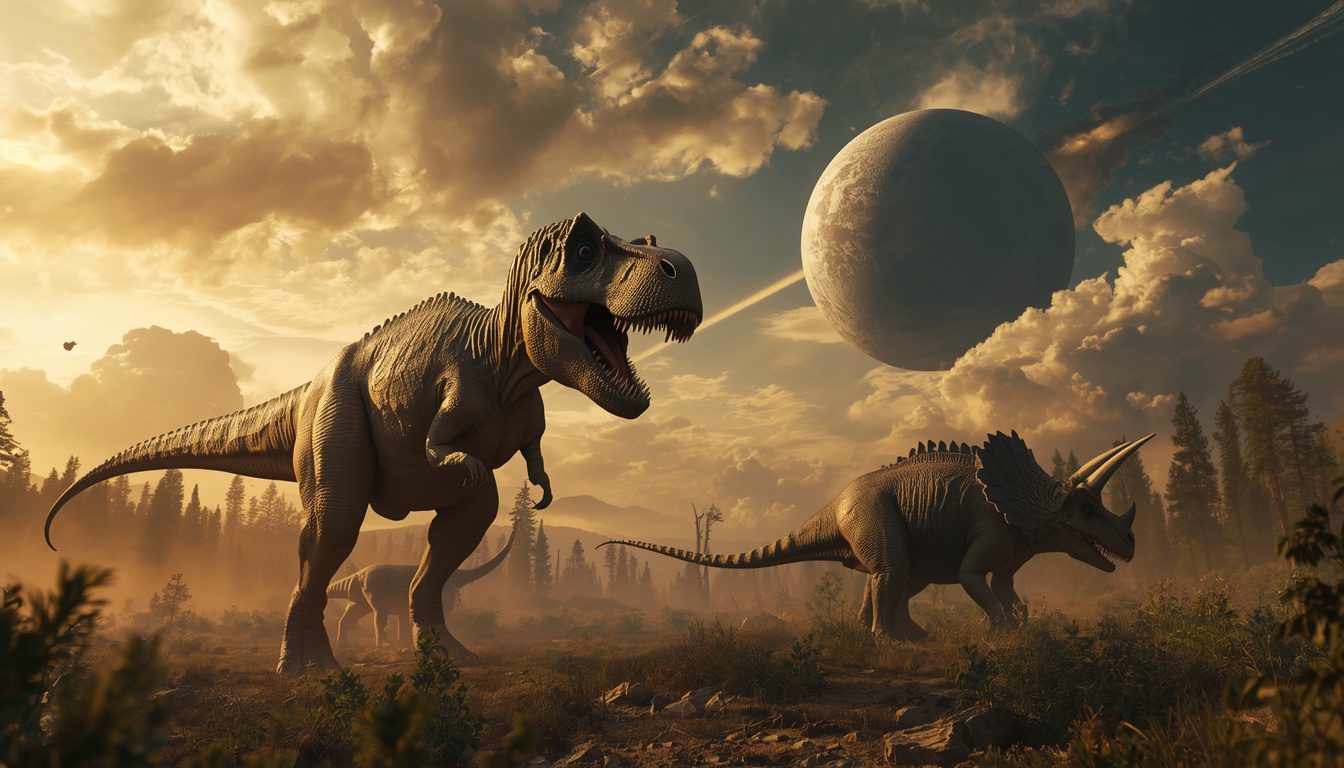
If you have ever wondered What period was the Mesozoic (the age of dinosaurs)?, the answer opens the door to one of the most extraordinary chapters in Earth’s history. The Mesozoic Era, often called the Age of Reptiles and popularly known as the age of dinosaurs, lasted from about 252 million years ago to 66 million years ago. It was a vast stretch of geological time when dinosaurs evolved, diversified, dominated many land ecosystems, and eventually disappeared in the mass extinction that ended the era. But the Mesozoic was far more than simply a time when dinosaurs walked across Earth. It included enormous changes in continents, oceans, climates, plants, mammals, flying reptiles, and marine life.
The Mesozoic Era timeline and its three major periods
The Mesozoic Era timeline is divided into three major geological periods: the Triassic, Jurassic, and Cretaceous. Together, these periods cover roughly 186 million years of Earth’s history, beginning after the catastrophic Permian-Triassic extinction and ending with the famous Cretaceous-Paleogene extinction. Each period had its own distinctive climate, ecosystems, continents, and dinosaur communities. This means that saying “the dinosaurs lived in the Jurassic” is only partly accurate because dinosaurs existed for far longer than the Jurassic Period alone. In fact, some of the earliest dinosaurs appeared during the Triassic, while many famous species lived during the later Jurassic or Cretaceous. Understanding the timeline makes it much easier to place famous dinosaurs into their correct geological context.
The Triassic Period began around 252 million years ago and lasted until approximately 201 million years ago. It was the first period of the Mesozoic and followed the largest known mass extinction in Earth’s history, the Permian-Triassic extinction. Life was recovering and reorganizing during this time. Early dinosaurs appeared, but they were not initially the dominant large land animals. Other reptiles and archosaurs occupied many ecological roles.
The Jurassic Period followed the Triassic and lasted from roughly 201 million to 145 million years ago. During this period, dinosaurs became much more prominent across terrestrial ecosystems. Giant sauropods appeared in enormous forms, while theropods occupied important predator roles. The Jurassic is also famous for the evolution and diversification of early birds and the continued presence of marine reptiles in the oceans.
The Cretaceous Period was the final and longest period of the Mesozoic. It lasted from approximately 145 million years ago until 66 million years ago. During this period, dinosaurs reached remarkable diversity, flowering plants became increasingly important, and many familiar dinosaur groups evolved. Tyrannosaurids, ceratopsians, hadrosaurs, ankylosaurs, and numerous other groups flourished in different regions.
The end of the Cretaceous brought a sudden biological crisis. A large asteroid struck the region now associated with the Yucatán Peninsula, producing environmental changes that contributed to the extinction of non-avian dinosaurs and many other organisms. The Mesozoic therefore represents both the rise of dinosaurs and the end of their dominance over land ecosystems.
When did dinosaurs live on Earth?
The question when did dinosaurs live on Earth has a surprisingly complicated answer because dinosaurs did not appear all at once. The earliest known dinosaurs evolved during the Late Triassic, more than 230 million years ago. At first, they were relatively small compared with some of the giant reptiles and other large animals living at the time. Over millions of years, however, dinosaurs diversified into an extraordinary collection of forms.
This evolutionary expansion continued through the Jurassic. Some dinosaurs became enormous herbivores capable of reaching lengths of more than 20 meters, while others remained relatively small and agile. Predatory dinosaurs also diversified, developing different body shapes, feeding strategies, and hunting behaviors. Their success was not based on a single evolutionary advantage but on a long process of adaptation and diversification.
Dinosaurs then continued evolving throughout the Cretaceous. This was an especially important period for dinosaur diversity because many distinctive groups appeared or became widespread. Tyrannosaurs became major predators in some northern ecosystems. Ceratopsians developed elaborate skulls and horns. Hadrosaurs became highly successful herbivores. Ankylosaurs developed heavily armored bodies and, in some species, powerful tail clubs.
One important misconception is that humans and dinosaurs lived together. Modern humans appeared extremely recently compared with the dinosaurs. Homo sapiens has existed for only a few hundred thousand years, while non-avian dinosaurs disappeared about 66 million years ago. The time separating humans from Tyrannosaurus rex is therefore enormous.
There is one important scientific distinction, however. Birds are living dinosaurs. Modern birds evolved from theropod dinosaurs and survived the extinction event that eliminated non-avian dinosaurs. So in an evolutionary sense, dinosaurs are still alive today.
That means the statement “dinosaurs went extinct” requires some clarification. Non-avian dinosaurs became extinct at the end of the Cretaceous, but avian dinosaurs survived and eventually produced the enormous diversity of birds living today.
What happened during the Triassic Period?
The Triassic Period dinosaurs lived in a world dramatically different from the one we know today. The continents were joined into the supercontinent Pangaea, creating enormous connected land areas. Much of the interior of Pangaea was relatively dry, while coastal areas experienced different environmental conditions. The climate was generally warm, although it varied considerably between regions and through time.
The Triassic began after the devastating Permian-Triassic mass extinction. Ecosystems were therefore undergoing a major recovery. Many ecological niches were available, allowing surviving groups to expand and new groups to evolve. Reptiles became increasingly important across terrestrial and aquatic environments.
The earliest dinosaurs were part of this larger evolutionary radiation. They were initially relatively uncommon compared with other archosaurs. Some early dinosaurs were small, lightly built, and capable of moving efficiently on two legs. Over time, different dinosaur lineages began to occupy increasingly diverse ecological roles.
One early dinosaur was Eoraptor, a small animal known from rocks in what is now Argentina. Another important early dinosaur was Herrerasaurus, also from South America. These animals demonstrate that dinosaur evolution was already underway during the Late Triassic.
The Triassic also saw the evolution of other animals that would become extremely important later. Early crocodile relatives, pterosaurs, marine reptiles, and the first mammals appeared or diversified during this broad interval. Mammals therefore did not suddenly appear millions of years after dinosaurs. Their earliest ancestors were already part of Mesozoic ecosystems.
The Triassic ended approximately 201 million years ago during another major extinction event. This event eliminated many competing reptile groups and changed terrestrial ecosystems dramatically. Dinosaurs subsequently became much more prominent during the Jurassic.
Why was the Jurassic Period so important?
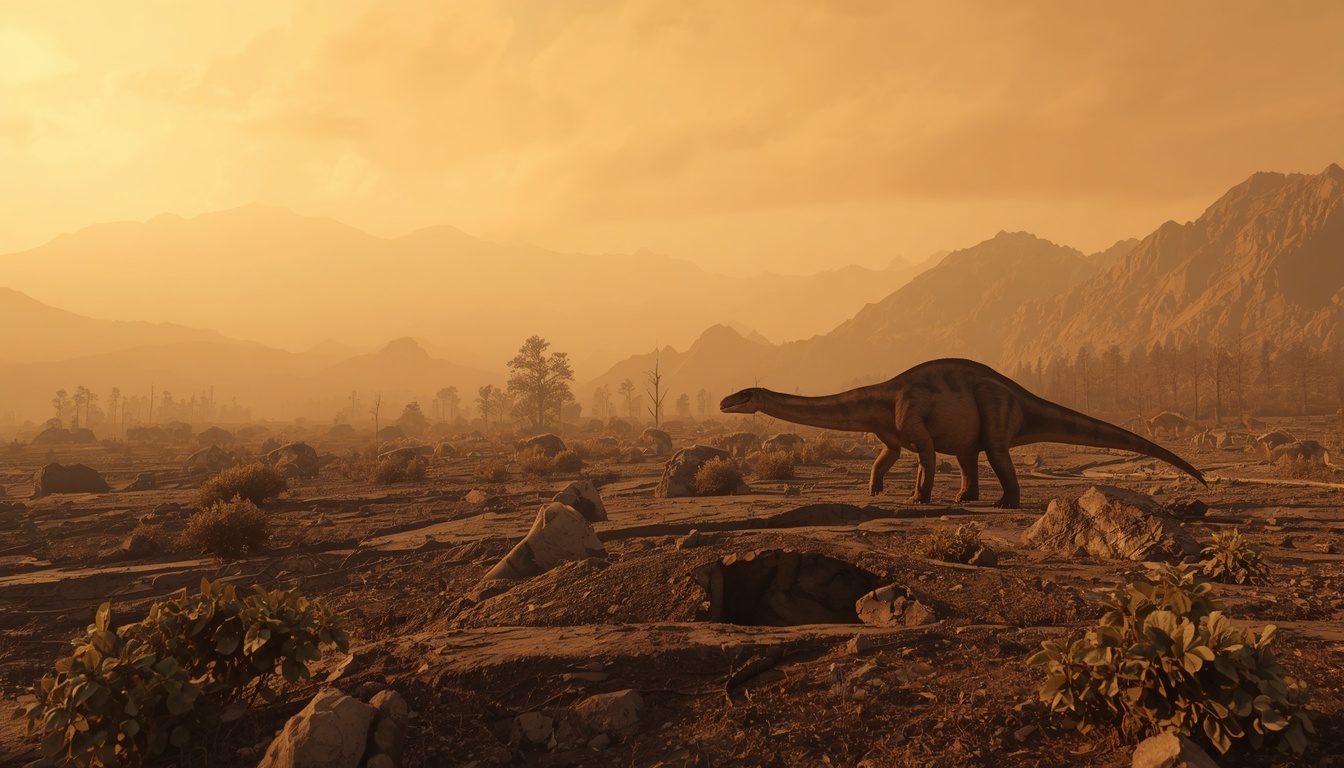
The Jurassic Period dinosaur facts are among the most recognizable pieces of prehistoric history because many iconic dinosaur species lived during this interval. The Jurassic began around 201 million years ago and lasted until approximately 145 million years ago. It was a period of major dinosaur diversification and enormous changes in Earth’s geography.
Pangaea was beginning to break apart during the Jurassic. This continental fragmentation changed ocean circulation, climate patterns, and the distribution of ecosystems. New coastlines developed as landmasses gradually separated. Over millions of years, these geological changes contributed to the increasingly regional nature of animal populations.
Some of the largest animals ever to walk on land lived during the Jurassic. Sauropods such as Diplodocus, Apatosaurus, and Brachiosaurus represent different branches of this enormous herbivorous group. Their long necks, long tails, column-like legs, and enormous bodies made them some of the most spectacular animals in Earth’s history.
Predatory dinosaurs also became highly diverse. Allosaurus was one of the major Jurassic predators in North America. Other theropods occupied different environments and ecological roles elsewhere. Predator-prey relationships became increasingly complex as dinosaur communities diversified.
The Jurassic was also important for the history of birds. Archaeopteryx lived during the Late Jurassic and possessed a mixture of characteristics associated with non-avian dinosaurs and birds. Its fossils provide important evidence for the evolutionary connection between birds and theropod dinosaurs.
Marine ecosystems were equally fascinating. Oceans contained ichthyosaurs, plesiosaurs, and other marine reptiles. These animals were not dinosaurs, although they lived during the same periods. This distinction is important because popular culture often groups every large Mesozoic reptile under the word “dinosaur.”
The Jurassic was therefore not simply a period of giant dinosaurs. It was a complex evolutionary world containing terrestrial reptiles, marine reptiles, early mammals, pterosaurs, insects, plants, and emerging birds.
How did the Cretaceous Period change the dinosaur world?
The Cretaceous Period dinosaur evolution represents the final and longest chapter of dinosaur history. Beginning approximately 145 million years ago, the Cretaceous continued until the mass extinction 66 million years ago. During this enormous interval, dinosaurs became extraordinarily diverse and occupied ecosystems across much of the planet.
Continents continued moving apart. The geography of Earth became increasingly different from the Pangaean world of the Triassic. Large oceans separated landmasses, creating regional ecosystems and encouraging evolutionary differences between populations.
One of the most important biological developments was the spread and diversification of flowering plants. These plants eventually became major components of many terrestrial ecosystems. Their expansion influenced herbivorous animals and contributed to increasingly complex plant-animal relationships.
Hadrosaurs became highly successful herbivores. Many species possessed specialized dental structures that allowed them to process plant material efficiently. Some developed elaborate crests, while others had different adaptations associated with feeding and social behavior.
Ceratopsians also became prominent. Triceratops, for example, lived during the very end of the Cretaceous in what is now western North America. Its large skull, facial horns, and bony frill made it one of the most recognizable dinosaurs ever discovered.
Tyrannosaurus rex also lived near the end of the Cretaceous. It was not a Jurassic dinosaur, despite the common association of dinosaurs from different periods in popular culture. T. rex lived during the Maastrichtian portion of the Late Cretaceous, only a few million years before the extinction event.
The Cretaceous also produced many other remarkable animals. Ankylosaurs carried heavy armor. Dromaeosaurs possessed sharp sickle-shaped claws. Giant pterosaurs flew above some ecosystems. Marine reptiles dominated parts of the oceans.
By the end of the Cretaceous, dinosaur ecosystems had therefore become extremely sophisticated. Their disappearance was not the result of dinosaurs simply becoming “too old” or naturally fading away. A sudden global environmental crisis fundamentally altered the planet.
What was Earth like during the Age of Dinosaurs?
The Age of Dinosaurs climate and environment changed substantially over the approximately 186 million years of the Mesozoic. There was no single “dinosaur climate.” Conditions varied between the Triassic, Jurassic, and Cretaceous, and even within individual periods.
Overall, the Mesozoic was generally warmer than the present-day Earth. Polar regions were not necessarily covered by the permanent ice sheets that characterize Antarctica and Greenland today. Some polar environments supported forests and other vegetation.
The arrangement of continents also had enormous consequences. During the Triassic, Pangaea created huge continental interiors. As Pangaea broke apart, coastlines expanded and ocean circulation changed. These geological processes influenced regional climates and ecosystems.
Rainfall patterns also varied. Some parts of the world were extremely dry, while others supported lush forests and wetlands. Fossil evidence allows scientists to reconstruct these environments from ancient soils, plant remains, pollen, sedimentary rocks, and animal fossils.
Vegetation changed throughout the Mesozoic. Conifers, cycads, ferns, horsetails, and other plants were important components of many ecosystems. Flowering plants became increasingly important during the Cretaceous.
The atmosphere also differed from today. Atmospheric carbon dioxide levels changed through geological time, influencing global temperatures and plant productivity. Volcanic activity could release enormous quantities of gases into the atmosphere, while weathering and geological processes could remove carbon dioxide over longer timescales.
These changes mattered to dinosaurs because animals are connected to their environments. Food availability, rainfall, temperature, vegetation, coastlines, and seasonal conditions all influenced where species could survive.
The Mesozoic was therefore not a static prehistoric landscape. It was a constantly changing planet, and dinosaurs evolved within those changes.
Why is the Mesozoic called the Age of Dinosaurs?
The phrase Age of Dinosaurs is commonly used because dinosaurs were among the dominant terrestrial vertebrates throughout much of the Mesozoic. However, the phrase can sometimes create an inaccurate picture of the era. Dinosaurs did not live alone, and they did not dominate every environment.
The oceans, for example, contained many powerful predators that were not dinosaurs. Ichthyosaurs resembled modern dolphins in body shape but were reptiles. Plesiosaurs possessed different body designs and included both long-necked and short-necked forms. Mosasaurs later became major marine predators during the Cretaceous.
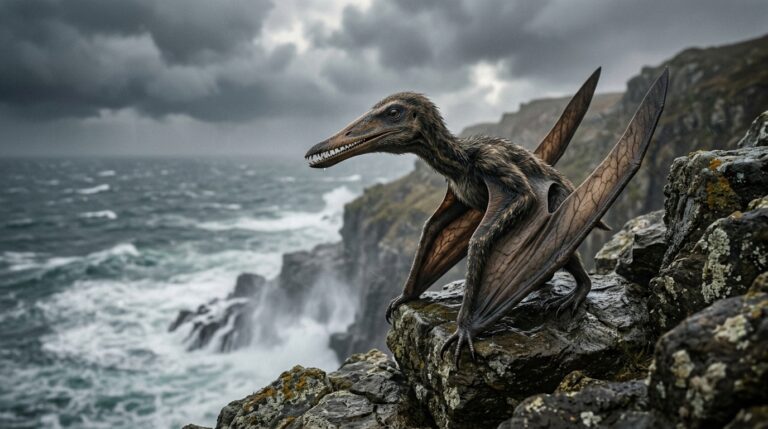
The skies also contained pterosaurs. These flying reptiles were not dinosaurs, although they were close evolutionary relatives. Some pterosaurs became enormous, with wingspans reaching dimensions comparable to small aircraft.
Mammals were present as well. They were generally much smaller than many large dinosaurs, but they occupied a variety of ecological niches. Over millions of years, mammals developed different feeding strategies and body forms.
The reason dinosaurs stand out is their extraordinary success on land. They evolved into predators, herbivores, omnivores, scavengers, and highly specialized animals. Their body sizes ranged from tiny animals to the largest known terrestrial vertebrates.
They also survived for an enormous period of time. The earliest dinosaurs appeared more than 230 million years ago, while their non-avian descendants disappeared 66 million years ago.
This means dinosaurs were not simply a short-lived evolutionary experiment. Their history spans well over 160 million years before the final Cretaceous extinction.
That is longer than the entire history of humans by an almost unimaginable margin.
How did the Mesozoic Era end?
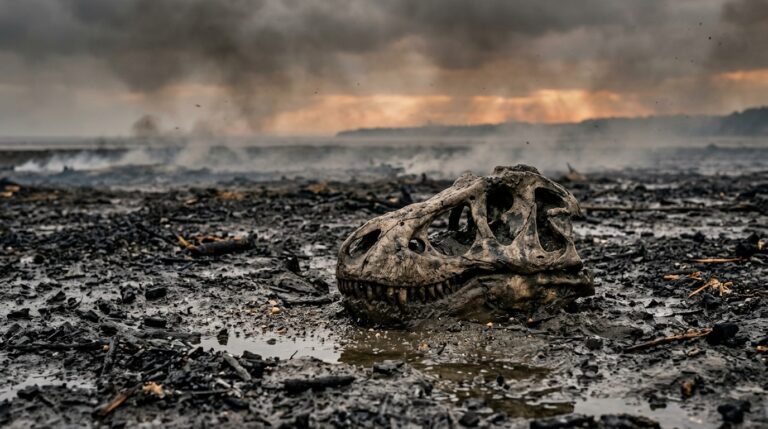
The Mesozoic Era extinction event occurred approximately 66 million years ago at the boundary between the Cretaceous and Paleogene periods. It is commonly called the K-Pg extinction event. The event eliminated a large proportion of Earth’s species, including all non-avian dinosaurs.
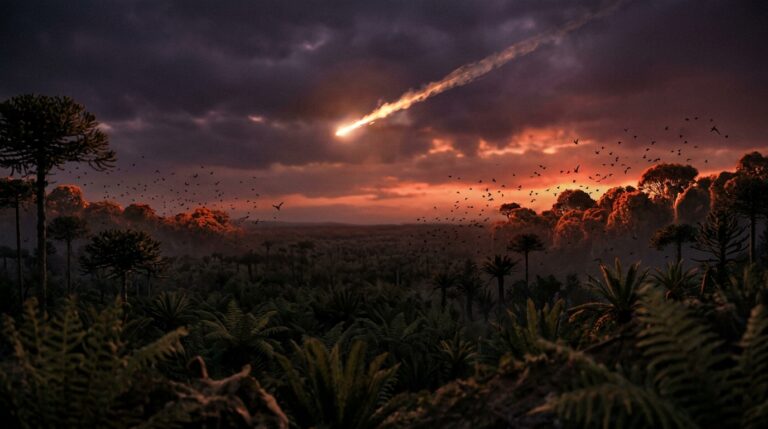
One of the strongest pieces of evidence concerns a massive asteroid impact near what is now the Yucatán Peninsula. The impact created the Chicxulub crater, which is roughly 180 kilometers wide.
The collision released enormous amounts of energy. Dust, aerosols, and other material entered the atmosphere and affected sunlight reaching Earth’s surface. Wildfires, atmospheric disturbances, changes in temperature, and food-web collapse followed.
The consequences spread through ecosystems. Plants were affected by reduced sunlight and environmental disruption. Herbivores then faced reduced food availability. Predators depended on those herbivores and were affected further down the food chain.
Not every species was affected in exactly the same way. Some organisms survived because of their ecological flexibility, small size, aquatic lifestyles, ability to shelter, or ability to survive on different food sources.
Birds were among the dinosaur lineages that survived. Their descendants diversified dramatically after the extinction, eventually producing thousands of modern bird species.
The extinction therefore did not erase the entire dinosaur lineage. It eliminated the non-avian dinosaurs while one branch survived.
Volcanic activity associated with the Deccan Traps in what is now India is also an important part of scientific discussion surrounding the end-Cretaceous environmental crisis. Researchers continue studying how volcanism and the asteroid impact interacted with Earth’s climate and ecosystems.
The evidence strongly supports the asteroid impact as a major cause of the extinction, while scientific research continues to refine the precise sequence and relative contribution of different environmental stresses.
How do scientists know when the Mesozoic happened?
The Mesozoic geological periods explained through fossils and rocks demonstrate how scientists reconstruct deep time. Unlike human history, there are no written records from the Mesozoic. Scientists instead rely on geological evidence preserved in Earth’s crust.
Fossils are among the most important sources of information. Dinosaur bones, teeth, footprints, eggs, nests, skin impressions, feathers, and coprolites can reveal what animals looked like and how they lived.
But fossils alone do not provide the entire timeline. Scientists also study the rocks containing those fossils. Different layers of sedimentary rock can preserve evidence from different intervals of geological history.
Radiometric dating is another essential technique. Certain radioactive elements decay at predictable rates. By measuring radioactive parent elements and their decay products, scientists can estimate the age of rocks associated with fossils and geological events.
Scientists also use stratigraphy, which examines the relationships between layers of rock. In general, undisturbed younger layers occur above older layers. This helps researchers establish the relative order of geological events.
Magnetic evidence provides another useful tool. Earth’s magnetic field has reversed many times throughout geological history. These reversals can leave signatures in rocks, helping scientists correlate geological layers across different regions.
The boundaries between major geological periods are therefore based on multiple lines of evidence. The dates are continually refined as new discoveries and improved dating techniques become available.
This is why the beginning of the Mesozoic is usually given as approximately 252 million years ago and its end as approximately 66 million years ago. These numbers represent scientifically established geological boundaries rather than dates recorded by ancient humans.
Why are the three Mesozoic periods easy to confuse?
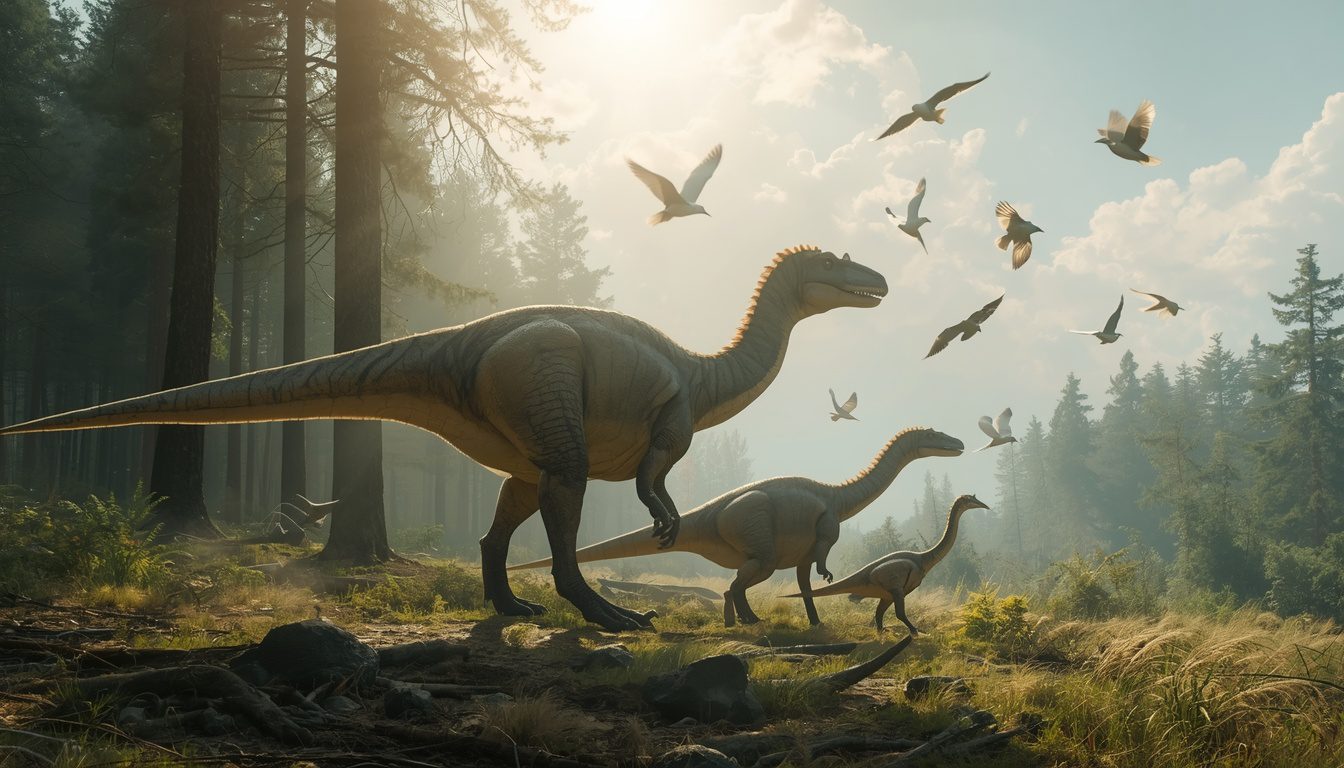
The Triassic Jurassic Cretaceous differences can be confusing because dinosaurs lived during all three periods, yet many famous dinosaurs are strongly associated with only one of them. The easiest way to understand the distinction is to treat the periods as three chapters of one enormous story.
The Triassic was the beginning of the dinosaur story. Dinosaurs appeared and began diversifying, but they shared the planet with many other successful reptile groups.
The Jurassic was the period when many giant dinosaur lineages became especially prominent. Famous long-necked sauropods and large theropod predators lived during this time.
The Cretaceous was the final chapter. It produced many of the dinosaurs that are most familiar to modern audiences, including Tyrannosaurus rex and Triceratops.
There is also a useful chronological rule. If a dinosaur appears in a movie, toy collection, or museum display, its presence alongside another dinosaur does not necessarily mean the two animals actually lived at the same time.
For example, Tyrannosaurus rex lived tens of millions of years after Stegosaurus. They were separated by a much greater period of time than the amount of time separating humans from some ancient civilizations.
Likewise, Diplodocus and Triceratops did not live together. Diplodocus lived during the Late Jurassic, while Triceratops lived during the Late Cretaceous.
These distinctions matter because the Mesozoic was so long that “dinosaur era” is an extremely broad description. Two dinosaurs could both be Mesozoic animals while being separated by tens of millions of years.
Understanding the three periods makes dinosaur history far easier to visualize.
How long did the Mesozoic Era last?
The how long was the Mesozoic Era question has a straightforward approximate answer: about 186 million years. It began around 252 million years ago and ended approximately 66 million years ago.
That number is difficult to comprehend because modern human history occupies an incredibly small fraction of it.
Imagine compressing the entire Mesozoic into a single calendar year. The Triassic, Jurassic, and Cretaceous would occupy almost the entire calendar. Human civilization would appear only in an extremely tiny fraction at the very end of the final moment.
The Mesozoic was also longer than the entire time since the extinction of non-avian dinosaurs. Sixty-six million years have passed since the asteroid impact, yet the Mesozoic itself lasted nearly three times that long.
During those 186 million years, continents moved thousands of kilometers. Mountains formed and eroded. Oceans opened and closed. New species evolved while others disappeared. Plants transformed terrestrial ecosystems.
Dinosaurs themselves changed dramatically during this period. The small early dinosaurs of the Late Triassic were very different from enormous Jurassic sauropods or heavily armored Cretaceous ankylosaurs.
Birds evolved from theropod dinosaurs. Mammals diversified alongside dinosaurs. Flowering plants expanded across the planet. Insects evolved alongside changing plant communities.
So the Mesozoic should not be thought of as one frozen prehistoric scene. It was an immense evolutionary journey.
The phrase “Age of Dinosaurs” is useful, but the real story is much bigger. It was an era of geological transformation and biological experimentation on a planetary scale.
The Shocking Truth: When Did the First Soft and Hard Shells in Animals Form?
What Period Was the Paleozoic Really? The Answer Will Surprise You
The Formation of Earth: How Our Planet Was Born
Summary
The Mesozoic Era, commonly called the Age of Dinosaurs, lasted from approximately 252 million years ago to 66 million years ago.
It was divided into three major periods:
- Triassic Period: approximately 252–201 million years ago.
- Jurassic Period: approximately 201–145 million years ago.
- Cretaceous Period: approximately 145–66 million years ago.
Dinosaurs first appeared during the Late Triassic. They became increasingly diverse during the Jurassic and Cretaceous and eventually occupied an enormous variety of ecological roles.
The Mesozoic was also home to pterosaurs, marine reptiles, early mammals, early birds, insects, and diverse plant communities.
The era ended with the Cretaceous-Paleogene extinction approximately 66 million years ago. A large asteroid impact at Chicxulub is considered a major cause of the extinction, although other environmental factors, including major volcanic activity, were also involved in the broader end-Cretaceous environmental crisis.
Importantly, birds are living dinosaurs. Therefore, while non-avian dinosaurs disappeared, the dinosaur lineage continues today.
The Mesozoic was not simply “the time of dinosaurs.” It was a nearly 186-million-year transformation of Earth’s geography, climate, ecosystems, and life.
FAQ
1. What period was the Mesozoic?
The Mesozoic was an era, not a single period. It consisted of the Triassic, Jurassic, and Cretaceous periods and lasted approximately 252 to 66 million years ago.
2. Was the Jurassic the entire Age of Dinosaurs?
No. Dinosaurs lived during the Triassic, Jurassic, and Cretaceous. The Jurassic was only the middle period of the Mesozoic Era.
3. Did T. rex live during the Jurassic?
No. Tyrannosaurus rex lived during the Late Cretaceous, approximately 68–66 million years ago. It lived tens of millions of years after many famous Jurassic dinosaurs.
4. Were dinosaurs the only reptiles during the Mesozoic?
No. Pterosaurs, marine reptiles, crocodile relatives, and many other reptile groups lived alongside dinosaurs. Some were extremely successful predators in their own environments.
5. Are dinosaurs completely extinct?
Not in the evolutionary sense. Non-avian dinosaurs became extinct 66 million years ago, but birds are living descendants of theropod dinosaurs. Therefore, dinosaurs still exist today in the form of birds.
CTA
The Mesozoic was far more than a time when giant dinosaurs walked across Earth. It was an extraordinary 186-million-year story of evolution, continental drift, changing climates, massive predators, enormous herbivores, and one of the most dramatic extinction events in Earth’s history.
If you enjoyed exploring the Age of Dinosaurs, share this article with someone who loves dinosaurs, fossils, paleontology, or prehistoric history. And keep exploring—because the deeper you go into Earth’s past, the stranger the story becomes.