Befrey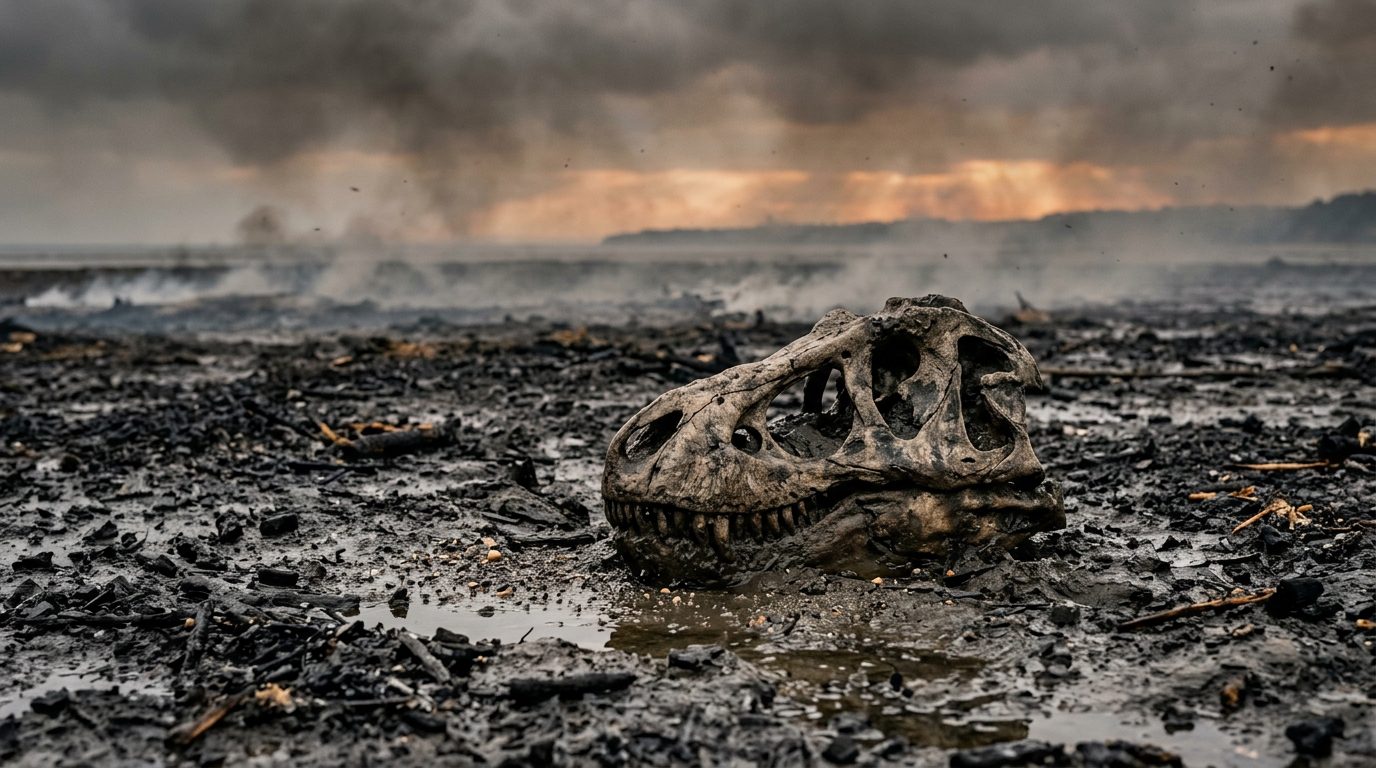
The story of the dinosaur extinction at end of Cretaceous represents the ultimate cosmic mystery on planet Earth. For over 165 million years, giant non-avian reptiles dominated every terrestrial ecosystem across the globe. They survived shifting continents, fluctuating sea levels, and changing atmospheric conditions without missing a beat. Yet, in a geological eye-blink roughly 66 million years ago, their golden age came to a violent, irreversible conclusion. The sudden death of Earth’s most successful land inhabitants continues to spark fierce debate among scientists, paleontologists, and curious minds around the world. Understanding the ultimate cause of dinosaur extinction requires unraveling a complex web of environmental disasters, extraterrestrial strikes, and planetary transformations.
To grasp the sheer scale of this ancient catastrophe, we must look at the k-pg extinction event timeline and evaluate the physical clues left behind in deep rock strata. The boundary between the Cretaceous and Paleogene periods marks one of the most violent biological resets in planetary history. Contrary to popular belief, the demise of the giant beasts was not a peaceful fading away or a slow evolutionary decline. It was an explosive, apocalyptic ordeal that altered atmospheric chemistry, choked out sunlight, and reshaped global food chains forever. By examining the cretaceous paleogene extinction causes, we gain a profound perspective on how fragile life on Earth truly is and how quickly global apex species can vanish from existence.
The Apocalyptic Impact and the Chicxulub Cosmic Collision
The Size and Velocity of the Cosmic Killer
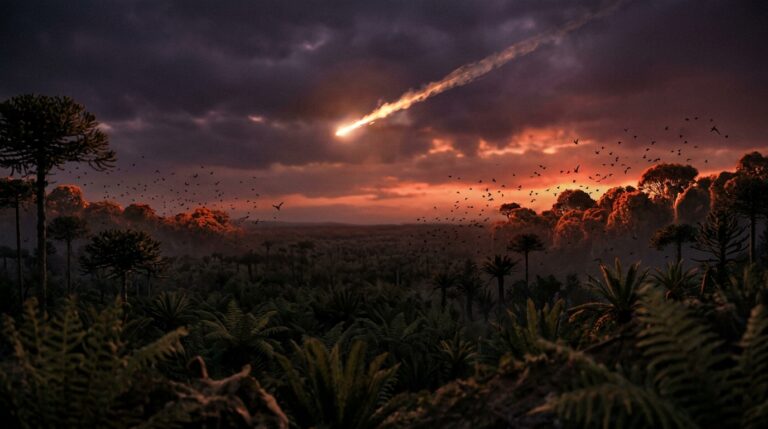
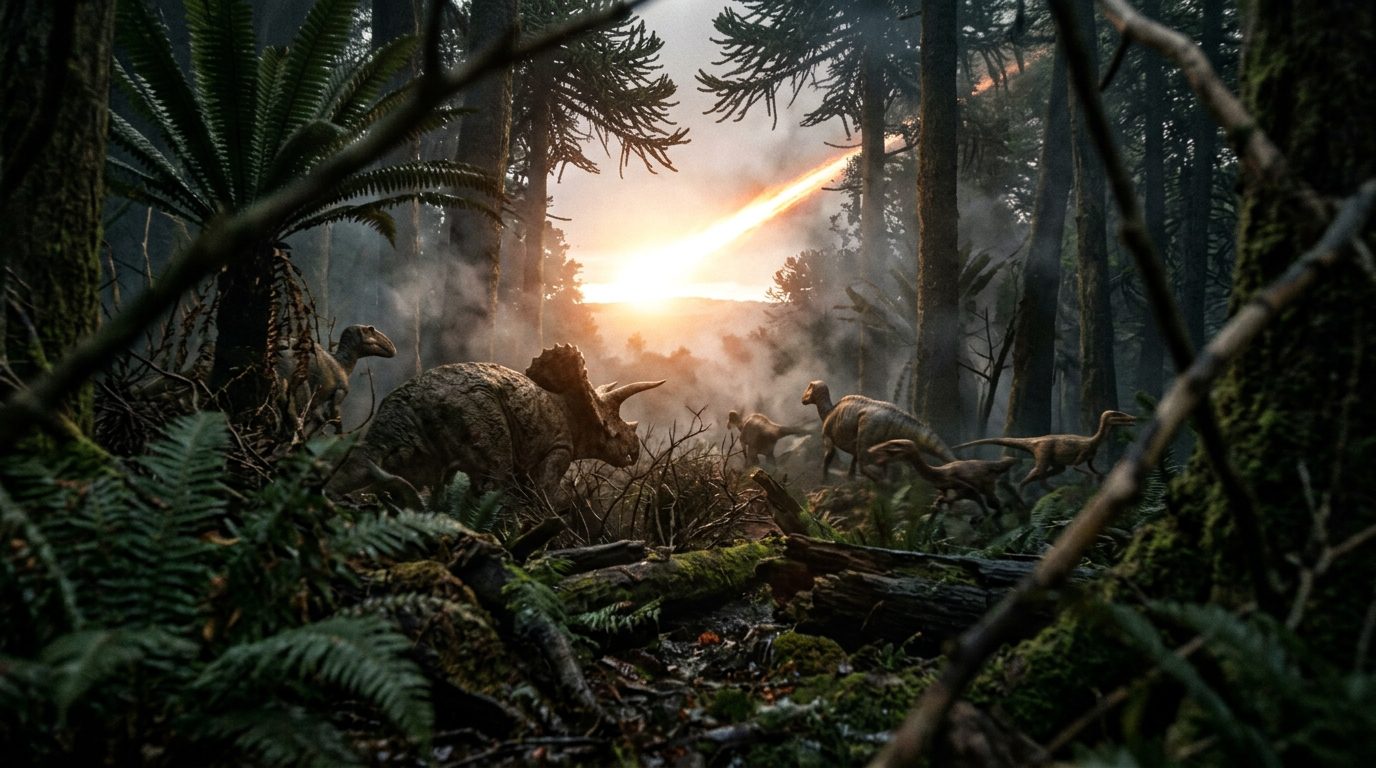
When considering how big was the dinosaur killing asteroid, geological surveys indicate a space rock measuring roughly six to nine miles in diameter. Traveling at an astounding speed of nearly forty-five thousand miles per hour, this massive asteroid slammed into the shallow waters of the Yucatan Peninsula in modern-day Mexico. The energy released upon impact was equivalent to billions of atomic bombs exploding simultaneously. This catastrophic blast blasted a crater over one hundred miles wide and twelve miles deep directly into Earth’s crust, vaporizing bedrock, seawater, and the asteroid itself into a superheated plasma column that shot high into the upper atmosphere.
The Immediate Blast Wave and Global Firestorms
The immediate consequences of the collision were utterly terrifying for anything living within thousands of miles of the impact site. Thermal radiation from the vaporized rock plume spread across the atmosphere, turning the sky into a blinding furnace that ignited widespread, global firestorms cretaceous asteroid impact events across entire continents. Forests hundreds of miles away burst into flames within minutes as hot glass spherules rained down from the sky. Meanwhile, shockwaves flattened ancient coastal woodlands, and atmospheric pressure spikes ruptured the internal organs of land creatures, leaving vast landscapes scorched and utterly devoid of life.
The Tidal Wave That Washed Over Continents
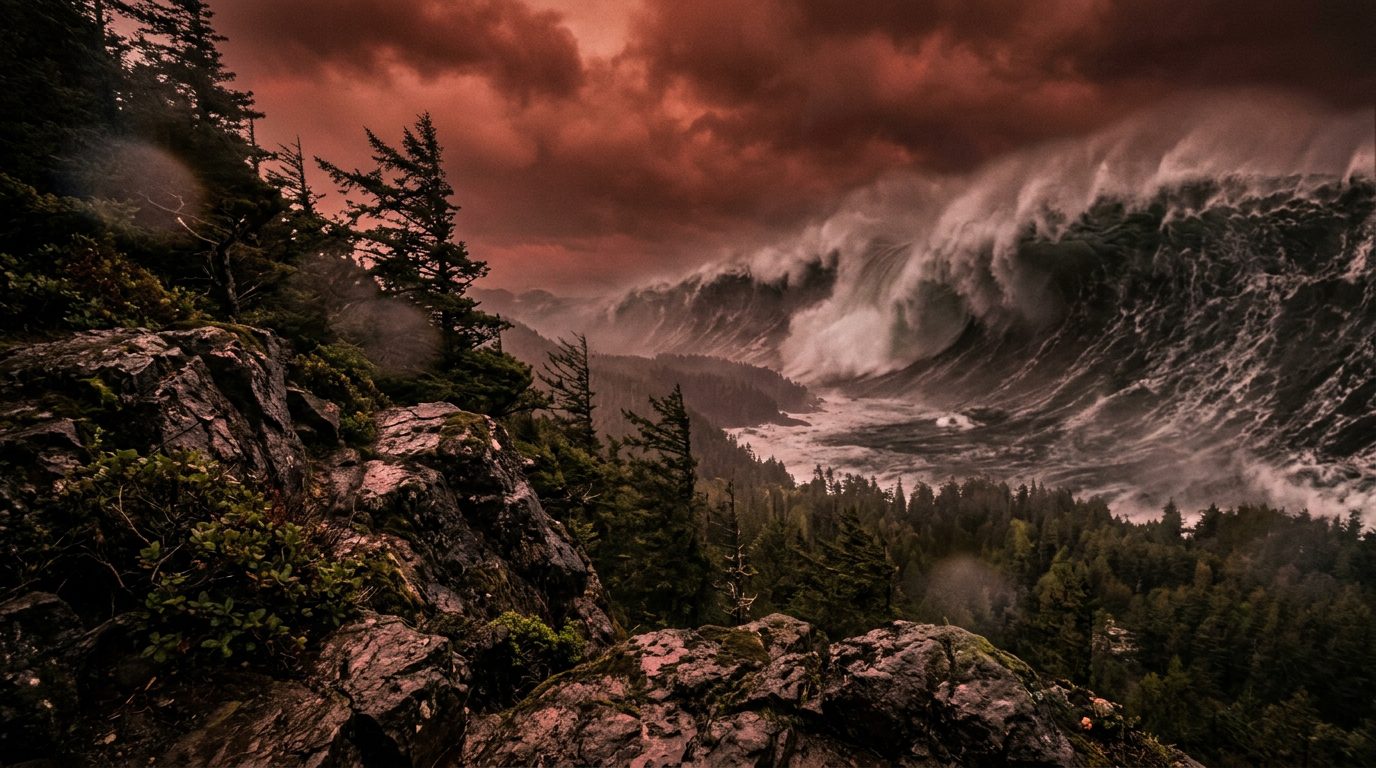
Beyond the fiery shockwave, the marine impact displaced billions of tons of water, generating a monstrous underwater displacement wave. Geologists studying megatsunami evidence cretaceous asteroid strikes have uncovered immense displaced sediment boulders and disturbed rock layers hundreds of miles inland across North and South America. These towering walls of water, standing hundreds of feet tall, tore through coastal estuaries, drowning land animals, uprooting ancient vegetation, and washing marine organisms onto dry land. The combination of fire, wind, and water created an inescapable ring of destruction that shattered continental ecosystems in a matter of hours.
Deep Geological Clues and Shocking Forensic Evidence
The Worldwide Iridium Fingerprint
For decades, scientists debated whether a cosmic collision ever actually occurred or if it was merely a wild theory. The breakthrough came when researchers discovered a distinct layer of dark clay sandwiched between Cretaceous and Paleogene rock formations around the world. Chemical analysis revealed an extraordinary concentration of iridium, a heavy element extremely rare in Earth’s crust but abundant in asteroids. This iridium layer evidence dinosaur extinction marker provided undeniable proof that a massive extraterrestrial object had pulverized itself and distributed its microscopic remnants across the entire globe, leaving behind a clear forensic signature of cosmic slaughter.
Microscopic Deformations and Impact Spherules
Beyond heavy chemical elements, geologists uncovered physical mineral deformations that could only be forged under extreme cosmic pressure. Examining shock quartz evidence chicxulub impact sites revealed microscopic crisscross fractures within quartz crystals, a deformation structure that cannot be produced by volcanic eruptions or normal tectonic stress. Alongside these shocked minerals, scientists identified billions of tiny glass droplets known as tektites scattered across global sedimentary layers. These micro-structures represent liquid rock that was ejected into space by the impact, instantly cooled into glass during re-entry, and rained back down onto the scorched planet.
Resolving the Cosmic Origin Debate
The synthesis of global iridium layers, shocked quartz crystals, and tektites finally provided the smoking gun that settled decades of scientific controversy. When scientists located the buried Chicxulub crater using gravity anomaly mapping and seismic profiling, the physical evidence lined up perfectly. This deep forensic investigation highlighted paleontology evidence end cretaceous event discoveries, confirming that a space rock had indeed delivered a devastating blow to Earth. The geologic record left no doubt: the world had experienced a sudden, catastrophic strike capable of resetting global biological evolution in a single moment.
Volcanic Chaos and the Pre-Impact Stress Test
The Fiery Eruptions of the Deccan Traps
While the asteroid delivered the decisive death blow, Earth’s biosphere was already experiencing severe environmental strain prior to the cosmic strike. In what is now modern-day India, a massive volcanic province known as the Deccan Traps was actively erupting over hundreds of thousands of years. Investigating deccan traps volcanic activity dinosaurs reveals that colossal basaltic lava flows poured across vast landmasses, releasing trillions of tons of toxic gases, sulfur dioxide, and carbon dioxide into the atmosphere. These relentless volcanic surges created severe climate oscillations, alternating between intense acid rain pulses and rapid global warming spells long before the asteroid arrived.
Pre-Existing Stress on Late Cretaceous Ecosystems
The prolonged volcanic outgassing placed immense pressure on terrestrial and marine life, weakening species resilience across multiple continents. Environmental stress destabilized plant communities, reduced herbivore population density, and forced apex predators to adapt to rapidly changing hunting grounds. Modern paleontological analyses assessing what caused the chicxulub asteroid impact debate often highlight this dual-disaster scenario. The Deccan Traps had already pushed many global ecosystems to their tipping point, meaning that when the cosmic collision occurred, ecosystems were far too fragile to absorb such a dramatic environmental shock.
Cumulative Planetary Strain
This double-whammy of volcanic outgassing and cosmic impact created a catastrophic feedback loop that crushed planetary recovery efforts. Sulfur emissions from volcanoes combined with impact-generated sulfate aerosols to produce blinding acid rain, stripping vegetation of leaves and polluting freshwater rivers. Soil chemistry turned toxic, preventing forest regeneration and starving plant-eating reptiles. By the time the atmospheric dust settled, Earth’s carbon cycle was thoroughly broken, proving that the combination of volcanic chaos and extraterrestrial collision created an environmental trap from which large, specialized species could not escape.
The Endless Impact Winter and Biological Collapse
The Sunless Dark and Deep Freezing
The most destructive phase of the extinction began after the initial heat wave subsided. Millions of tons of fine soot, sulfur dust, and pulverized rock remained suspended in the upper atmosphere, creating a dense shield that completely blocked out sunlight. Scientists analyzing this impact winter nuclear winter cretaceous scenario estimate that darkness enveloped the planet for months, if not years. Surface temperatures plummeted rapidly, plunging tropical paradises into freezing darkness. Without sunlight, global photosynthesis ground to a sudden halt, causing marine phytoplankton and terrestrial plant life to wither and die in terrifyingly short order.
The Cascade of Ecological Starvation
The collapse of primary producers triggered a swift and relentless domino effect up the food chain. Herbivorous dinosaurs like Triceratops and Edmontosaurus exhausted remaining seed reserves and rotting vegetation within weeks, rapidly starving to death in the frozen dark. Consequently, massive carnivores like Tyrannosaurus rex lost their primary prey base. When analyzing the collapse of food chain cretaceous extinction, researchers observe a total breakdown of energy transfer across terrestrial ecosystems. Large animals requiring hundreds of pounds of meat or vegetation daily simply could not survive in an environment devoid of fresh biological growth.
Atmospheric Duration and Global Stagnation
A critical question in deep-time studies centers on lasted how long did impact winter last, with atmospheric modeling pointing to a multi-year period of severe global darkness and cooling. During this extended freeze, weather systems stalled, rainfall dropped dramatically, and global ocean currents stalled. The protracted duration of the dark freeze ensured that even hardy, long-lived large reptiles succumbed to hypothermia, starvation, or reproductive failure. The planet became a quiet, frozen wasteland where only the smallest, most adaptable organisms could cling to survival in subterranean burrows, deep river caves, or decaying leaf litter.
Marine Havoc and Ocean Acidification
The Poisoned Surface Waters
The destruction was by no means limited to dry land; Earth’s oceans suffered an equally brutal biological collapse. Massive quantities of sulfur released from vaporized anhydrite rocks at the impact site reacted with atmospheric water vapor to form concentrated sulfuric acid. When this toxic chemical mixture fell as rain, it caused rapid, widespread ocean acidification end of cretaceous waters worldwide. Surface ocean chemistry altered dramatically, lowering pH levels and making it virtually impossible for marine organisms to construct calcium carbonate shells or maintain normal metabolic functions.
The Collapse of Planktonic Ecosystems
Microscopic plankton forming the base of marine food webs were virtually wiped out within months. Ammonites, massive coil-shelled mollusks that had filled ocean waters for hundreds of millions of years, vanished completely alongside delicate marine microorganisms. This planktonic collapse starved filter feeders, fish, and large swimming marine reptiles. Terrifying top ocean predators like mosasaurs and long-necked plesiosaurs, which relied on abundant fish and ammonites, quickly starved. The marine realm was transformed into a quiet, low-oxygen graveyard where marine food webs were stripped back to basic bacterial and detritus-driven systems.
Deep Sea Survivors and Slow Recovery
Interestingly, while surface waters experienced total ecological collapse, certain deep-sea benthic organisms managed to endure the crisis. Benthic creatures living on the ocean floor relied on falling organic detritus rather than live surface plankton, allowing them to scavenge on the rain of dead organic matter drifting down from above. This stark contrast between surface devastation and deep-sea persistence further proves that the extinction was driven by the immediate loss of sunlight and primary photosynthetic productivity rather than a universal poison, emphasizing how critical sun-driven food webs are to planetary life.
The Survivors and the Evolutionary Dawn
Not All Dinosaurs Perished
A common misconception is that the impact killed every single member of the dinosaur family tree instantly. When asking did all dinosaurs die during cretaceous extinction, paleontology provides a resounding and fascinating answer: no. While giant, non-avian dinosaurs perished completely, a small, highly specialized lineage of feathered avian theropods survived. Investigating modern birds surviving dinosaur extinction reveals that small, ground-dwelling, seed-eating birds managed to forage beneath ash layers and survive the sunless winter, making modern sparrows, eagles, and penguins direct living descendants of Cretaceous theropod dinosaurs.
Why Mammals Inherited the Earth
Small mammals, which had lived in the shadow of giant reptiles for over one hundred million years, suddenly found themselves holding the winning evolutionary ticket. Exploring why did mammals survive dinosaur extinction reveals that their tiny body sizes, omnivorous diets, burrowing habits, and endothermic warm-bloodedness gave them an incredible advantage. Burrowing underground protected them from the initial firestorm and thermal shock, while their ability to eat seeds, insects, and decaying organic matter allowed them to survive the long impact winter. When sunlight finally returned, these tiny furry survivors emerged into an open world free of giant reptilian predators.
The Resilience of Ectothermic Generalists
Along with mammals and birds, various cold-blooded generalists like crocodilians, turtles, snakes, and amphibians survived remarkably well. Examining survivor species after asteroid impact reveals that low metabolic rates were a huge benefit during periods of severe starvation. A crocodile or turtle could go months or even a year without a substantial meal, slowing its metabolism down while hiding in river mud or freshwater burrows. This high-metabolic flexibility, combined with freshwater environments buffered by geothermal heat and detritus-based food chains, allowed these ancient reptilian lineages to cross the K-Pg boundary relatively unscathed.
The Speed of Extinction and Planet Earth’s Legacy
Deep Time Velocity and Geological Suddenness
A central question that fascinates researchers is how fast did dinosaurs go extinct on a global scale. While the initial blast, firestorms, and tsunamis killed millions of individual creatures within hours and days, the complete global disappearance of non-avian species took anywhere from a few years to a few thousand years. In the context of deep geological time, where eras are measured in tens of millions of years, this rate of collapse is practically instantaneous. It represents an unprecedented ecological shock that wiped out roughly seventy-five percent of all plant and animal species on the planet in a flash.
The Dawn of the Age of Mammals
The tragic fall of the dinosaurs opened vast ecological space that sparked one of the most explosive adaptive radiations in Earth’s history. Free from the predatory pressure of giant carnivores and the grazing dominance of massive herbivores, surviving mammals diversified at a breathtaking pace. Over the subsequent Cenozoic Era, tiny shrew-like creatures evolved into majestic whales, swift horses, massive elephants, and intelligent primates. The asteroid impact, while catastrophic for the Cretaceous world, was the ultimate evolutionary prerequisite for the eventual rise of human civilization.
Lessons Written in Deep Stone
The story of the Cretaceous catastrophe serves as a powerful reminder of life’s vulnerability and resilience. It demonstrates that no matter how dominant, massive, or successful a group of organisms may be, planet-wide environmental shifts can reset the rules of survival instantly. By studying the deep geological record, humans gain vital insights into how Earth’s climate, atmosphere, and biological networks interact during extreme crises. The ancient bones resting in deep rock layers stand as silent witnesses to a dark, fiery day when the world changed forever, leaving behind an unbroken thread of life that continues to thrive today.
Summary
-
A giant six-to-nine-mile-wide asteroid struck the Yucatan Peninsula 66 million years ago, releasing energy equivalent to billions of atomic bombs.
-
Thermal radiation caused global firestorms, while impact waves generated mega-tsunamis that reshaped coastal environments.
-
Massive soot and sulfur emissions created an extended impact winter, blocking sunlight, halting photosynthesis, and collapsing global food chains.
-
Ocean acidification stripped surface waters of plankton, causing the complete collapse of ammonites and large marine reptiles.
-
Non-avian dinosaurs went extinct, but small seed-eating avian dinosaurs survived to become modern birds, while tiny burrowing mammals emerged to rule the Cenozoic Era.
The Formation of Earth: How Our Planet Was Born
Geological Processes in the Early Formation of Earth
Formation and Evolution of Stars: From Protonebula to Black Hole
Frequently Asked Questions
Did the asteroid impact kill all dinosaurs instantly?
No, the immediate impact, shockwave, and global thermal heat wave killed millions of animals within hours, but the majority of non-avian dinosaurs died over the following months and years due to global freezing, darkness, and severe starvation.
Were the Deccan Traps volcanoes sole causes of the extinction?
No, while the Deccan Traps volcanic eruptions caused severe climate stress and outgassing for thousands of years prior to the collision, chemical and geological evidence confirms the Chicxulub asteroid impact was the primary trigger for the mass extinction.
Why did frogs and amphibians survive when big dinosaurs died?
Amphibians and frogs survived because they were small, burrowed into wet mud, had low metabolic demands, and inhabited freshwater river systems buffered by detritus-based food webs that didn’t depend entirely on live plant growth.
How do scientists know the asteroid came from space?
Scientists discovered a global layer of clay enriched with iridium—an element rare on Earth’s surface but common in asteroids—alongside shocked quartz crystals and micro-tektites that can only be formed by hypervelocity cosmic impacts.
Are there any living dinosaurs alive today?
Yes! Modern birds are direct avian descendants of small feathered theropod dinosaurs that survived the K-Pg extinction event, meaning dinosaurs technically never went completely extinct.
Uncover the Mysteries of Deep Time Today
Ready to explore more incredible scientific deep dives, historical mysteries, and Earth-shattering discoveries? Step inside our vast archive of paleontology guides, geological breakthroughs, and ancient history breakdowns. Explore our full library of articles today and expand your knowledge of our planet’s amazing past!