Befrey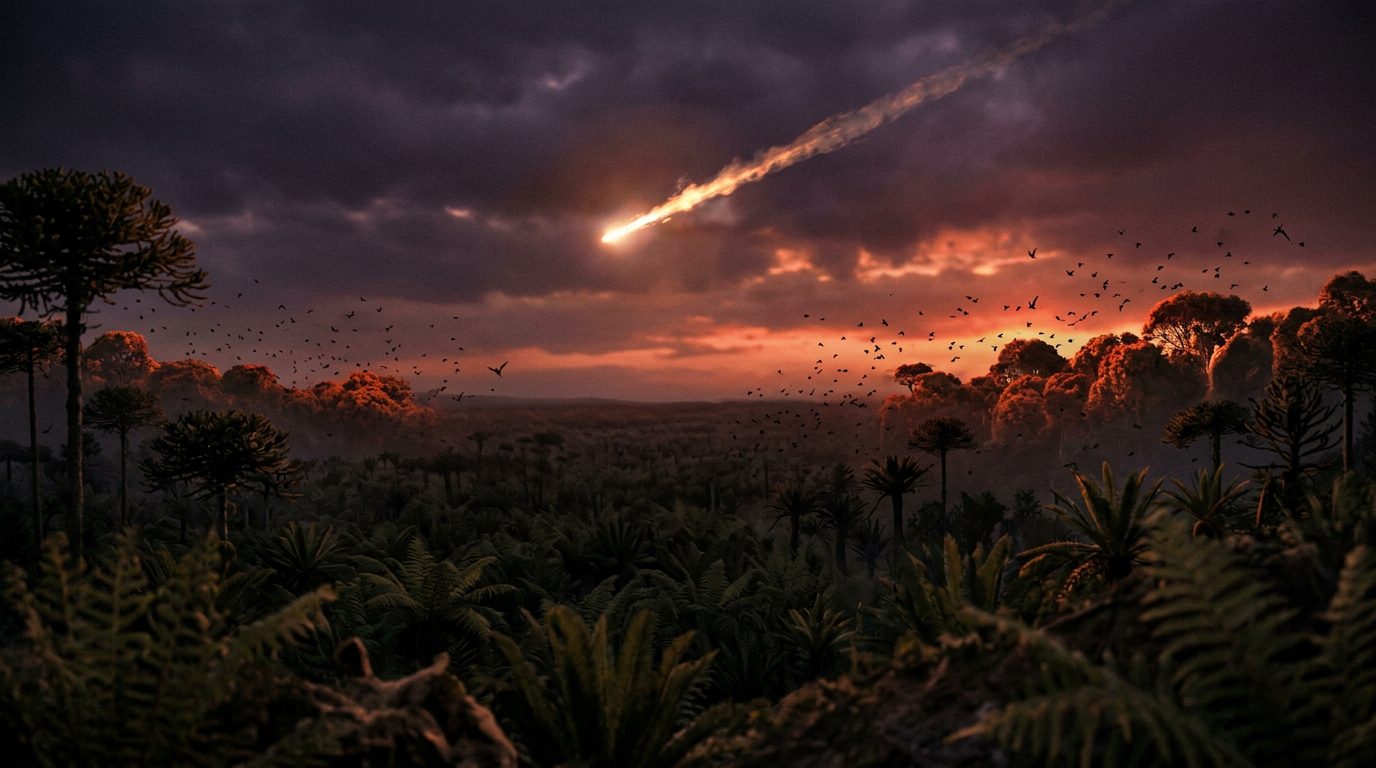
The story of life on Earth is defined by massive shifts in land, sea, and atmosphere, but no age captures human imagination quite like the Mesozoic Era. Often referred to as the Age of Reptiles, this dramatic expanse of time is divided into three legendary epochs: the Triassic, the Jurassic, and the Cretaceous. To truly understand this vanished world, curious minds require the prehistoric periods explained in a clear, comprehensive narrative. Across hundreds of millions of years, planet Earth transformed from a barren, sun-scorched supercontinent into a vibrant, lush world overflowing with colossal beasts, dense forests, and bizarre ocean monsters. Understanding the mesozoic era order of periods provides a foundational roadmap for seeing how life continuously adapts, survives, and re-invents itself after cataclysmic disasters.
When exploring this deep-time sequence, modern humans often wonder when did dinosaurs first appear on earth and how they managed to conquer every ecological niche imaginable. The journey was far from simple or instantaneous. It required millions of years of continental drifting, shifting weather patterns, severe climatic shocks, and continuous evolutionary warfare. By diving deep into the mesozoic era simple breakdown for beginners, we can unearth the fascinating web of life that existed long before humans walked the planet. Each period carried its own unique atmospheric chemistry, distinct plant life, and dominant apex predators that fundamentally altered the history of our world.
The Dawn of a New Age in the Dawn-Lit Triassic World
Earth’s Brutal Recovery and Pangaea’s Dry Interior
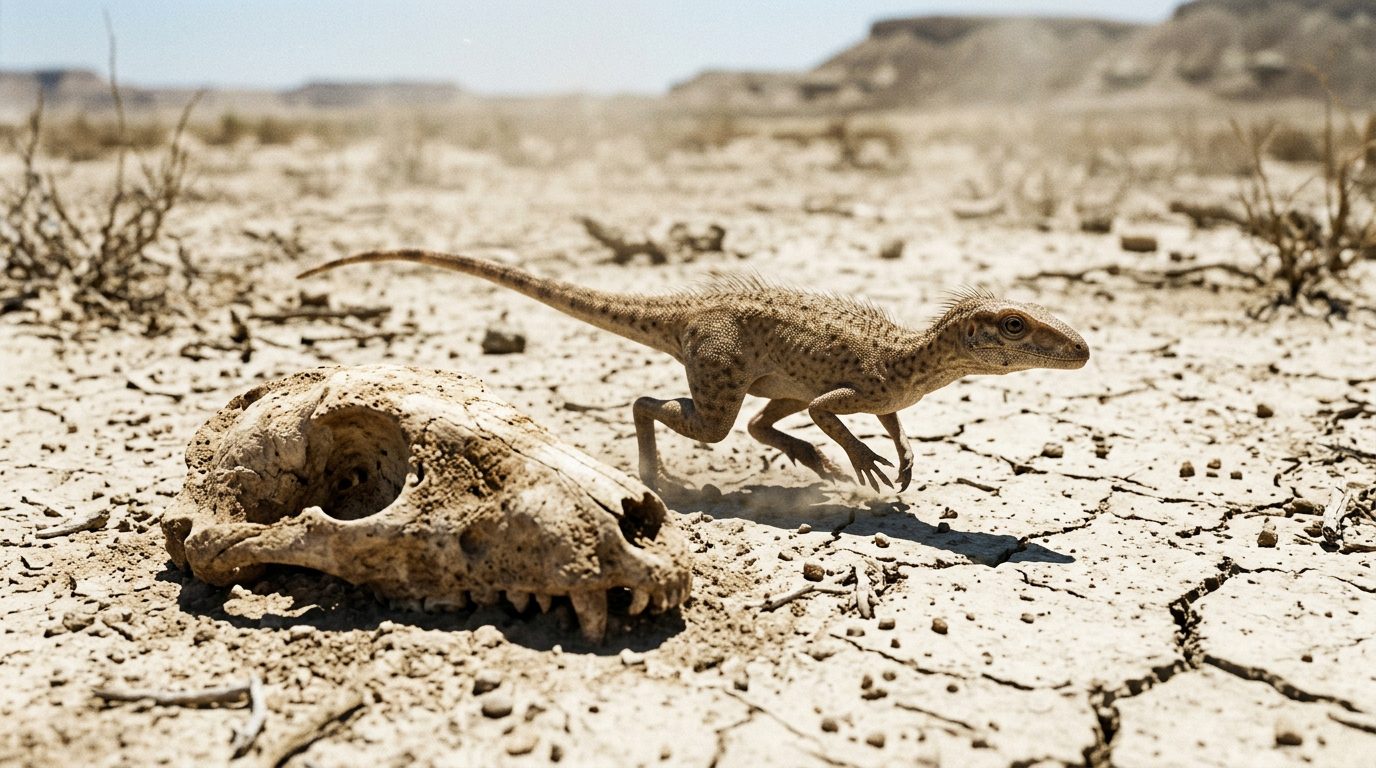
The Triassic Period, spanning roughly from 252 to 201 million years ago, opened in the immediate wake of the Permian-Triassic extinction event, the single most catastrophic die-off in Earth’s history. Over ninety percent of all marine species and seventy percent of terrestrial life vanished almost overnight due to intense volcanic activity and rapid climate destabilization. As a result, the world at the beginning of the Triassic was an eerie, scorched desert landscape where surviving species struggled to establish a foothold. All of Earth’s landmasses were merged into a single colossal supercontinent known as Pangaea, surrounded by a global ocean called Panthalassa. This giant land arrangement created a severe continental climate featuring blisteringly hot summers, icy winters, and vast, rainless interior regions completely devoid of coastal moisture.
Bizarre Early Reptiles and the Rise of First Mammals
As life slowly crawled back from the brink, scientists interested in what happened in the triassic period discover an era defined by weird, experimental evolutionary forms. Mammal-like reptiles known as synapsids, which dominated the pre-extinction world, gave way to archosaurs, an extraordinarily successful group of reptiles that would eventually produce crocodilians, pterosaurs, and dinosaurs. Investigating the flora and fauna of the triassic period reveals open landscapes dominated by seed ferns, cycads, and ginkgoes, alongside early, nimble reptiles that darted through sparse underbrush. Crucially, the first mammals in the triassic period also made their quiet debut. These tiny, nocturnal, shrew-like creatures scurried through the darkness, relying on high metabolism and sharp senses to avoid being devoured by increasingly agile archosaurs.
Early Dinosaurs and the Triassic-Jurassic Extinction
By the late Triassic, small, bipedal carnivores like Coelophysis and herbivorous prosauropods began marking the subtle start of the evolutionary timeline of dinosaurs. These early dinosaurs were not yet the colossal titans that dominate popular culture; they were fast, opportunistic, and resilient. However, their path to global dominance was nearly cut short. The end of the Triassic was marked by another violent mass extinction event triassic jurassic, driven by immense volcanic rifting as Pangaea began to split apart. Huge volumes of greenhouse gases flooded the atmosphere, causing oceanic acidification and rapid global heating. Yet, while many primitive reptilian competitors perished, early dinosaurs miraculously survived, setting the stage for an unprecedented era of monstrous growth.
The Golden Era of Titans in the Lush Jurassic Kingdom
Pangaea Breaks Apart and Oceans Fuel Lush Forests
Spanning from roughly 201 to 145 million years ago, the Jurassic Period ushered in a warmer, far more humid global climate. As the supercontinent of Pangaea continued to crack and fragment into two smaller landmasses, Laurasia in the north and Gondwana in the south, new sea lanes flooded empty rift valleys. This dramatic rift was a major milestone in pangaea breaking up mesozoic timeline. Moisture from these newly formed interior seas swept across dry continents, turning ancient, arid deserts into endless, moisture-rich tropical rainforests and vast fern prairies. The dramatic shifts in climate differences mesozoic era caused polar ice caps to disappear completely, creating a planet that was essentially a global greenhouse filled with evergreen trees, towering conifers, and sprawling horsetails.
Gentle Giants and Savage Apex Predators
With an abundance of rich vegetation covering the globe, herbivorous dinosaurs evolved to mind-boggling sizes to maximize their digestive efficiency and defend themselves against opportunistic hunters. Examining life during the jurassic era reveals iconic, long-necked sauropods like Brachiosaurus, Apatosaurus, and Diplodocus browsing canopy foliage high above the ground, while armored beasts like Stegosaurus picked at low-lying shrubbery. Naturally, massive herbivores attracted massive carnivores. When analyzing the top predators of the jurassic period, feared hunters like Allosaurus and Ceratosaurus take center stage. These apex carnivores possessed powerful jaws, serrated teeth, and sharp claws designed to hunt large prey across open, forested plains.
The Greening Landscapes and Expanding Marine Frontiers
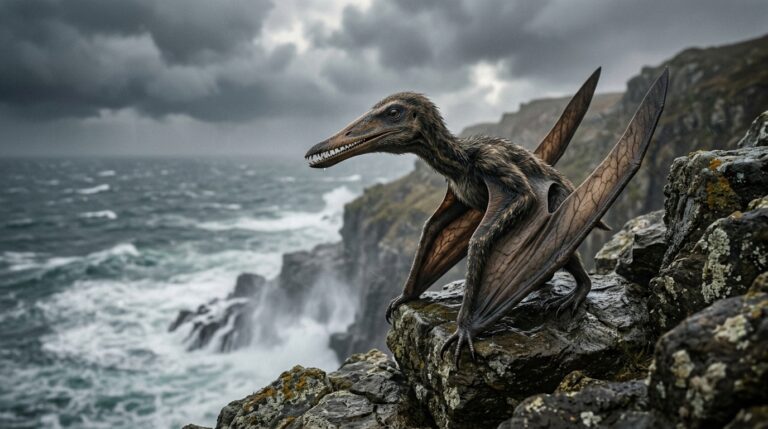
A close look at jurassic period plants and dominant animals demonstrates how deeply interconnected terrestrial ecosystems had become. Gymnosperms, including massive conifers and thickets of palm-like cycads, formed the primary food source for giant herbivores. Beneath the canopy, early insects, amphibians, and small reptiles thrived in the humid air. Meanwhile, the open skies saw the dramatic expansion of flying reptiles mesozoic evolution, as early pterosaurs like Rhamphorhynchus perfected powered flight, soaring over coastline waters to catch fish. The Jurassic was an age of absolute biological splendor, establishing a stable, warm world where reptiles held supreme command over land, sea, and air.
The Zenith and Apogee of Life in the High Cretaceous
Evolutionary Marvels on Fragmented Continents
Extending from 145 to 66 million years ago, the Cretaceous Period represents the longest and final chapter of the Mesozoic Era. Anyone asking how long was the cretaceous period will find an astonishing 79-million-year span defined by continuous continental drift, high sea levels, and explosive biological diversity. As continents pulled farther apart, isolated landmasses created distinct evolutionary pockets, giving rise to specialized regional fauna. Ocean levels reached historic highs, creating shallow inland seas that split continents like North America into island landmasses. This geographic separation acted as a catalyst for natural selection, spurring rapid species diversification across every continent on the planet.
Feathers, Flowers, and Aquatic Monsters
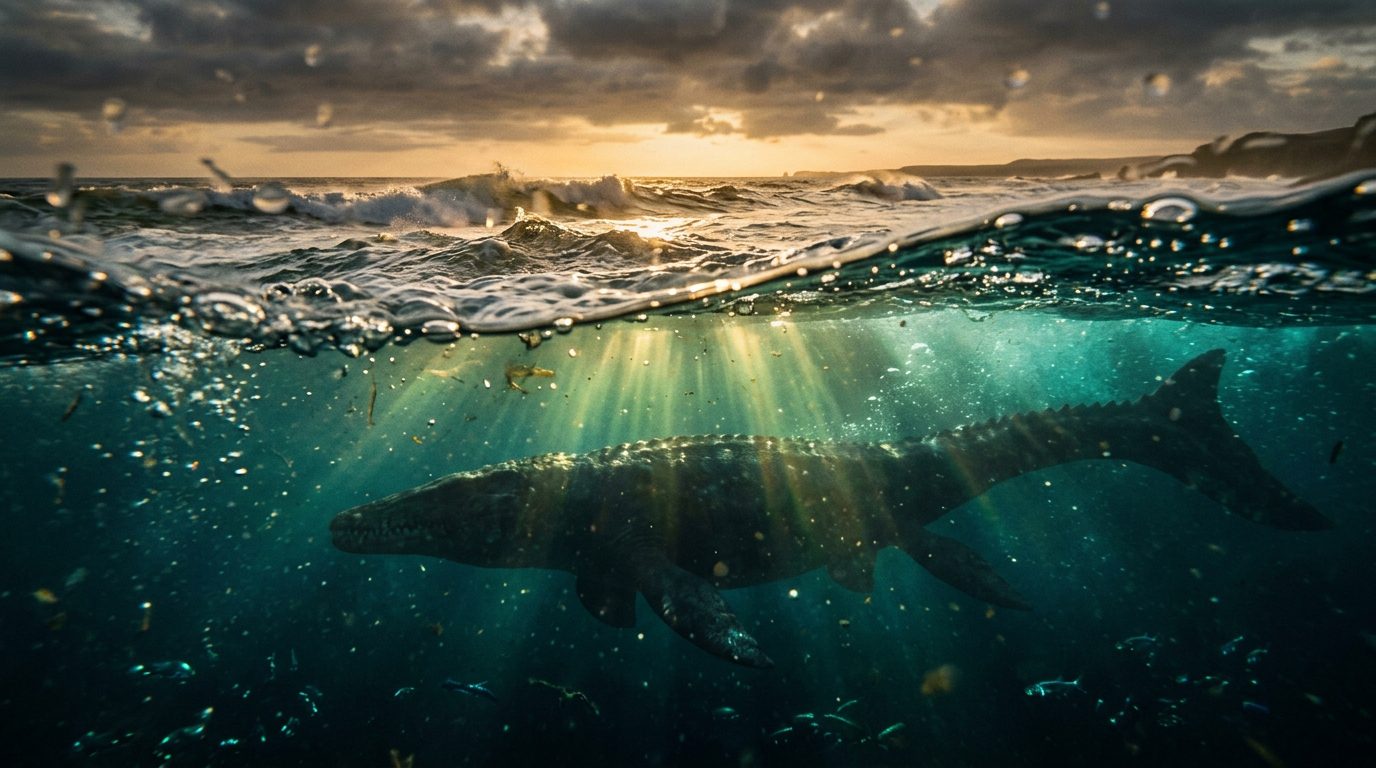
The Cretaceous Period witnessed two revolutionary biological breakthroughs that changed the terrestrial surface forever: the emergence of flowering plants (angiosperms) and the remarkable evolution of birds from cretaceous dinosaurs. Flowering plants co-evolved alongside pollinating insects, leading to colorful landscapes filled with early broadleaf trees like magnolias, maples, and oaks. Concurrently, feathered theropod dinosaurs began diversifying into true avian species. Below the water’s surface, the cretaceous apex predators and marine life reached terrifying proportions. Giant marine lizards known as mosasaurs, alongside massive plesiosaurs and long-jawed Xiphactinus fish, turned Cretaceous oceans into some of the most dangerous hunting grounds in planetary history.
The Final Reign of Earth’s Greatest Kings
On land, the Cretaceous gave rise to some of the most famous prehistoric animals ever discovered. A direct triassic vs jurassic vs cretaceous comparison highlights how dinosaurs evolved from small, nimble runners in the Triassic, to giant long-necked grazers in the Jurassic, and finally into highly specialized, heavily armored, and deadly efficient species in the Cretaceous. Herds of horned Triceratops, duck-billed Edmontosaurus, and heavily armored Ankylosaurus moved across North America, constantly stalked by the ultimate apex predator, Tyrannosaurus rex. Similar predator-prey dynamics played out worldwide, with giant carnivores like Spinosaurus dominating North Africa and Giganotosaurus stalking prey across South America.
The Cataclysmic Fall and Evolutionary Legacy
The Cosmic Strike That Shook the World
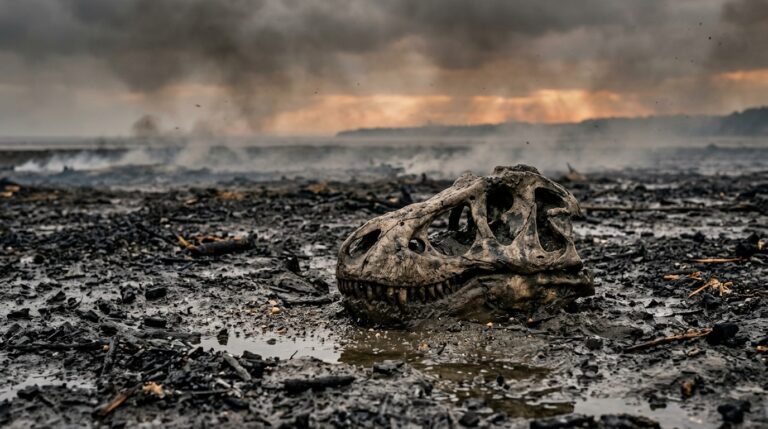
Despite tens of millions of years of evolutionary dominance, the reign of non-avian dinosaurs came to a swift and brutal end approximately 66 million years ago. Investigating why did the mesozoic era end brings researchers to the Chicxulub asteroid impact event, a world-shattering collision off the coast of modern-day Mexico. A space rock over six miles wide slammed into Earth at hypervelocity, unleashing energy equivalent to billions of atomic bombs. The initial impact triggered global wildfires, massive megatsunamis, and continent-spanning earthquakes. However, the true global killer was the fallout: millions of tons of vaporized rock, soot, and sulfur were injected high into the stratosphere, blocking out sunlight for years.
Dark Skies, Collapsing Food Webs, and Extinction
The sudden absence of sunlight caused global temperatures to plummet, bringing photosynthesis to a sudden halt on land and in the oceans. Herbivores starved as plant life withered, causing a catastrophic domino effect that wiped out apex carnivores shortly after. Understanding the major extinction at end of cretaceous reveals a dark prolonged impact winter where approximately seventy-five percent of all plant and animal species vanished forever. Giant sauropods, horned dinosaurs, apex carnivores, pterosaurs in the skies, and massive mosasaurs in the seas were completely wiped clean from the geological record, bringing the glorious Mesozoic Era to an abrupt, tragic close.
The Unbroken Thread of Modern Survival
Yet, despite the absolute devastation, life found a way through the darkness. Small, adaptable creatures capable of burrowing, scavenging, or surviving on seeds managed to endure the nuclear winter. Tiny nocturnal mammals survived underground, laying the evolutionary foundation for primates, whales, elephants, and humans millions of years later. Similarly, small feathered avian dinosaurs survived the global firestorm, continuing their lineage into the modern birds that sing outside our windows today. The deep story of the Mesozoic is not merely a tale of ancient monsters, but an enduring lesson in life’s incredible resilience, adaptability, and unbroken continuity through time.
What period was the Mesozoic (the age of dinosaurs)?
What Was the Permian Mass Extinction? Nearly All Died
Vertebrates & Plants on Land: The Prehistoric Secret?
Summary
-
The Mesozoic Era was split into three major periods: the dry Triassic, the humid Jurassic, and the highly diverse Cretaceous.
-
Life had to rebuild after the Permian-Triassic extinction, starting with small, experimental archosaurs and early mammals in a dry supercontinent named Pangaea.
-
The Jurassic Period saw Pangaea fragment, creating warm, humid global climates, vast coniferous forests, and giant sauropods hunted by large apex predators.
-
The Cretaceous Period introduced flowering plants, modern bird evolution, extremely dangerous marine predators, and iconic dinosaurs like T. rex and Triceratops.
-
The era ended 66 million years ago due to the Chicxulub asteroid impact, which caused an environmental winter that wiped out non-avian dinosaurs and paved the way for mammals.
Frequently Asked Questions
Which period came first: Triassic, Jurassic, or Cretaceous?
The Triassic Period came first, starting around 252 million years ago. It was followed by the Jurassic Period around 201 million years ago, and finally the Cretaceous Period, which lasted until 66 million years ago.
Were dinosaurs present during all three periods of the Mesozoic Era?
Yes, but they evolved dramatically over time. Early, small dinosaurs first appeared in the late Triassic, became massive global giants in the Jurassic, and reached their highest level of species diversity during the Cretaceous.
Did humans live alongside dinosaurs in any of these prehistoric periods?
No, modern humans (Homo sapiens) appeared only about 300,000 years ago, nearly 65 million years after non-avian dinosaurs went extinct at the end of the Cretaceous Period.
Why were plants so different in the Triassic compared to the Cretaceous?
The Triassic had a dry, harsh climate dominated by drought-resistant seed ferns and cycads. By the Cretaceous, higher humidity, shifting landmasses, and evolutionary advances led to the broad expansion of flowering plants (angiosperms).
Are there any living descendants of animals from the Mesozoic Era today?
Yes! Birds are direct living descendants of small feathered theropod dinosaurs from the Cretaceous. Additionally, crocodilians, turtles, mammals, and certain marine species trace their lineages directly back to Mesozoic ancestors.
Experience Deep History Today
Curious to explore more thrilling deep-dive investigations into ancient Earth history, evolutionary marvels, and lost prehistoric worlds? Dive deeper into our expansive library of scientific deep-dives, detailed guides, and historical breakthroughs. Explore our full article archive today to continue your journey through deep time!