Befrey
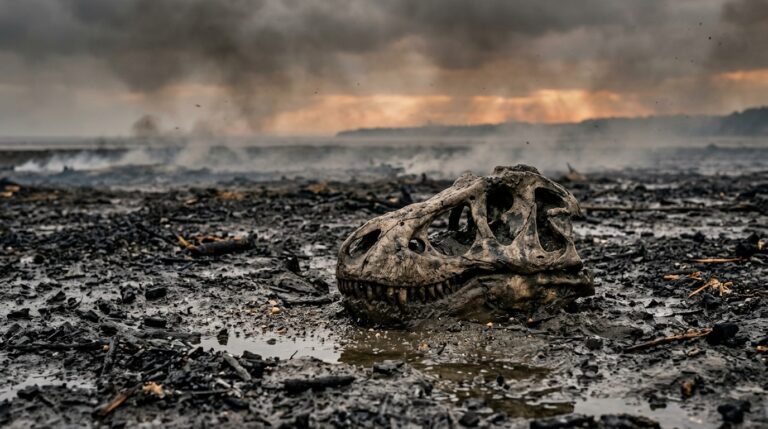
What was the Permian mass extinction? It was the closest life on Earth ever came to being wiped out completely. Around 252 million years ago, something catastrophic swept across the entire planet. Land and sea both collapsed at nearly the same time. Entire food chains disappeared within a geological blink of an eye. Scientists often call it the mother of all extinction events, and the evidence backs that up completely. This single disaster nearly ended the story of complex life before it truly had a chance to flourish. Understanding what happened here reveals just how fragile, and yet how stubbornly resilient, life on this planet really is.
Earth Before the Catastrophe
Picture Earth roughly 252 million years ago. Almost all land on the planet was fused into one giant supercontinent called Pangea. This single landmass created extreme climates. Deep interior regions baked under brutal heat, while coastlines faced their own instability. Oceans covered the rest of the globe in one connected body of water. Marine life had flourished for millions of years, filling reefs with trilobites, ancient corals, and armored fish. On land, early reptiles and amphibians had spread across diverse habitats. Everything seemed stable. Nothing suggested that within a short window of geological time, most of it would disappear.
The Permian-Triassic Extinction Event Explained
The Permian-Triassic extinction event marks the official boundary between two major chapters of Earth’s history. It sits exactly where the Paleozoic Era ends and the Mesozoic Era begins. This boundary is not just a date on a chart. It represents one of the sharpest, most brutal resets biology has ever experienced. Around 96 percent of marine species vanished during this window. On land, roughly 70 percent of vertebrate species were wiped out as well. Even insects, which are famously tough survivors, suffered their only confirmed mass extinction in their entire evolutionary history. Geologists identify this boundary using a thin, distinct rock layer found across the world. That layer holds chemical fingerprints of a planet in crisis. Every time scientists study a new site containing this boundary, the same grim story repeats itself.

The End-Permian Extinction Timeline: How Fast Did Life Collapse?
For decades, scientists debated how long the end-Permian extinction timeline actually lasted. Early estimates suggested it might have unfolded over hundreds of thousands of years. Newer, more precise dating techniques changed that picture dramatically. Advanced zircon crystal dating now suggests the most intense phase happened astonishingly fast. Some research points to a core collapse window of around sixty thousand years or less. A few studies argue the sharpest die-off pulse may have hit within just tens of thousands of years. In geological terms, that speed is almost instantaneous. Imagine an event that took less time than the gap between two ice ages, yet managed to erase most life on Earth. That is exactly what makes this timeline so terrifying to paleontologists. Speed, more than anything else, is what made this extinction so deadly. Life simply did not have enough time to adapt.
What Caused the Great Dying? Uncovering the Real Trigger
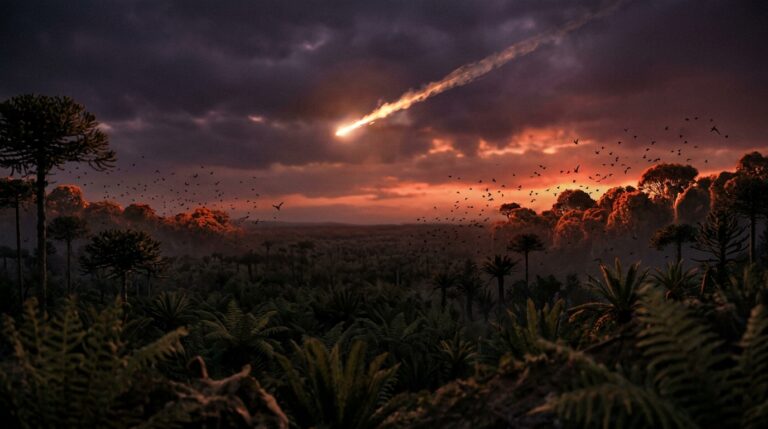
So what actually caused the Great Dying? For years, scientists proposed competing theories. Some pointed to asteroid impacts, similar to the one that later ended the dinosaurs. Others suspected sudden climate shifts unrelated to any single trigger. Modern evidence now points overwhelmingly toward one culprit above all others. Massive volcanic activity in what is now Siberia appears to be the primary driver. This wasn’t a single eruption. It was a prolonged, planet-altering event that reshaped the atmosphere itself. The volcanic activity released enormous volumes of carbon dioxide and toxic gases into the air. That combination triggered a chain reaction of environmental disasters happening all at once. Rising temperatures, poisoned air, and dying oceans fed into each other in a vicious cycle.
Siberian Traps Volcanic Eruptions: The Planet’s Worst Nightmare
The Siberian Traps volcanic eruptions represent one of the largest volcanic events in Earth’s entire history. These eruptions produced flood basalts, a type of lava that spreads across vast areas rather than exploding from a single peak. The resulting rock formations still cover millions of square kilometers across modern Russia today. Imagine lava flows so massive they could bury entire countries under solid rock. As these eruptions continued for thousands of years, they pumped staggering amounts of greenhouse gases into the sky. Global temperatures spiked dramatically as a direct result. Some researchers believe the eruptions also ignited buried coal deposits, releasing even more carbon into the atmosphere. Toxic gases like sulfur dioxide created acid rain on a global scale. Forests died. Soil eroded. The very foundation of terrestrial ecosystems began to crumble. Few events in planetary history compare to the sheer destructive scale of these eruptions.
Ocean Acidification and the Mass Extinction of Marine Life
Ocean acidification during the mass extinction turned the seas into a hostile environment almost overnight. As carbon dioxide levels skyrocketed, oceans absorbed much of that excess gas. This chemical shift lowered the pH of seawater across the globe. Creatures that relied on calcium carbonate to build shells and skeletons faced immediate danger. Coral reefs, already delicate ecosystems, began collapsing at alarming rates. On top of acidification, oxygen levels in the water dropped sharply, creating what scientists call ocean anoxia. Vast stretches of seafloor became lifeless, oxygen-starved dead zones. Fish, mollusks, and countless invertebrate species simply could not survive in these conditions. The combination of acid, heat, and suffocation created a marine environment unlike anything the planet had seen before. It’s little wonder that marine life suffered the heaviest losses of the entire extinction event.
Which Species Vanished and Which Somehow Survived
Not every creature succumbed to the chaos. Certain groups showed a surprising ability to endure. Lystrosaurus, a stocky, pig-sized reptile relative, became one of the extinction’s strangest success stories. This creature spread across nearly every continent shortly after the crisis, likely due to its burrowing habits and flexible diet. Meanwhile, giant amphibians and many reptile groups that once dominated Permian landscapes disappeared entirely. In the oceans, trilobites, once one of the most successful animal groups in Earth’s history, vanished for good after surviving nearly 300 million years. Certain small, hardy organisms managed to squeeze through the bottleneck by tolerating low oxygen and extreme heat. Survival during this period had little to do with size or strength. It had everything to do with adaptability and sheer luck.
The Long Recovery of Life After the Mass Extinction
The recovery of life after the mass extinction was neither quick nor simple. Many scientists estimate it took somewhere between five and ten million years for ecosystems to stabilize again. Repeated environmental aftershocks slowed progress considerably during the earliest stages of the Triassic period. Oxygen levels remained low for an extended stretch, limiting how large or complex new species could become. Reef systems, in particular, took an especially long time to reappear in anything resembling their former diversity. Slowly, new groups began filling the empty ecological space left behind. Early archosaurs emerged during this recovery window, eventually giving rise to the dinosaurs that would dominate the next era. In many ways, this devastating extinction cleared the stage for entirely new evolutionary experiments. Without this reset, the biological world that followed might look completely unrecognizable today.

Why the Permian Extinction Still Matters Today
Modern scientists study this ancient disaster for reasons that go far beyond curiosity. The parallels to today’s environmental changes are difficult to ignore. Rapid carbon release, rising global temperatures, and ocean acidification are all processes happening again right now, just through different mechanisms. Researchers frequently point to this extinction as a cautionary case study for understanding tipping points in Earth’s climate system. It demonstrates how interconnected systems, oceans, atmosphere, and land, can spiral into crisis once pushed too far. It also shows how quickly geological time can turn from stable to catastrophic. While no one expects an identical repeat, the underlying warning remains relevant. Earth has always been capable of dramatic, rapid change. Understanding the past remains one of our best tools for protecting the future.
Vertebrates & Plants on Land: The Prehistoric Secret?
How Scientists Found the Oldest Fossils of Life on Earth
Hadean Formation of the Earth and the Formation of the Crust
Summary
The Permian mass extinction, often nicknamed the Great Dying, stands as the most severe extinction event in Earth’s recorded history. It struck around 252 million years ago, wiping out the vast majority of marine and terrestrial species. Massive volcanic eruptions from the Siberian Traps triggered a chain reaction of global warming, ocean acidification, and widespread oxygen loss. The core collapse may have unfolded in as little as tens of thousands of years, an almost instant event by geological standards. Recovery took millions of years, eventually paving the way for entirely new groups of animals, including the ancestors of dinosaurs. Today, scientists continue studying this ancient catastrophe for lessons about climate tipping points and ecological resilience.
Frequently Asked Questions
What caused the Permian mass extinction?
The leading explanation points to massive volcanic eruptions in Siberia, which released enormous amounts of greenhouse gases and triggered runaway global warming, ocean acidification, and oxygen depletion.
When did the Permian mass extinction happen?
It occurred approximately 252 million years ago, marking the boundary between the Permian and Triassic geological periods.
How many species died during the Permian mass extinction?
Estimates suggest around 96 percent of marine species and roughly 70 percent of terrestrial vertebrate species were lost.
How long did it take life to recover after the extinction?
Full ecological recovery likely took between five and ten million years, one of the longest recovery periods of any known mass extinction.
Could an extinction event like this happen again?
While an identical event is unlikely, scientists note real similarities between the rapid carbon release of that era and certain aspects of today’s environmental changes, making it a valuable warning from deep history.
Call To Action
If ancient catastrophes like this fascinate you, there’s an entire hidden history of Earth still waiting to be explored. Subscribe for more deep dives into prehistoric life, extinction events, and the forces that shaped our planet long before humans arrived.