Befrey
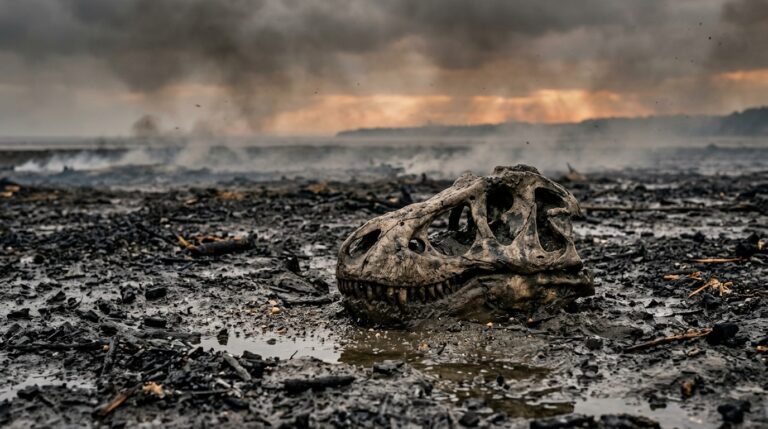
The Hadean formation of the Earth, formation of the crust represents the very first and most extreme chapter in our planet’s history. In modern geology and planetary science, the Hadean formation of the Earth and the formation of the crust are studied to understand how planets are born, how early crusts emerge, and how conditions suitable for later life were prepared. The term “Hadean” reflects the hostile environment of early Earth, dominated by intense heat, volcanic activity, and frequent impacts. Despite these extremes, critical processes began that shaped the Earth’s interior, surface, and long-term evolution.
Understanding the Hadean formation of the Earth and the formation of the crust is essential for both beginners and professionals. For newcomers, it explains how Earth began as molten matter and gradually cooled. For experts, it provides insight into planetary differentiation, early geochemical cycles, and crust-mantle interactions. This period laid the foundation for the Archean eon and ultimately for the emergence of continents, oceans, and life itself. By examining physical, chemical, and thermal processes together, scientists can reconstruct a time from which almost no direct rock record survives.
Origins of Early Earth
Solar Nebula Collapse
The story of Earth begins within the solar nebula, a rotating disk of gas and dust surrounding the young Sun. Gravity caused particles within this disk to collide and stick together, forming increasingly larger bodies. These early aggregates, called planetesimals, were the building blocks of terrestrial planets. During this stage, heat was generated by constant collisions and radioactive decay. This heat played a crucial role in the Hadean formation of the Earth and the formation of the crust.
As planetesimals grew, their gravitational pull increased. Larger bodies attracted more material, accelerating growth through a process known as accretion. Earth’s mass increased rapidly within a relatively short geological time. This violent growth phase created enormous internal temperatures, leading to widespread melting. The accumulation of energy during accretion set the stage for planetary differentiation and early crust development.
Accretion and Differentiation
Accretion did not occur evenly or gently. Instead, Earth experienced countless high-energy impacts. Each impact released heat, melting portions of the young planet. As temperatures rose, heavier elements like iron and nickel sank toward the center, forming the core. Lighter silicate materials moved upward, forming the mantle. This separation of materials is known as differentiation.
Differentiation is a central concept in understanding the Hadean formation of the Earth and the formation of the crust. Without this process, Earth would remain chemically uniform. Instead, differentiation created layered internal structures that controlled heat flow and surface evolution. The mantle became the source of early magmas, while the surface began to cool and solidify into the first crustal materials.
Hadean Environment
Extreme Temperatures
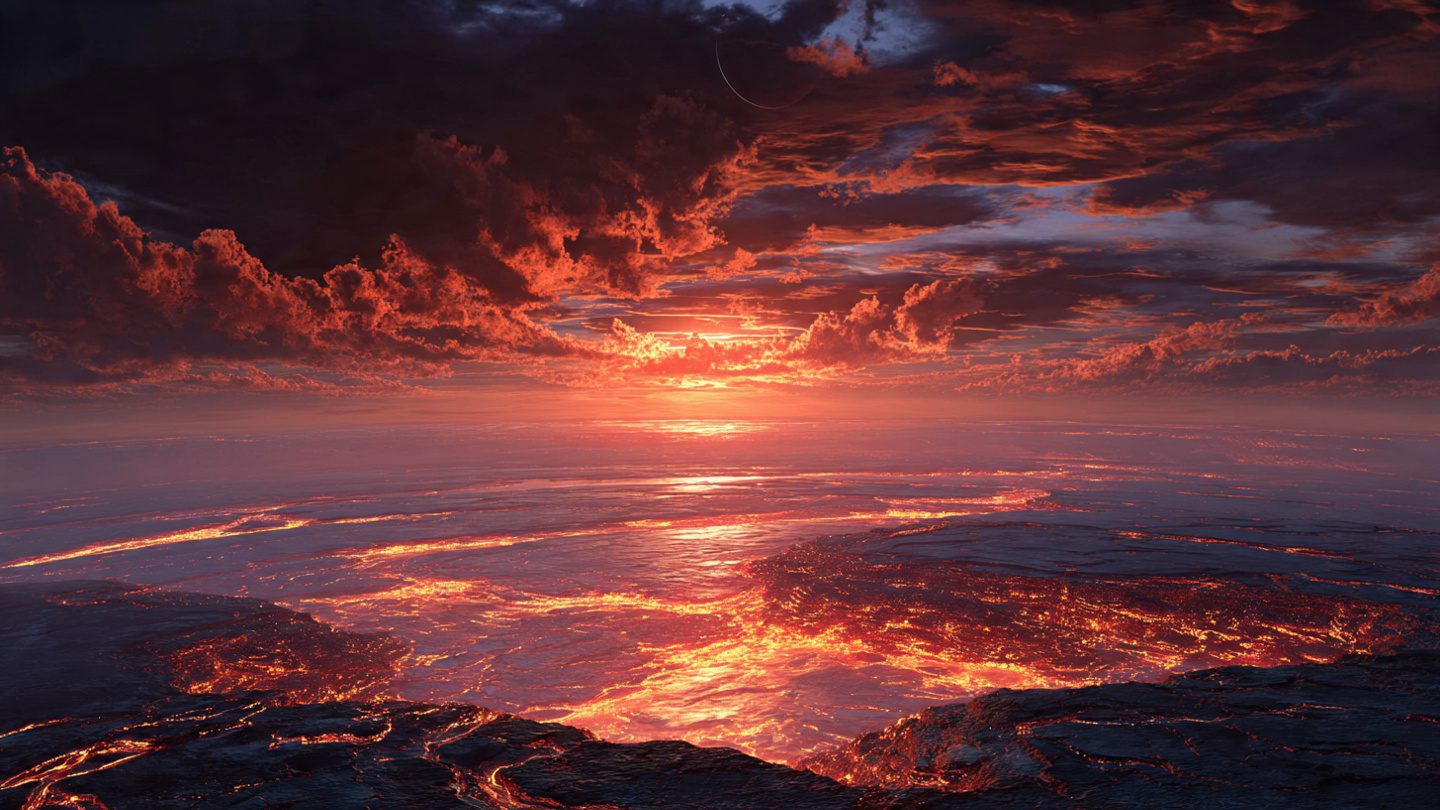
The Hadean Earth was characterized by extreme heat. Surface temperatures were high enough to keep large portions of the planet molten. Magma oceans likely covered much of the surface. These global or regional magma oceans formed as a result of intense accretional heating and core formation.
Such high temperatures influenced the formation of the crust. As magma oceans slowly cooled, crystals formed and settled, creating chemically distinct layers. This cooling process marked the earliest steps in crust formation. Although the crust was unstable and frequently recycled, it represented the beginning of a solid Earth surface.
Heavy Bombardment
Another defining feature of the Hadean environment was frequent asteroid and comet impacts. This period, often referred to as heavy bombardment, constantly disrupted the surface. Large impacts could remelt the crust and even affect the mantle. Each collision added energy and altered the chemical composition of surface materials.
Despite this chaos, impacts also contributed valuable materials. Volatile compounds, including water and gases, were delivered by comets and hydrated asteroids. These materials played a role in later crustal evolution and atmospheric development. Therefore, heavy bombardment was both destructive and constructive during the Hadean formation of the Earth and the formation of the crust.

Formation of the First Crust
Magma Ocean Crystallization
As Earth gradually cooled, magma oceans began to crystallize. Minerals with higher melting points solidified first, sinking or floating depending on their density. This process produced an early, differentiated crust composed mainly of basaltic materials.
The formation of the crust during the Hadean was not a single event. Instead, it was a repeated cycle of melting and solidification. Early crusts were thin, fragile, and easily destroyed by impacts or internal heat. Nevertheless, these early crustal fragments marked a critical step in Earth’s evolution.
Basaltic Proto-Crust
The earliest crust was likely basaltic in composition, similar to modern oceanic crust. This proto-crust formed from mantle-derived magmas that erupted onto the surface. Because of high heat flow, this crust was constantly recycled back into the mantle.
Even though little of this crust remains today, geochemical evidence preserved in ancient minerals provides clues. Zircon crystals, some over 4 billion years old, suggest that crustal material existed very early. These zircons indicate that the Hadean formation of the Earth and the formation of the crust began earlier and was more complex than once thought.
Geochemical Evidence
Ancient Zircons
Zircons are among the most important sources of information about the Hadean Earth. These durable minerals can survive extreme conditions and preserve isotopic signatures. Analysis of ancient zircons reveals information about temperature, water presence, and crustal composition.
Some zircons indicate interaction with liquid water, suggesting that parts of the crust cooled enough to support oceans. This challenges older views of a completely molten Hadean Earth. Instead, it supports a dynamic model with localized crust formation and stabilization.
Isotopic Signatures
Isotopic studies of elements such as oxygen, hafnium, and lead provide insight into early crustal processes. Variations in these isotopes suggest repeated melting, differentiation, and recycling of crustal material.
These findings reinforce the importance of the Hadean formation of the Earth and the formation of the crust in shaping later geological history. They demonstrate that complex geochemical cycles were active much earlier than previously assumed.

Formation and Evolution of Stars: From Protonebula to Black Hole
Role of Volatiles
Water Delivery
Water is a key component in crust formation and evolution. During the Hadean, water was delivered through both internal degassing and external impacts. Volcanic activity released water vapor from the mantle, while comets added additional supplies.
Once present, water influenced melting temperatures and mineral stability. It facilitated the formation of new crustal rocks and contributed to surface cooling. This interaction between water and rock was essential for long-term crust stabilization.
Atmosphere Interaction
The early atmosphere formed from volcanic gases released during intense magmatism. Chemical reactions between gases and surface rocks altered mineral compositions.
Over time, these interactions contributed to the development of a more stable surface environment. The coupling of atmosphere and crust during the Hadean formation of the Earth and the formation of the crust set the stage for later climate regulation.
Transition Toward Stability
Cooling of the Mantle
Gradual cooling of the mantle reduced the frequency of large-scale melting events. As heat flow decreased, crustal fragments could survive longer. This allowed thicker and more stable crustal regions to develop.
This transition marked the end of the Hadean and the beginning of the Archean eon. While conditions were still harsh, Earth was becoming more hospitable. The processes initiated during the Hadean continued to influence geological activity for billions of years.
Early Tectonic Behavior
Although modern plate tectonics likely did not exist during the Hadean, early forms of tectonic movement may have occurred. Localized crustal recycling and mantle upwellings suggest a proto-tectonic regime.
These early movements helped redistribute heat and materials. They contributed to the gradual organization of Earth’s surface and interior. Understanding these processes helps scientists connect early crust formation with later continental development.
Importance for Planetary Science
Comparative Planetology
Studying the Hadean formation of the Earth and the formation of the crust provides a framework for understanding other rocky planets. By comparing Earth with Mars, Venus, and exoplanets, scientists can identify universal processes.
These comparisons reveal why Earth developed stable oceans and continents while other planets did not. Early crust formation appears to be a key factor in long-term habitability.
Foundations of Habitability
The Hadean set the initial conditions for life, even if life itself appeared later. Crust formation created chemical gradients and protected environments. These factors are essential for prebiotic chemistry.
Therefore, the Hadean formation of the Earth and the formation of the crust are not just geological events. They are fundamental steps toward a living planet.
Summary
The Hadean formation of the Earth and the formation of the crust represent a time of intense heat, impacts, and transformation. Through accretion, differentiation, magma ocean crystallization, and volatile delivery, Earth developed its first solid surface. Although unstable and frequently recycled, this early crust laid the groundwork for later geological and biological evolution.
What We Know About the Big Bang – and What Remains a Mystery
FAQ
What is the Hadean formation of the Earth?
The Hadean formation of the Earth describes the earliest stage of Earth’s history, beginning with planetary accretion from the solar nebula. During this time, Earth was extremely hot, partially molten, and shaped by intense impacts and volcanism.
Why is the formation of the crust crucial during the Hadean eon?
The formation of the crust created the first solid surface of the planet. This early crust controlled heat loss, chemical differentiation, and set the foundation for all later geological processes.
Was the Earth completely molten during the Hadean?
No. While magma oceans were widespread, evidence from ancient zircons suggests that cooler regions existed where early crust could stabilize temporarily.
Did water exist during the Hadean formation of the Earth?
Yes. Isotopic evidence from zircons indicates the presence of liquid water, suggesting that early oceans may have formed locally during the Hadean formation of the Earth and the formation of the crust.
How do scientists study the Hadean formation of the Earth today?
Scientists use zircon minerals, isotopic analysis, experimental simulations, and planetary comparisons to reconstruct conditions from this ancient period.
Why is the Hadean formation of the Earth and the formation of the crust important for life?
These processes created stable surfaces, chemical gradients, and environments necessary for prebiotic chemistry and later biological evolution.