Befrey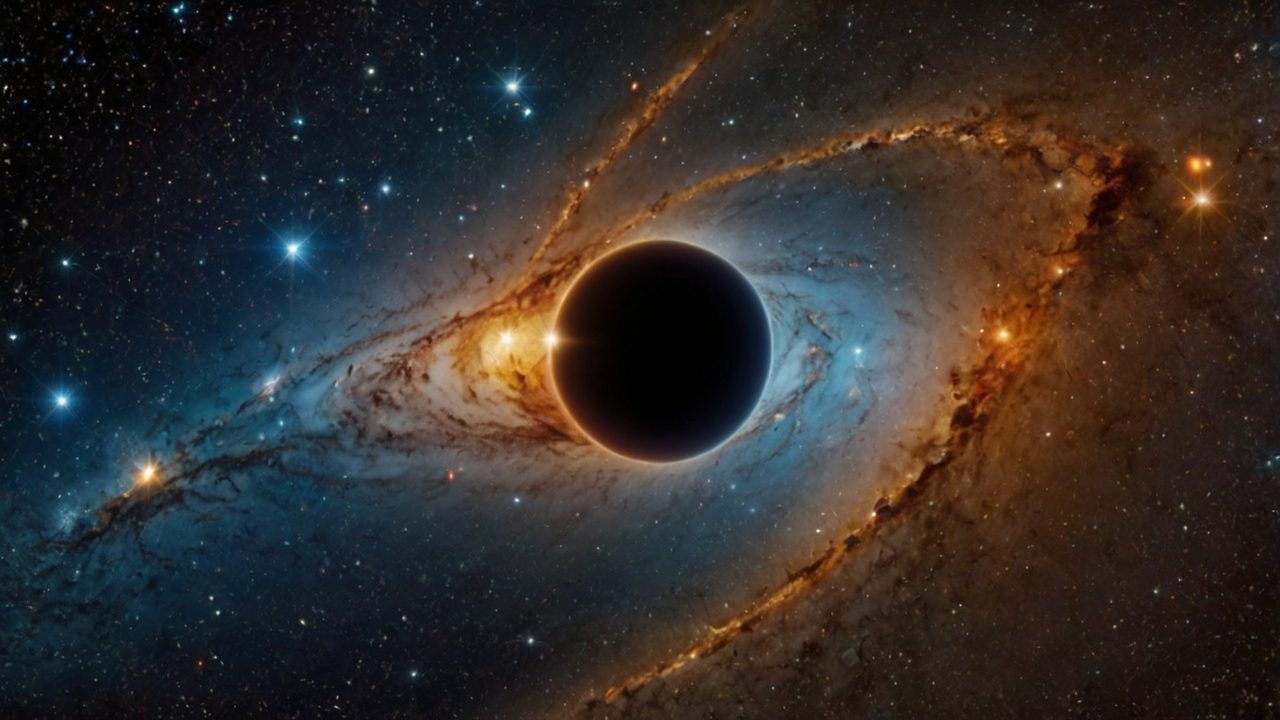
The formation and evolution of stars is one of the most fascinating and complex processes in the universe. It tells the story of how light itself is born, how elements are created, and how matter transforms into the most extreme cosmic objects — black holes.
In this article, we’ll take an in-depth journey through the stages of star birth, stellar evolution, and death. From the first whisper of a protonebula to the violent collapse of a dying star, this guide reveals the forces that shape our cosmos.
Throughout this article, the main keyword formation and evolution of stars and its variations (like stellar formation, star life cycle, birth and death of stars, stellar evolution process) will appear naturally to maximize SEO visibility while keeping the content engaging and educational.
The Beginning of Everything: From Cosmic Clouds to Protonebula
Every star begins as part of a giant molecular cloud, a vast region of dust and gas scattered across interstellar space. These clouds, mostly hydrogen and helium, can stretch for hundreds of light-years. Gravity slowly pulls matter together into denser regions called protostellar cores.
Within these cold and dark regions, the temperature drops to only a few degrees above absolute zero. Over time, the densest part of the cloud collapses under its own gravity — forming a protonebula, the earliest stage of a star’s life.
The Role of Gravity and Turbulence
In the process of formation and evolution of stars, gravity is the architect. It gathers diffuse particles into clusters, compressing them until pressure and temperature rise dramatically. However, turbulence and magnetic fields resist the collapse, creating a balance between chaos and order.
Once a region becomes gravitationally unstable, it begins to collapse more rapidly. This triggers the creation of a rotating, flattened structure — a protostellar disk — where accretion begins.

Accretion and the Birth of a Protostar
As gas spirals inward toward the core, angular momentum conservation forms a disk around the young protostar. Inside this disk, material continuously falls onto the central body, increasing its mass and temperature.
During this protostar phase, the star emits strong infrared radiation but is not yet visible in optical light. Inside its core, temperatures climb to millions of degrees. When the conditions become right, hydrogen atoms begin fusing into helium — the moment true starlight is born.
H3: The Nebula and Accretion of Earth – Formation of Our Planet Explained
Just as Earth formed through nebular accretion, stars are born through similar processes on a grander scale. Understanding accretion helps explain both planetary and stellar formation, revealing the shared origins of planets and stars.
The Main Sequence: The Stable Life of a Star
Once nuclear fusion ignites, the star enters its longest and most stable period — the main sequence. Here, gravity pulling inward is perfectly balanced by the outward pressure of radiation from fusion in the core.
For billions of years, hydrogen is fused into helium, releasing the light and energy that make stars shine. The position of a star on the Hertzsprung-Russell diagram (HR diagram) depends on its mass, luminosity, and temperature.
Mass Determines Destiny
The mass of a star determines its entire formation and evolution.
-
Low-mass stars (like red dwarfs) burn hydrogen slowly and can live for trillions of years.
-
Medium stars, like our Sun, last around ten billion years before transforming into red giants.
-
High-mass stars live fast and die young — burning through their fuel in a few million years before collapsing violently.
Geological Processes in the Early Formation of Earth
Planetary evolution parallels stellar processes in fascinating ways. Early Earth’s geological transformations share roots with the cosmic mechanisms that govern how stars live and die — pressure, heat, and gravitational collapse.
Post–Main Sequence: When Stars Leave the Main Stage
When a star runs out of hydrogen in its core, the balance between gravity and pressure collapses. The core contracts and heats up while the outer layers expand — marking the end of the main sequence and the beginning of the giant phase.
Red Giants and Helium Fusion
In low and medium-mass stars, hydrogen fusion continues in a shell around the contracting core. The outer layers balloon outward, forming a red giant. When temperatures reach around 100 million Kelvin, helium begins fusing into carbon and oxygen through the triple-alpha process.
After several million years, the star ejects its outer layers into space, creating a planetary nebula. The remaining core stabilizes as a white dwarf — an ultra-dense, Earth-sized remnant glowing faintly from residual heat.
Supergiants and Heavy Element Fusion
In massive stars, fusion doesn’t stop at helium. These titans continue fusing heavier elements — carbon, neon, oxygen, silicon — until reaching iron. Iron fusion absorbs more energy than it produces, leading to instability. When the core can no longer support its own weight, it collapses in seconds.
Supernova: The Death Explosion of Massive Stars
The collapse of a massive star’s core triggers a supernova explosion — one of the most powerful events in the universe. The outer layers are blasted into space, while the core is compressed to unimaginable densities.
Supernovae are essential to the formation and evolution of stars on a cosmic scale. They seed the galaxy with heavy elements like gold, silver, and uranium — the building blocks for new planets, stars, and even life.
Neutron Stars and Black Holes
Depending on the mass of the remaining core:
-
If it’s between about 1.4 and 3 solar masses, the core becomes a neutron star.
-
If it’s more massive, gravity wins completely, and the collapse continues — forming a black hole.
At this stage, the formation and evolution of stars reaches its ultimate transformation: a singularity from which not even light can escape.
Black Holes: The Final Stage of Stellar Evolution
A black hole is the endpoint for the universe’s most massive stars. When the core collapses beyond the limits of neutron degeneracy pressure, spacetime itself curves into an infinitely dense point.
Black holes are not just the graveyards of stars — they are engines that shape galaxies. Through accretion disks and relativistic jets, they influence star formation in their surroundings, maintaining the cosmic cycle.
The Role of Black Holes in Galactic Evolution
As black holes consume matter, they release vast amounts of energy. This feedback can trigger new star formation or prevent it, depending on conditions. The universe is, therefore, a dynamic balance between birth and destruction — the heart of the formation and evolution of stars.
Stellar Feedback: How Stars Shape the Next Generation
Stars don’t evolve in isolation. Their winds, radiation, and supernova explosions affect nearby clouds, compressing gas or dispersing it. This stellar feedback regulates the rate of star formation in galaxies.
Massive stars often end their lives by creating new star-forming regions. Their explosions compress surrounding gas, causing new protostellar clouds to form. Thus, the death of one generation becomes the birth of the next — the eternal cycle of the cosmos.
Heavy Element Synthesis: The Alchemy of the Cosmos
During stellar evolution, stars act as cosmic forges. In their cores, lighter elements fuse into heavier ones — hydrogen into helium, helium into carbon and oxygen, and in massive stars, all the way up to iron.
But the heaviest elements are born during supernova explosions. The intense heat and pressure create rapid neutron capture processes (r-process), producing elements like gold, platinum, and uranium.
Without stellar death, there would be no life. Every atom in your body heavier than helium was forged in the heart of a star and released through its death. The formation and evolution of stars is, quite literally, the story of us.
MK Ultra Mind Control Conspiracy – CIA’s Secret Experiments on Human Minds
While this topic might seem unrelated, both the mysteries of human consciousness and cosmic evolution explore the limits of existence and transformation — whether within the mind or the stars themselves.
Supermassive Black Holes: The Cosmic Giants
At the centers of most galaxies lie supermassive black holes, containing millions to billions of solar masses. Their origins remain one of the biggest questions in astrophysics.
They may form from the collapse of massive star clusters, or by the merging of smaller black holes. These cosmic giants regulate star formation across entire galaxies through their gravitational and energetic feedback.
Galactic Recycling
As galaxies evolve, gas flows toward their centers, feeding black holes and triggering new starbursts. The formation and evolution of stars and black holes are therefore intertwined — each shaping the destiny of the other.
H3: Project Monarch Mind Control – The Dark Conspiracy of Creating Slaves
Exploring the hidden depths of mind control and manipulation mirrors the cosmic dance between creation and destruction — both reveal how unseen forces shape reality, whether psychological or cosmic.
The End and the Beginning: The Cosmic Cycle
The formation and evolution of stars is a never-ending loop. The materials expelled from dying stars form the raw ingredients for new generations. Each new star, planet, and life form owes its existence to the ashes of the old.
Even our Sun, halfway through its life, will one day expand into a red giant, shed its outer layers, and leave behind a white dwarf. Long after, new stars will be born from its remnants. The universe continually renews itself through death and rebirth.

Summary
The formation and evolution of stars is the grand story of the universe — from the quiet birth within a protonebula to the explosive finale of a supernova or the silent darkness of a black hole.
Understanding this process explains how matter cycles through time and space, how elements form, and how galaxies grow. Stars are both creators and destroyers, forgers of light and life.
Their birth, life, and death connect everything — from the atoms in our bodies to the vast spiral arms of galaxies. The next time you look at the night sky, remember: you are literally made of star dust.
FAQ
1. What is the first stage in the formation and evolution of stars?
The process begins with a dense region in a molecular cloud collapsing under gravity, forming a protonebula and eventually a protostar.
2. Do all stars end up as black holes?
No. Only very massive stars collapse into black holes. Smaller stars end as white dwarfs or neutron stars.
3. How long do stars live?
It depends on mass — low-mass stars can live trillions of years, while massive ones may last just a few million.
4. What elements are created in stars?
Stars fuse hydrogen and helium into heavier elements like carbon, oxygen, and iron. Supernovae create even heavier elements.
5. Why are supernovae important?
They recycle material into space, forming new stars and planets, and create the elements necessary for life.
Call to Action
If this cosmic journey through the formation and evolution of stars fascinated you, share it with others who love the mysteries of the universe.
Subscribe for more in-depth explorations into science, space, and the unseen wonders of existence.
Let’s keep discovering the stars together 🌌