Befrey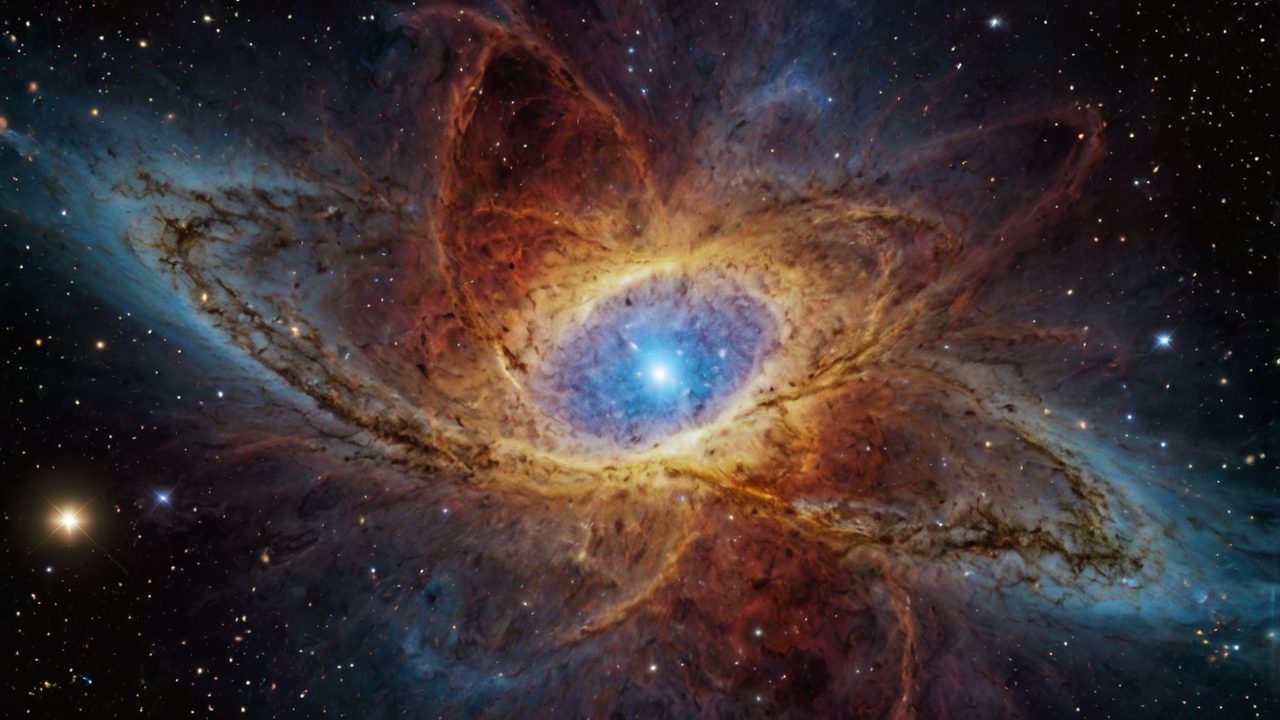
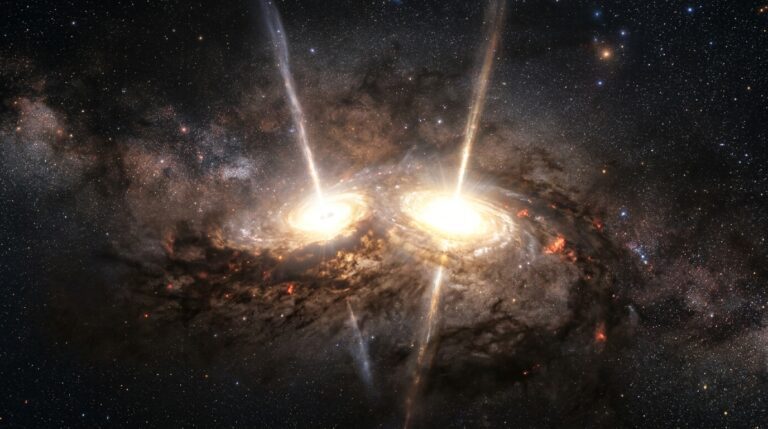
The Big Bang theory is the leading explanation for how our universe began. It tells us that everything we see today — galaxies, stars, planets, even the atoms in our bodies — originated from a single, unimaginably dense point around 13.8 billion years ago.
The main keyword, Big Bang theory, and its related phrases such as origin of the universe, early universe, cosmic creation, and Big Bang mysteries are central to this article. We will explore both what science has revealed and what still confounds cosmologists about this ultimate beginning.
From the first instant of cosmic expansion to the formation of matter, dark energy, and space-time itself, the Big Bang theory is both one of humanity’s greatest triumphs and deepest enigmas.
The Moment of Creation: What the Big Bang Really Was
Many imagine the Big Bang as an explosion in space, but it was not an explosion in space — it was an explosion of space. In the beginning, there was no space, time, or matter as we know them. All of it emerged together in an instant of pure creation.
At the first fraction of a second, the universe was unimaginably hot and dense. Energy transformed into fundamental particles — quarks, electrons, photons — in a cosmic dance that would later form everything.
Physicists describe the initial moment as a singularity, where the laws of physics break down. The concept challenges our understanding of reality itself. What came before the Big Bang? Was there a “before”? The Big Bang theory cannot yet tell us.
The First Second: Expansion, Cooling, and Creation of Matter
In the earliest microseconds, forces that now seem distinct — gravity, electromagnetism, and the nuclear forces — may have been unified. As the universe expanded, it cooled, and these forces separated in a process known as symmetry breaking.
Subatomic particles began to combine, forming protons and neutrons. After about three minutes, the first atomic nuclei appeared in a process called primordial nucleosynthesis.
Hydrogen and helium dominated the early universe, along with traces of lithium — the first elements forged by the Big Bang. Billions of years later, stars would fuse these simple atoms into heavier elements, creating the periodic table as we know it.
The Cosmic Microwave Background: Echo of the Big Bang
Roughly 380 000 years after the Big Bang, the universe cooled enough for electrons to bind with protons, forming neutral atoms. Light was finally free to travel through space. That light, stretched by the ongoing expansion, still fills the universe today as the cosmic microwave background (CMB).
The CMB is the oldest light we can see — a faint glow from when the universe became transparent. It provides a snapshot of the cosmos at that ancient moment, showing tiny fluctuations that would later grow into galaxies and clusters.
The Big Bang theory predicted this radiation long before it was discovered, and its existence remains one of the strongest pieces of evidence supporting the model.
H3: Latest Discoveries in Space – Unveiling Cosmic Secrets and Extraordinary Finds
Modern telescopes and space probes continue to deepen our understanding of the Big Bang. New cosmic discoveries constantly refine our picture of how the universe evolved, revealing secrets about galaxies, dark energy, and the mysterious structure of space itself.
The Expansion of the Universe
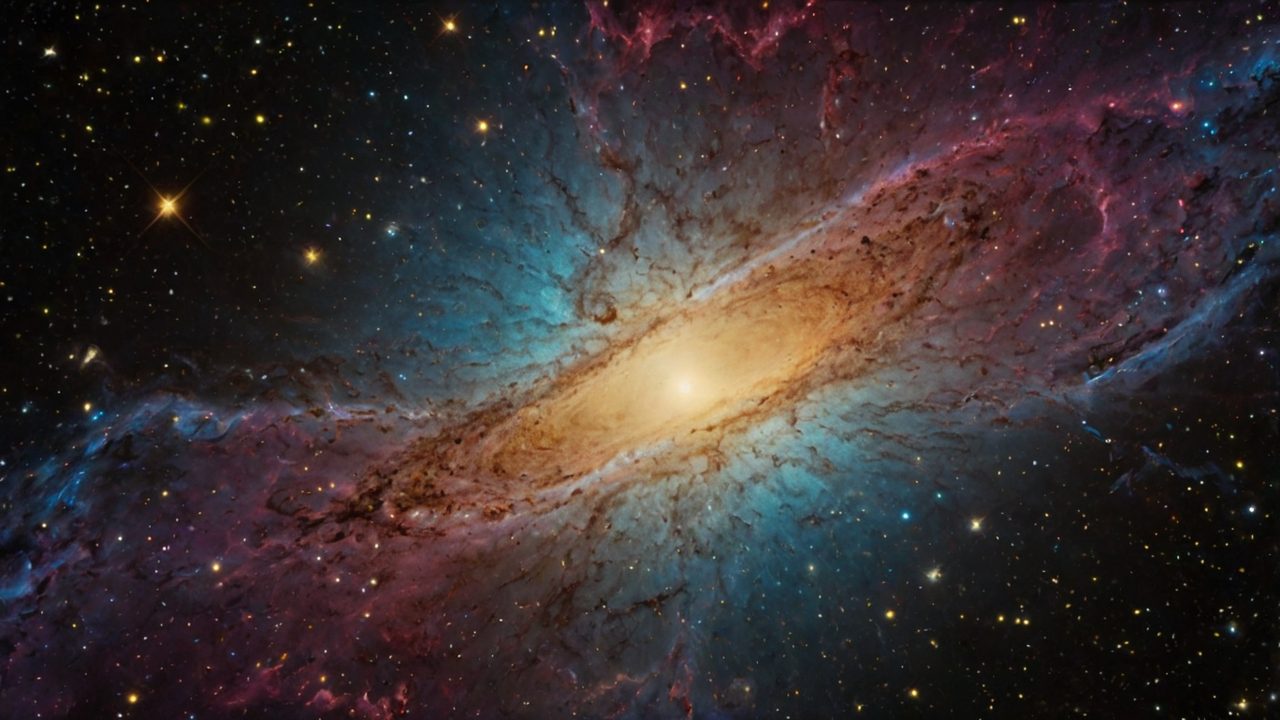
One of the most remarkable insights of the Big Bang theory is that space itself is expanding. Every distant galaxy is moving away from us, not through space, but with space.
This discovery revolutionized astronomy. The farther away a galaxy is, the faster it appears to recede. This relationship, called Hubble’s law, confirms that the universe had a beginning and continues to stretch.
The Role of Dark Energy
Observations show that this expansion is speeding up rather than slowing down. Scientists attribute this acceleration to a mysterious force called dark energy.
Dark energy may make up about 68 percent of the universe, yet we have no idea what it actually is. It remains one of the biggest unsolved riddles in cosmology — a key piece missing from the puzzle of the Big Bang theory.
What Happened Before the Big Bang?
The question of what existed before the Big Bang is one of science’s most profound. The theory itself describes what happened after the beginning, but not what came before.
Some theories suggest the universe could be cyclic — expanding, collapsing, and rebirthing in endless repetition. Others propose that our universe emerged from a quantum fluctuation, a random event within a larger multiverse.
These ideas challenge our concept of time and causality. In the Big Bang theory, time itself began with the universe. Asking what came “before” might be meaningless — there was no before when time did not yet exist.
H3: Paradoxes in Physics and Mathematics – Unlocking the Universe’s Biggest Mysteries
The origins of the universe are filled with paradoxes — mathematical and physical contradictions that push human understanding to its limits. Just like quantum mechanics and relativity, the Big Bang reveals where logic and reality intertwine.
The Formation of Galaxies and Cosmic Structures
Hundreds of millions of years after the Big Bang, gravity began pulling matter together. Tiny fluctuations in density — seen in the CMB — grew into clumps. These clumps eventually became galaxies, stars, and planets.
The formation and evolution of galaxies mark the next major chapter in the universe’s story. Massive clouds of gas cooled and collapsed, giving birth to the first stars. Their light illuminated the cosmos and created new elements through fusion.
As stars lived and died, they enriched the universe, setting the stage for planets — and eventually, life. The structure of the universe we see today is the direct result of those first cosmic seeds planted by the Big Bang.
H3: Was the Moon Landing Faked? The Truth Behind the Moon Landing Hoax Conspiracy
Exploration of the universe has always faced skepticism and conspiracy. Just as the moon landing sparked debate, so too does the origin of the cosmos. Yet both stand as testaments to humanity’s relentless search for truth.
The Hidden Universe: Dark Matter and Invisible Forces
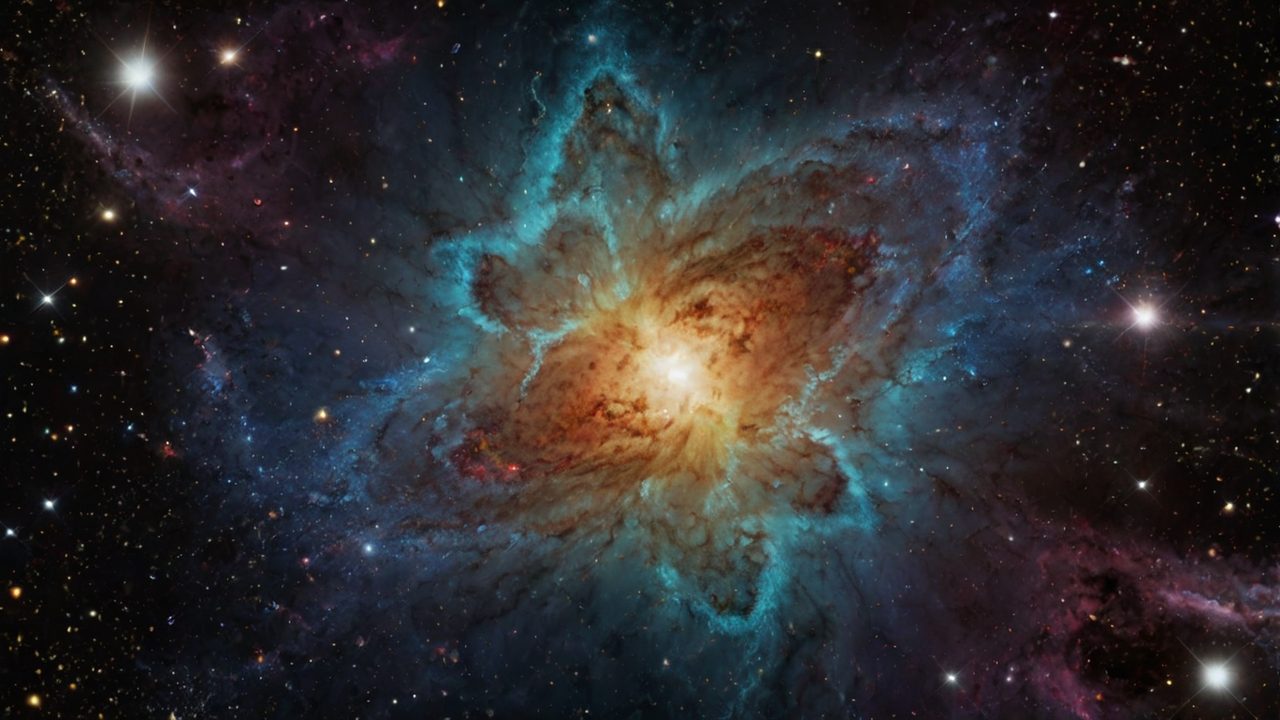
The Big Bang theory explains much — but not everything. About 27 percent of the universe is made of dark matter, an invisible substance that doesn’t emit or absorb light. We only detect it through its gravitational influence on galaxies and clusters.
Dark matter and dark energy together dominate the cosmos, meaning most of the universe is invisible and unknown. What we see — stars, planets, gas, and dust — makes up less than five percent of existence.
Quantum Beginnings: When Physics Breaks Down
At the earliest moments, when the universe was smaller than an atom, gravity and quantum mechanics both played crucial roles. Unfortunately, these two pillars of physics don’t agree.
To truly understand the Big Bang theory, we need a theory of quantum gravity — one that unites Einstein’s relativity with quantum mechanics. String theory and loop quantum gravity are attempts, but neither is complete.
Until then, the exact nature of the universe’s beginning remains hidden behind the “quantum curtain” — a mystery that challenges even the greatest minds.
H3: Secrets of the Brain and Consciousness – Unlocking the Mind’s Hidden Power
Just as the mind is a frontier of inner exploration, the early universe is a frontier of cosmic exploration. Both consciousness and creation defy simple explanation, hinting at deeper layers of reality still undiscovered.
Could the Universe Be Infinite?
The Big Bang theory tells us the universe is expanding, but does it have an edge? Is it infinite, or does it curve back on itself like the surface of a sphere?
Current observations suggest the universe is nearly flat, extending without limit. But “infinite” is a concept as mysterious as “beginning.” If the universe has no edge, what does that say about its origin?
Some scientists propose that the universe could be part of a larger multiverse — countless other universes beyond our own, each with different laws of physics. The Big Bang theory might describe just one bubble in an endless cosmic sea.
The Fate of the Universe
If the universe began with a bang, how will it end? There are several possibilities:
-
The Big Freeze – Expansion continues forever. Galaxies drift apart, stars die, and the universe grows cold and dark.
-
The Big Crunch – Expansion reverses, pulling everything back into a final collapse.
-
The Big Rip – Dark energy accelerates expansion so much that galaxies, atoms, and even space-time itself tear apart.
The ultimate fate depends on dark energy — that mysterious force accelerating expansion. Its nature will decide whether the universe ends in fire, ice, or something stranger still.
The Big Bang and the Origin of Time
Time itself began with the Big Bang. There was no “before” in the classical sense. Just as a circle has no starting point, time may loop or emerge from deeper physical principles we don’t yet grasp.
The Big Bang theory thus forces us to rethink everything we know about reality: cause and effect, beginning and end, even existence itself. It is a theory that explains the universe — and reminds us how little we truly know.
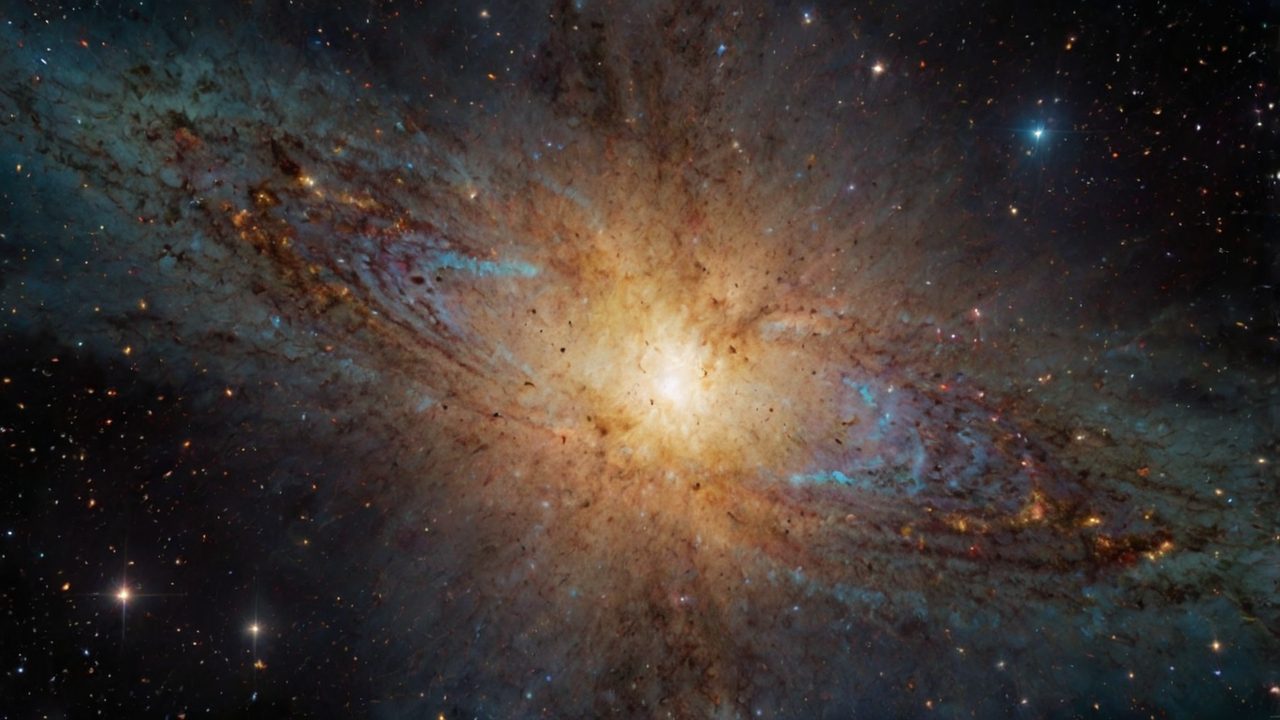
What We Still Don’t Understand
Despite decades of research, vast mysteries remain:
-
What triggered the Big Bang?
-
What is dark energy and dark matter?
-
Why does the universe have exactly the right balance for life to exist?
-
Is our universe one among many?
Each question pushes science to its limits. The Big Bang theory is a foundation, not a final answer. The cosmos still hides more than it reveals — and that is what makes it so endlessly fascinating.
Summary
The Big Bang theory explains how the universe began and evolved, but it also opens doors to deeper mysteries. From the creation of space and time to the birth of galaxies, from the hidden forces of dark matter to the paradoxes of physics, the story of the universe is both known and unknowable.
The more we learn, the more questions we find. The Big Bang is not just the origin of the universe — it is the origin of wonder itself.
FAQ
1. What is the Big Bang theory in simple terms?
It’s the idea that the universe began as an extremely dense, hot point that expanded and cooled, forming everything we see today.
2. How old is the universe?
Approximately 13.8 billion years, according to measurements of cosmic expansion.
3. What caused the Big Bang?
We don’t know. Current physics cannot describe what triggered it or what came before.
4. Is the universe still expanding?
Yes, and faster than ever — likely due to dark energy.
5. What’s the biggest mystery about the Big Bang?
The nature of dark matter, dark energy, and what existed before the beginning remain the greatest enigmas.
Call to Action
If the Big Bang theory sparks your imagination, share this article and explore more mysteries of science and space. The universe is full of secrets waiting to be revealed — and the next discovery might change everything. 🌌