Latest discoveries in space: Unveiling cosmic secrets with science and wonder
Introduction Welcome to an exciting journey through the latest discoveries in space, also known as the newest breakthroughs in astronomy and cosmic exploration. If you’re curious, amazed by the universe, or just love learning about interstellar wonders, you’re in the right place. This article focuses on Latest discoveries in space, sprinkling in synonyms like recent space findings, groundbreaking cosmic discoveries, and new space revelations. You’ll find interesting space details and deep exploration—not just surface-level! We’ll cover fascinating, up-to-date space science for readers aged 18 to 99, in a tone that’s professional, friendly, expert, and fun.
A cosmic labyrinth of new discoveries
The universe has been revealing its secrets through missions, telescopes, and experiments. Here are some of the latest discoveries in space that have reshaped our understanding:
1. Exoplanets in the habitable zone
Astronomers continue to discover Earth-like exoplanets orbiting in their star’s habitable zone. Notable recent finds include:
TOI-700 d: A rocky planet slightly larger than Earth, orbiting a red dwarf about 100 light-years away.
Kepler-1649 c: Comparable in size and temperature to Earth.
These latest discoveries in space fuel our hopes of finding a world where life could exist.
2. Water on distant moons and planets
New evidence points to water in surprising places:
Saturn’s moon Enceladus and Jupiter’s moon Europa are confirmed to have subsurface oceans. Geysers on Enceladus spew water-ice into space, hinting at hydrothermal activity.
Mars continues to surprise: researchers have detected signs that briny liquid water may flow seasonally on its slopes.
These findings challenge what we know about habitability.
3. Gravitational waves and cosmic echoes
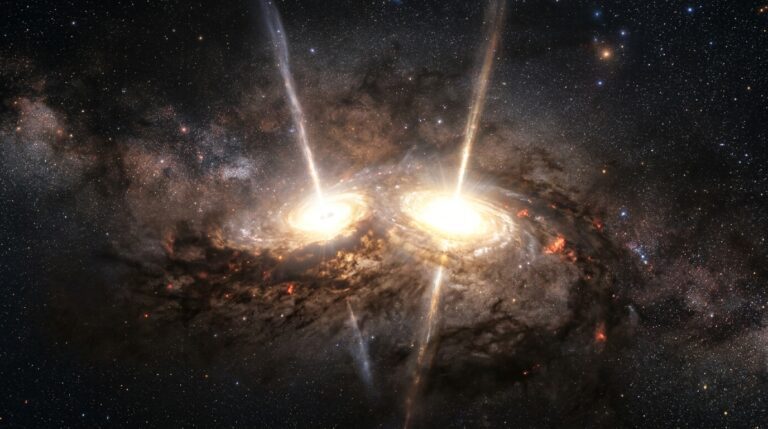
The detection of gravitational waves from neutron star collisions and black hole mergers continues to deepen our cosmic understanding. Recently, more sensitive detectors have captured fainter signals, bringing us closer to mapping the universe’s invisible rumblings.
4. Dark matter and dark energy insights
While dark matter and dark energy remain largely mysterious, recent observations offer tantalizing clues. We now have better measurements of how these unseen forces shape galaxy clusters. Learn more in the internal link about “dark matter and dark energy current understanding and cosmological implications”.
5. Asteroid composition and planetary defense
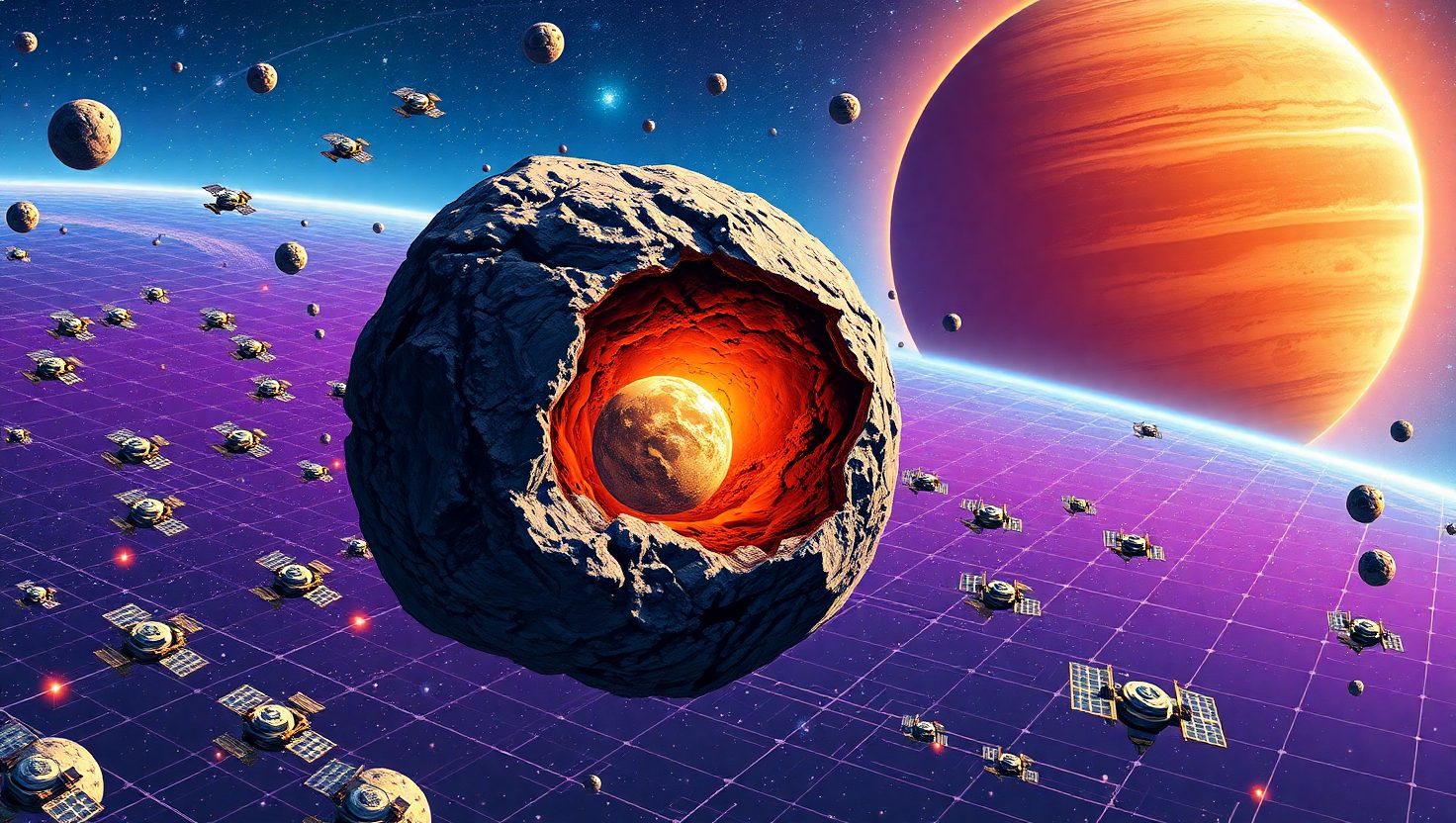
Missions like OSIRIS-REx (to asteroid Bennu) and Hayabusa2 (to asteroid Ryugu) returned samples to Earth. These reveal simple organic compounds, offering clues to how life-building blocks spread in the solar system. This also supports efforts in planetary defense.
Why these findings matter
Each of these latest discoveries in space is significant. Together, they:
Expand our knowledge of planet formation.
Offer new targets in the search for extraterrestrial life.
Help us understand the large-scale structure of the universe.
Inform strategies to protect Earth from cosmic threats.
Deep dive: Recent highlights
Exoplanets: Searching for Earth’s twin
Astronomers use telescopes like TESS (Transiting Exoplanet Survey Satellite) and James Webb Space Telescope (JWST) to find and characterize exoplanets. These tools help measure atmospheric compositions, climate patterns, and surface conditions. For example, JWST recently detected water vapor in the atmosphere of a super-Earth, a truly interesting space finding.
Water worlds: Moons and Mars
The discovery of water plumes on Enceladus energized the science community. Cassini spacecraft data revealed that Enceladus ejects a plume containing water vapor, salt, and organic molecules. Europa Clipper (planned) aims to survey Europa’s subsurface ocean. On Mars, researchers use spectrometers to detect hydrated minerals that vary with seasons—clues to briny flows.
Gravitational wave astronomy
The network of detectors (LIGO, Virgo, KAGRA) captures spacetime ripples from violent cosmic events. One of the latest discoveries in space includes gravitational echoes from a rare neutron-star–black-hole merger.
Dark matter & energy
Improved galaxy surveys and cosmic microwave background (CMB) data tighten constraints on dark matter’s distribution. Dark energy, responsible for cosmic expansion, is mapped more precisely via supernova studies and baryon acoustic oscillations. Fascinating details tie into the internal resource about dark matter and dark energy insights.
Solar system treasures
OSIRIS-REx revealed carbonaceous material on Bennu, including hydrated minerals and organics. Hayabusa2 confirmed water-related grains on Ryugu. These space insights hint at organic chemistry crucial to life.
To enrich your understanding, check these related articles:
Q1: What are the most exciting recent space discoveries? The most thrilling finds include Earth-size exoplanets in habitable zones, subsurface water on icy moons, and detections of gravitational waves from cosmic collisions.
Q2: Can life exist on exoplanets like TOI-700 d or Kepler-1649 c? These exoplanets are within their star’s habitable zone, making them potential candidates. However, we still need to confirm atmosphere and surface conditions to truly assess habitability.
Q3: Why are gravitational waves important? Gravitational waves offer a new way to “see” the universe. They reveal events like neutron star mergers, which produce heavy elements and test general relativity in extreme conditions.
Q4: What have asteroid missions taught us? Missions like OSIRIS-REx and Hayabusa2 brought back samples with organic compounds and water-bearing minerals. They help us understand the origins of life and prepare for planetary defense.
Q5: What is the difference between dark matter and dark energy? Dark matter exerts gravitational pull on visible matter. Dark energy drives the universe’s accelerated expansion. Both remain mysterious but are central to our cosmos’s fate.
Key takeaways: quick summary
Latest discoveries in space include new exoplanets, water worlds, gravitational wave signals, and solar system samples.
These findings enhance our knowledge of life’s origins, planet formation, and the universe’s evolution.
Interdisciplinary links, like AI in astronomy, human biology, and cosmology, enrich the story.
Stay curious and explore deeper through the internal links provided.
Thank you for joining this cosmic adventure! If you found this article on the latest discoveries in space enlightening:
Share it with fellow space lovers!
Comment below your favorite space discovery or what you hope astronomers uncover next.
Subscribe to get future articles on space science and beyond!
Happy exploring, and may the universe continue to amaze you!

 Befrey