Befrey
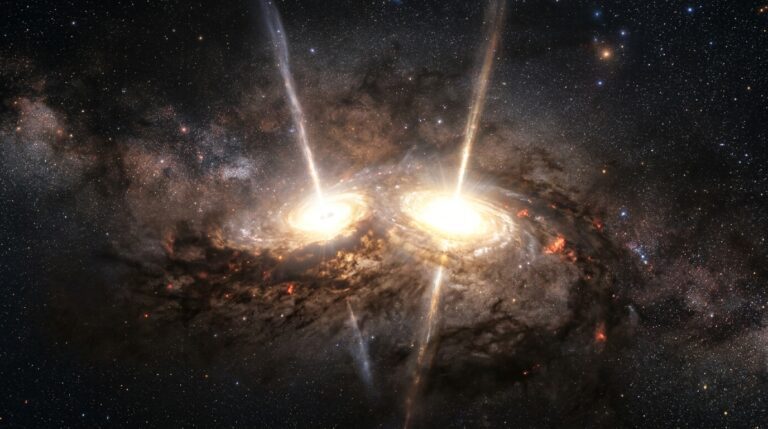
The nebula and accretion of Earth is one of the most fascinating chapters in the history of the universe. The Earth did not appear suddenly in its present form. Instead, it was born from cosmic dust, gas, and a series of violent processes that gradually shaped it into the habitable world we live on today. This transformation began more than 4.5 billion years ago inside a vast nebula—a swirling cloud of gas and dust left behind after the death of earlier stars.
In this article, we will explore the nebular hypothesis, the accretion process that led to Earth’s formation, the role of gravity in shaping the early solar system, and how collisions, chemistry, and cosmic energy transformed a cloud of dust into a living planet. Along the way, we will dive deep into every stage of the process to ensure you fully understand how the Earth evolved from nothing more than stardust.
This guide is written with SEO optimization in mind, using important keywords such as nebula, Earth accretion, planetary formation, protoplanetary disk, solar system origin, and planetary evolution.
The Nebular Hypothesis: Birth of the Solar System
The nebular hypothesis is the most widely accepted scientific explanation for how the solar system formed. According to this model, the Sun and planets developed from a giant molecular cloud of hydrogen, helium, and trace elements.
When a nearby supernova explosion disturbed this cloud, regions of higher density began to collapse under their own gravity. Over time, the gas and dust contracted into a rotating disk known as a protoplanetary disk. At its center, the Sun ignited through nuclear fusion, while the leftover material gradually began to clump together, forming planets, moons, and asteroids.
Key Elements of the Nebular Hypothesis
-
A rotating disk of gas and dust.
-
Central concentration of mass forming the Sun.
-
Accretion of solid materials into planetesimals.
-
Growth of planetesimals into protoplanets.
-
Differentiation of planets due to heat and gravity.
Accretion: From Dust to Planet
The word accretion means the gradual growth of objects through collision and accumulation. In the early solar system, tiny dust grains clumped together by electrostatic forces. Over millions of years, these small grains grew into kilometer-sized planetesimals.
As they collided, gravitational attraction took over, pulling more matter together. This runaway process allowed some planetesimals to grow into protoplanets—the building blocks of planets like Earth.
Stages of Earth’s Accretion
-
Dust grain aggregation – Microscopic particles sticking together.
-
Planetesimal formation – Kilometer-scale rocky bodies.
-
Runaway growth – Larger planetesimals attracting smaller ones.
-
Protoplanet formation – Earth-sized objects beginning to dominate their orbit.
-
Giant impacts – Collisions shaping Earth’s structure and evolution.
The Role of Collisions in Shaping Earth
The early solar system was a violent place. Protoplanets and planetesimals frequently collided at high speeds. These collisions released enormous amounts of energy, melting rock and creating magma oceans. One of the most significant impacts was the giant impact hypothesis, which suggests that Earth collided with a Mars-sized body called Theia.
This catastrophic event not only reshaped Earth but also led to the formation of the Moon. Without this event, Earth might not have developed its stable tilt, seasons, and tides—all crucial for life.
Differentiation: Earth’s Internal Structure
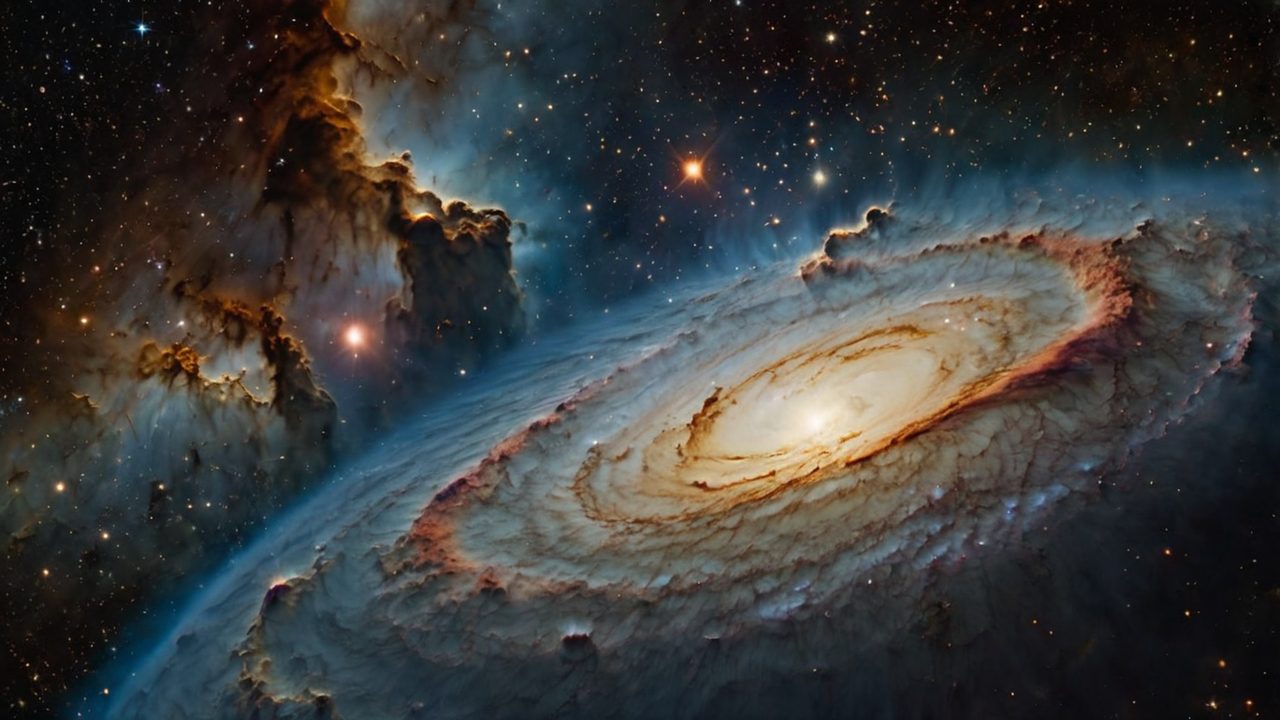
As Earth continued to grow, heat from collisions, radioactive decay, and gravitational compression caused the planet to partially melt. This allowed heavy elements such as iron and nickel to sink to the center, forming the core, while lighter materials rose to create the mantle and crust.
This process, called planetary differentiation, was essential for Earth’s long-term habitability. The metallic core generated Earth’s magnetic field, shielding the surface from harmful solar radiation. Meanwhile, the crust provided a solid foundation for continents, oceans, and eventually, life.
The Atmosphere and Oceans
Once Earth had stabilized, volcanic activity released gases such as carbon dioxide, nitrogen, and water vapor, creating a primordial atmosphere. Comets and asteroids rich in water ice may have contributed additional water, eventually forming the oceans.
These early oceans played a critical role in moderating Earth’s temperature and becoming the cradle of life.
Life from Stardust
The story of Earth’s accretion and nebula origins is more than geology—it is biology as well. Every atom in our bodies, from carbon to oxygen to iron, was forged inside ancient stars. When those stars exploded, their material seeded the nebula that gave birth to our planet.
Thus, the nebula and accretion of Earth is directly tied to the origin of life itself. We are literally made of stardust.
Educational Value: Why This Story Matters
Understanding how Earth formed helps us answer bigger questions:
-
How common are Earth-like planets?
-
Could life exist elsewhere in the universe?
-
How stable is our planet in the long term?
Astronomy and planetary science not only explain our origins but also guide future exploration. Studying exoplanets around distant stars gives us a chance to compare Earth’s story with other worlds.
Conclusion
The nebula and accretion of Earth is a breathtaking cosmic story. From a cloud of gas and dust to a living world full of oceans, continents, and life, Earth’s journey was shaped by physics, chemistry, and chance. Understanding this process not only connects us to the universe but also reveals our unique place within it.
FAQ
What is the nebular hypothesis?
It is the theory that the solar system formed from a rotating cloud of gas and dust about 4.6 billion years ago.
What does accretion mean in planetary science?
Accretion is the process by which small particles and planetesimals gradually come together through collisions and gravity to form larger bodies, eventually creating planets.
How was the Moon formed?
The leading theory is that a Mars-sized body collided with Earth, ejecting material that eventually coalesced into the Moon.
Why is Earth’s magnetic field important?
It protects life by shielding the surface from harmful solar radiation and cosmic rays.
Could Earth have formed without a nebula?
No. The nebula provided the raw materials necessary for the Sun and planets to form.
Curious about the mysteries of our universe? Keep exploring my blog for more deep-dive articles on astronomy, planetary science, and the origins of life. Don’t forget to share this article with friends who love science!