Befrey
What period was the Paleozoic? Here’s the twist most people miss: the Paleozoic wasn’t actually a single period at all. It was a massive Era, spanning roughly 541 million years ago to about 252 million years ago, making it one of the longest and most transformative chapters in the entire history of life on Earth. This Era, often nicknamed the “Age of Ancient Life,” sits between the mysterious Precambrian world and the dinosaur-dominated Mesozoic Era. Understanding the Paleozoic timeframe means understanding how life crawled, swam, and eventually walked its way from simple ocean creatures into complex land-dwelling animals. It’s a story filled with explosions of biodiversity, catastrophic extinctions, and evolutionary breakthroughs that still shape every living thing on the planet today.
What Exactly Is an Era Versus a Period in Geologic Time?
Before going any further, it’s worth clearing up the confusion baked into the question itself. Scientists organize Earth’s history into a strict hierarchy, and mixing up the terms leads to a lot of misunderstanding. At the very top sits the Eon, the largest possible unit of geologic time, lasting billions of years. Below that comes the Era, a massive chunk of time defined by major shifts in life and geology, and this is exactly where the Paleozoic fits. Below the Era sits the Period, a smaller subdivision, and the Paleozoic Era actually contains six separate periods stacked inside it like chapters in a very long book. So technically, asking “what period was the Paleozoic” is a bit like asking “what chapter was this entire book,” when the book itself contains multiple chapters. This distinction isn’t just pedantic nitpicking; it fundamentally changes how scientists study and date fossils, rock layers, and evolutionary milestones across hundreds of millions of years.
The Paleozoic Era Timeline: Mapping 300 Million Years of Ancient Life
The Paleozoic Era timeline stretches an almost unimaginable distance, covering roughly 289 million years of continuous change. It begins around 541 million years ago, right after the strange, soft-bodied creatures of the Ediacaran Period gave way to something entirely new. It ends around 251.9 million years ago, right before the rise of the dinosaurs during the Mesozoic Era. To put that span into perspective, modern humans have existed for only a few hundred thousand years, meaning the Paleozoic lasted roughly a thousand times longer than our entire species has been alive. During this enormous stretch of time, Earth’s continents were unrecognizable compared to today, drifting, colliding, and eventually fusing into the massive supercontinent known as Pangaea. Sea levels rose and fell dramatically multiple times, flooding and draining vast areas of land that are now high and dry. This timeline isn’t just a list of dates; it represents the literal foundation upon which nearly every modern plant and animal group can trace its evolutionary roots.

The Six Periods of the Paleozoic Era Explained One by One
The six periods of the Paleozoic Era each represent a distinct evolutionary chapter, and understanding them individually makes the bigger picture click into place instantly. Scientists divide the Era into the Cambrian, Ordovician, Silurian, Devonian, Carboniferous, and Permian periods, moving chronologically from oldest to youngest. Each period is separated by clear geological boundaries, often marked by major extinction events or dramatic shifts in fossil evidence found in rock layers worldwide. These boundaries weren’t chosen randomly; they reflect genuine, measurable changes in Earth’s biological and geological record. Paleontologists use these divisions to communicate precisely which slice of ancient history they’re studying, since saying “Paleozoic” alone would be far too broad and vague for serious scientific work. Think of it like referring to “the 1900s” versus specifying “the 1960s”; both are technically correct, but one gives you dramatically more useful information. Breaking down each individual period reveals just how much biological change occurred within this single, sprawling Era.
The Early Paleozoic: Cambrian, Ordovician, and Silurian Periods
The early Paleozoic kicks off with the Cambrian Period, running from about 541 to 485 million years ago, famous for triggering an explosive burst of animal diversity unlike anything seen before it. Ocean floors that had previously hosted simple, soft-bodied creatures suddenly filled with hard-shelled organisms, early arthropods, and strange experimental body plans. Next comes the Ordovician Period, spanning roughly 485 to 444 million years ago, which saw marine life diversify even further into complex reef ecosystems and the first tentative land plants. This period ended abruptly with a massive extinction event, one of the largest in Earth’s history, likely triggered by intense glaciation and dramatic sea level changes. The Silurian Period followed, lasting from about 444 to 419 million years ago, marking a major turning point as jawed fish began dominating the oceans for the first time. Land plants also became firmly established during the Silurian, developing vascular tissue that allowed them to grow taller and spread across previously barren coastlines. Together, these three periods represent nearly half of the entire Paleozoic Era, laying the biological groundwork for everything that followed.
The Late Paleozoic: Devonian, Carboniferous, and Permian Periods
The late Paleozoic opens with the Devonian Period, often called the “Age of Fishes,” lasting from roughly 419 to 359 million years ago. This period witnessed one of evolution’s most dramatic milestones: the first vertebrates crawling out of water and onto land, eventually giving rise to all four-limbed animals alive today. The Carboniferous Period came next, spanning about 359 to 299 million years ago, named directly after the massive coal deposits formed from its enormous swampy forests. Oxygen levels during the Carboniferous reached historic highs, allowing insects and arthropods to grow to genuinely gigantic sizes compared to their modern relatives. Finally, the Permian Period closed out the Era, running from roughly 299 to 252 million years ago, featuring the rise of early reptiles and the formation of the supercontinent Pangaea. This final period ended with the single most devastating extinction event in the planet’s entire history, a catastrophe so severe it nearly reset life on Earth from scratch.

The Cambrian Explosion: When Life on Earth Suddenly Diversified
The Cambrian explosion deserves its own dedicated spotlight because it fundamentally changed the trajectory of life on this planet within an astonishingly short window of geologic time. In roughly 20 to 25 million years, which sounds long but is actually a blink of an eye on evolutionary timescales, the number of distinct animal body plans skyrocketed dramatically. Before this event, life consisted mostly of simple, soft-bodied organisms drifting passively through ancient seas without much structural complexity. Suddenly, oceans filled with hard-shelled creatures, complex eyes, jointed limbs, and early predatory behaviors that had simply never existed before. Trilobites became one of the defining success stories of this era, thriving in oceans worldwide and leaving behind an incredibly rich fossil record scientists still study today. Researchers continue debating exactly what triggered this explosion, with theories ranging from rising oxygen levels to genetic breakthroughs enabling more complex body structures. Whatever the true cause, the Cambrian explosion essentially established the biological blueprint that every subsequent animal lineage, including humans, ultimately descended from.
Life Forms During the Paleozoic Era: From Ocean Giants to Land Pioneers
Life forms during the Paleozoic Era evolved through an almost dizzying sequence of transformations, moving from purely aquatic beginnings toward genuine land-based ecosystems. Early Paleozoic oceans teemed with trilobites, ancient mollusks, and strange armored fish that looked nothing like modern species swimming today. As the Era progressed, plants became the true pioneers of dry land, starting with simple mosses before eventually evolving tall, woody trees capable of forming genuine forests. Insects followed close behind, becoming some of the very first animals to successfully colonize terrestrial environments and diversify into countless specialized forms. Amphibians represented another massive milestone, bridging the gap between fully aquatic fish ancestors and animals capable of surviving extended periods on land. By the later stretches of the Paleozoic, early reptiles emerged, representing the first vertebrates capable of laying hard-shelled eggs away from water entirely. This progression from ocean-bound creatures to fully terrestrial reptiles essentially represents the entire evolutionary roadmap that made complex land-based life possible in the first place.
The Permian Mass Extinction: How the Paleozoic Era Came to an End
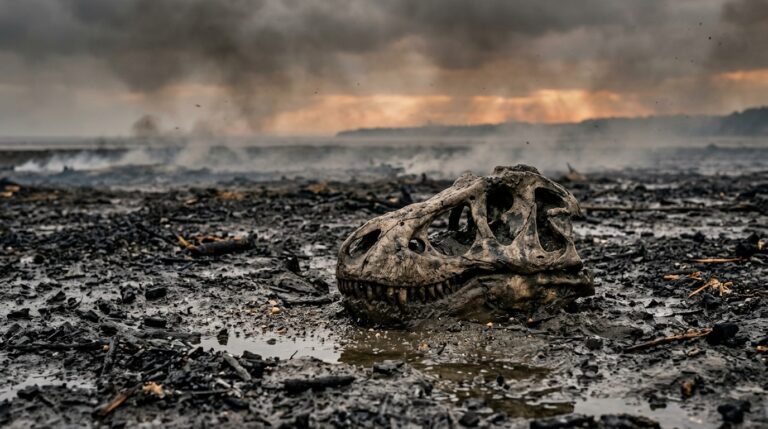
The Permian mass extinction stands as the dramatic, catastrophic finale that officially closed the book on the Paleozoic Era forever. Often nicknamed “The Great Dying” by scientists, this event wiped out an estimated majority of all marine species and a substantial portion of land-dwelling vertebrates within a relatively short geological timeframe. Massive volcanic eruptions in what is now Siberia are widely considered the primary trigger, releasing enormous quantities of greenhouse gases into the atmosphere over an extended period. This volcanic activity likely caused severe global warming, ocean acidification, and widespread oxygen depletion in marine environments worldwide. Coral reefs collapsed entirely, and it took millions of years for reef ecosystems to fully recover afterward, showing just how devastating the damage truly was. Terrestrial ecosystems suffered enormously as well, with entire groups of early reptiles and amphibians vanishing from the fossil record almost completely. This extinction event didn’t just end the Paleozoic Era; it fundamentally reset the evolutionary playing field, clearing space for entirely new groups of animals to rise during the following Mesozoic Era.

Paleozoic vs Mesozoic vs Cenozoic: Understanding the Difference
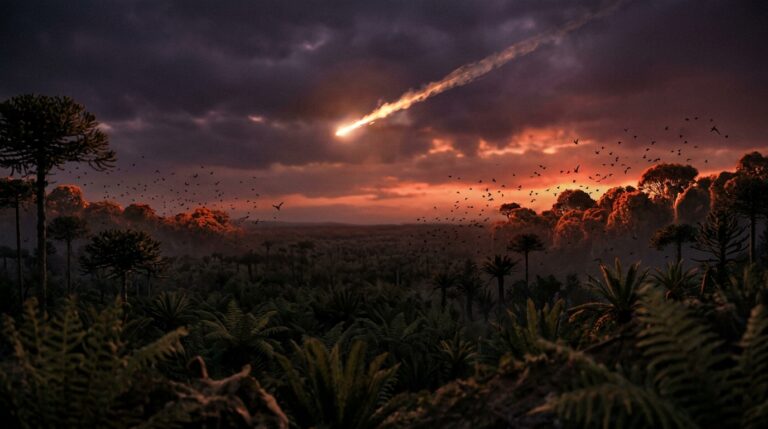
Comparing Paleozoic vs Mesozoic vs Cenozoic helps place this ancient Era within the much bigger picture of Earth’s complete biological history. The Paleozoic Era, as established, spans from about 541 to 252 million years ago, dominated by early marine life, the colonization of land, and the eventual rise of reptiles. The Mesozoic Era follows immediately afterward, running from roughly 252 to 66 million years ago, and is famously known as the “Age of Dinosaurs” due to their complete domination of terrestrial ecosystems. This middle Era ended with its own catastrophic extinction event, most likely triggered by a massive asteroid impact, wiping out non-avian dinosaurs entirely. Finally, the Cenozoic Era began around 66 million years ago and continues right up to the present day, earning the nickname “Age of Mammals” due to their explosive diversification following the dinosaurs’ disappearance. Humans themselves are an extremely recent product of this final Era, appearing only within the last few hundred thousand years of Cenozoic history. Seeing these three Eras side by side makes it clear just how much biological transformation Earth has experienced, with the Paleozoic serving as the essential foundation that made everything afterward possible.
Why the Paleozoic Era Still Matters to Scientists Today
Understanding what period, or more accurately what Era, the Paleozoic represents isn’t just a trivia question confined to textbooks. Modern paleontologists still actively study Paleozoic rock formations to understand ancient climate patterns, evolutionary pressures, and mass extinction dynamics relevant to today’s changing environment. Fossil fuel deposits, particularly coal, oil, and natural gas, largely trace their origins back to organic material compressed during specific Paleozoic periods, especially the Carboniferous. Studying the Permian mass extinction has also become increasingly relevant for climate scientists researching how rapid greenhouse gas increases can devastate entire global ecosystems. Every major animal group alive today, from insects to reptiles to eventually mammals, can trace fundamental evolutionary innovations directly back to breakthroughs achieved during this ancient Era. Even the very oxygen levels and atmospheric composition we depend on today were significantly shaped by biological processes first established during Paleozoic time. Far from being a distant, irrelevant chapter of ancient history, the Paleozoic Era remains a living, breathing reference point scientists continue turning to for answers about life’s past, present, and future.
The Shocking Truth: When Did the First Soft and Hard Shells in Animals Form?
Preshistory Archaic Formation of the First Forms of Life
Early Earth Atmosphere and Oceans: Origins of a Living Planet
Summary
The Paleozoic wasn’t a single period at all; it was a massive Era spanning roughly 541 to 252 million years ago, containing six distinct periods: Cambrian, Ordovician, Silurian, Devonian, Carboniferous, and Permian. This Era witnessed the explosive Cambrian diversification of animal life, the colonization of dry land by plants and animals, and the eventual rise of early reptiles across a newly formed supercontinent. It came to a dramatic close with the Permian mass extinction, the most devastating extinction event in Earth’s entire history, clearing the path for the dinosaur-dominated Mesozoic Era that followed. Comparing the Paleozoic against the later Mesozoic and Cenozoic Eras reveals just how foundational this ancient timeframe truly was for every living organism that exists today.
Frequently Asked Questions
Is the Paleozoic a period or an era?
The Paleozoic is a full Era, not a single period. It contains six separate periods within it: Cambrian, Ordovician, Silurian, Devonian, Carboniferous, and Permian.
How long did the Paleozoic Era actually last?
The Paleozoic Era lasted approximately 289 million years, beginning around 541 million years ago and ending roughly 252 million years ago.
What came immediately before and after the Paleozoic Era?
The Precambrian, specifically the Ediacaran Period, came directly before the Paleozoic Era. The Mesozoic Era, famous for dinosaurs, followed immediately afterward.
What ended the Paleozoic Era?
The Paleozoic Era ended with the Permian mass extinction, often called “The Great Dying,” the most severe extinction event ever recorded in Earth’s history.
Why is the Paleozoic Era considered so important for evolution?
The Paleozoic Era witnessed life’s transition from simple ocean organisms to complex land-dwelling animals, including the first vertebrates, insects, forests, and reptiles, forming the evolutionary foundation for nearly all modern life.
Call To Action
If untangling 289 million years of ancient Earth history sparked your curiosity, keep exploring. Share this article with anyone who’s ever confused an Era with a Period, and drop a comment below with which Paleozoic period fascinates you the most. Ancient history has never been more relevant to understanding our world today.