
The Catastrophic Misinterpretation Event: A Brief History of Domestic Blackouts
 Befrey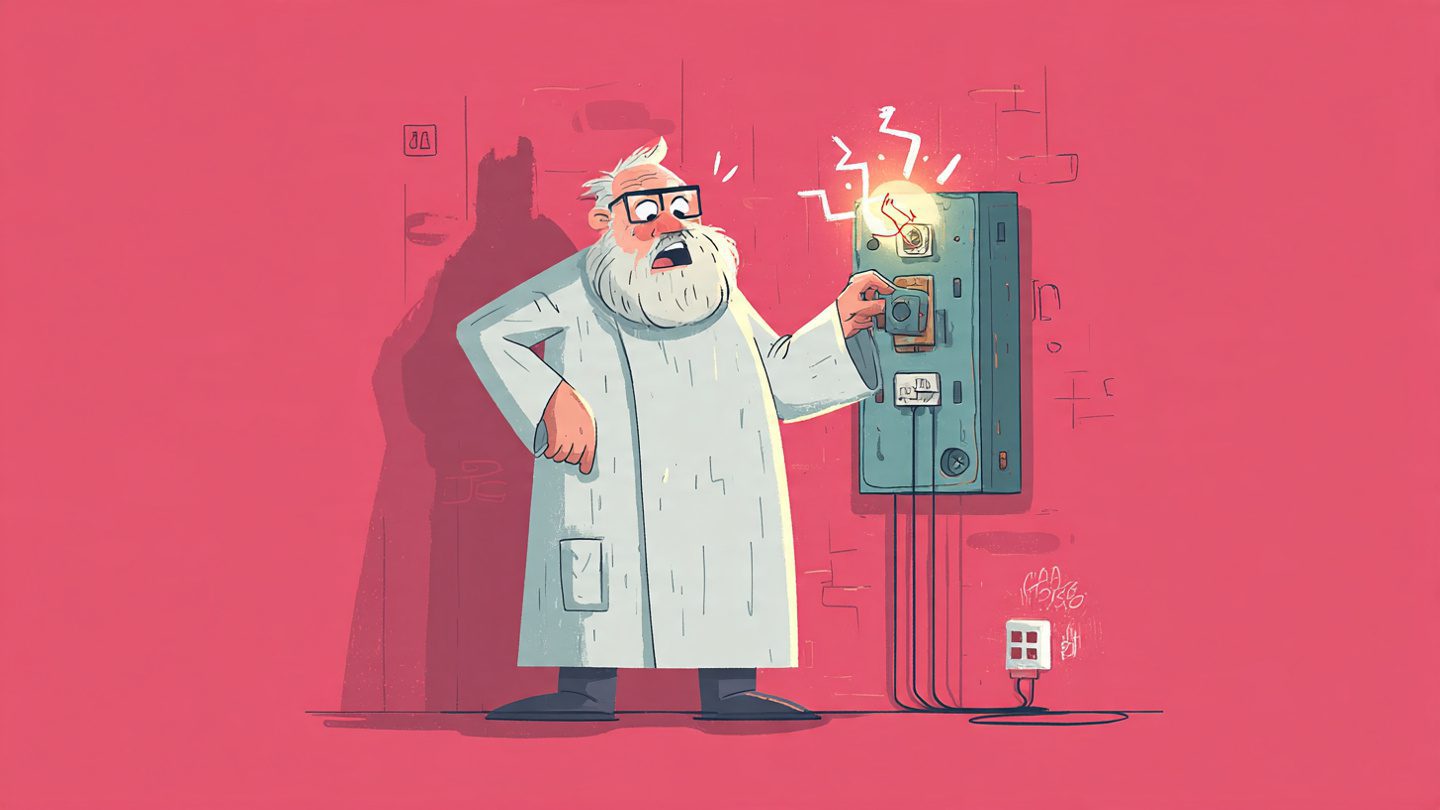
WARNING: This article is a work of pure fiction and satire. Read only if you possess a sense of humor and spare underwear.
The modern household exists in a fragile equilibrium where electricity hums quietly behind the walls like a polite ghost, while the internet floats invisibly in the air like a suspiciously confident ghost with a degree in misinformation. It was only a matter of time before these two entities were conflated by a well-meaning grandparent armed with a decisive finger and an unwavering belief that all problems can be solved by “switching it off.” Historians refer to this moment as the Catastrophic Misinterpretation Event, a recurring domestic phenomenon in which the phrase “turn off the internet” results in a full-scale power shutdown, plunging the home into a darkness so complete it briefly convinces the fridge it has died. Early documentation of this crisis appears in whispered family group chats, where messages like “Who turned off the whole house?” are followed by the digital equivalent of screaming. The grandparents, meanwhile, stand heroically beside the fuse box, convinced they have slain the invisible beast known as Wi-Fi, unaware that they have also assassinated the router, the television, and the emotionally fragile microwave clock. Anthropologists have noted that this behavior stems from an ancient survival instinct where turning off fire meant safety, except now the fire is the internet and the cave is a three-bedroom apartment with suspiciously good insulation. The resulting darkness is not merely physical but philosophical, as every family member is forced to confront the void, their own mortality, and the unsettling silence of a world without notifications. In this moment, time stretches, snacks become theoretical, and the grandparents nod with quiet satisfaction, believing they have restored order to a chaotic digital universe. The tragedy is not that they are wrong, but that they are confidently wrong, which is the most dangerous form of wrong. Thus begins the epic quest of teaching grandparents that “turning off the internet” does not require extinguishing civilization itself.
The Linguistic Abyss: Why Words Betray Us All
Language, that treacherous construct we use to exchange ideas and occasionally argue about the correct way to pronounce “router,” is largely to blame for this ongoing catastrophe. The phrase “turn off the internet” is, from a purely linguistic perspective, a disaster waiting to happen, as it implies that the internet is a single, tangible object with an off switch located conveniently near the coat rack. Grandparents, who grew up in an era where things had clear beginnings and endings, interpret this phrase with admirable literalism, leading them directly to the most authoritative-looking switch in the house, which is inevitably the main power breaker. This is not ignorance; this is linguistic precision taken to its logical, horrifying conclusion. When you say “turn off,” they hear “eliminate entirely,” and when you say “internet,” they hear “everything that makes the television shout and the phone glow like a haunted biscuit.” The result is a semantic landslide in which meaning collapses under the weight of its own ambiguity, leaving behind a darkened home and a deeply confused toaster. Scholars have attempted to resolve this by introducing more specific terminology, such as “disable Wi-Fi connectivity,” but this only results in grandparents suspecting they are being recruited into a secret government program. The true problem lies in the gap between generations, where one side sees the internet as a delicate network of signals and the other sees it as a mischievous entity that must occasionally be punished. This linguistic abyss cannot be bridged with mere words; it requires a complete reconfiguration of how reality is explained, preferably with diagrams, snacks, and a reassuring tone that suggests no one is about to unplug the sun. Until then, every request to “turn off the internet” remains a loaded phrase, capable of triggering a blackout that echoes through the family lineage.
The Psychology of the Decisive Switch
To understand why grandparents instinctively target the main power switch, one must delve into the psychology of the decisive switch, a concept so profound it has been studied by at least three very serious-looking people in lab coats. The decisive switch represents control, clarity, and the deeply satisfying feeling of ending a problem with a single, authoritative motion. In a world increasingly filled with invisible processes and abstract systems, the main breaker offers a rare moment of certainty, a physical lever that says, “I understand this, and I will dominate it.” Grandparents are not wrong to seek this sense of control; they have lived through decades of technological evolution that transformed simple machines into enigmatic boxes that beep ominously when questioned. When faced with the intangible nature of the internet, their minds naturally gravitate toward the most concrete solution available, which is to turn everything off and hope the problem gets the message. This approach has worked historically for many things, including radios, televisions, and occasionally arguments, so it is only logical to apply it to the internet as well. The flaw, of course, is that the internet does not reside in a single device but exists as a sprawling network that continues to function even as the house descends into darkness. This creates a paradox in which the grandparents feel successful while the rest of the household experiences a complete systems failure, leading to a breakdown in both technology and trust. The decisive switch, once a symbol of empowerment, becomes a weapon of unintended chaos, wielded with the best of intentions and the worst of outcomes. Understanding this psychology is the first step toward gently redirecting that decisive energy toward less catastrophic solutions, such as pressing the tiny button on the router that looks like it might explode if you stare at it too long.
The Router: A Misunderstood Oracle
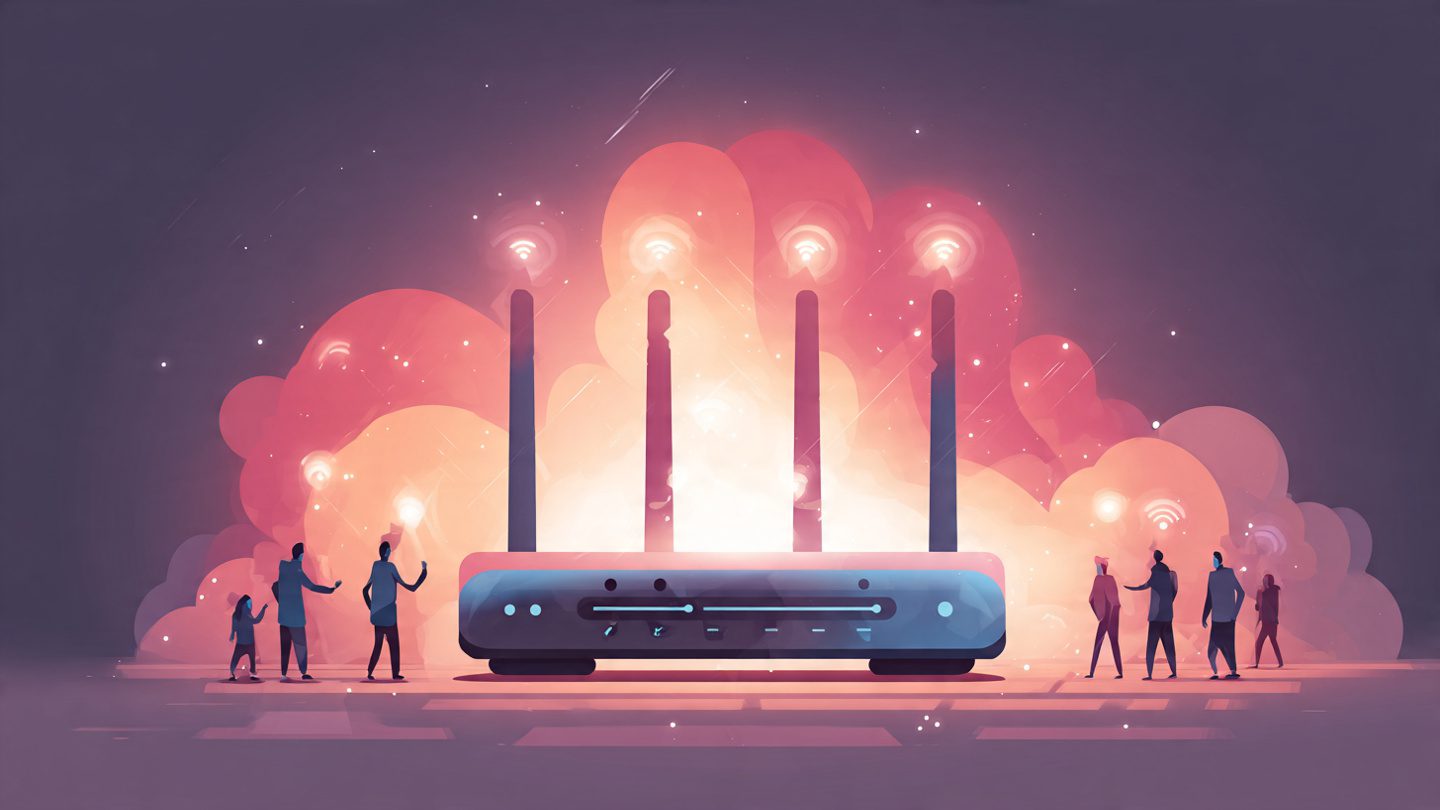
At the center of this domestic drama stands the router, a blinking, humming oracle that communicates exclusively through cryptic lights and an aura of quiet judgment. To the untrained eye, the router appears to be a decorative brick with trust issues, offering no obvious clues about its purpose or operation. Grandparents, encountering this device, often regard it with a mixture of suspicion and disappointment, as it lacks the reassuring heft and simplicity of older technologies. It does not click, it does not whir, and it certainly does not provide the immediate feedback of a satisfying “off” position, which makes it deeply untrustworthy. When told that this unassuming box is responsible for “the internet,” the natural response is disbelief, followed by a strategic retreat to the main power switch, which at least looks like it knows what it’s doing. The router, meanwhile, continues to blink in a pattern that may or may not be a coded message for help, further reinforcing the idea that it is either broken or possessed. Teaching grandparents to interact with the router requires a delicate balance of patience and theatrical explanation, as one must convince them that this small device holds immense power without triggering a desire to unplug it “just to see what happens.” The challenge is compounded by the router’s tendency to resolve issues through the ancient ritual of restarting, which involves turning it off and on again, a process that dangerously resembles the very behavior we are trying to avoid at a household level. This creates a conceptual loop in which the correct solution mirrors the incorrect one, leading to confusion, frustration, and at least one accidental blackout. The router, in its silent wisdom, remains the key to solving this problem, provided it can be introduced as a friend rather than a suspicious rectangle of lies.
The Educational Framework: Rebuilding Reality One Sentence at a Time
Teaching grandparents that “turning off the internet” does not mean turning off the power entirely requires the construction of an entirely new educational framework, one that redefines reality in terms that are both accessible and resistant to catastrophic interpretation. This process begins with the careful dismantling of existing assumptions, a task that must be approached with the precision of a bomb disposal expert who is also explaining things to someone who believes bombs are just loud clocks. The first step is to establish that the internet is not a singular object but a network, a concept that can be illustrated using metaphors involving roads, letters, or very organized pigeons. Once this foundation is in place, the next challenge is to identify the specific device responsible for providing internet access, which is where the router reenters the narrative as a misunderstood hero. Explaining the function of the router requires a combination of analogies, gestures, and possibly interpretive dance, as one must convey the idea that this small box is both important and delicate, but not in a way that invites aggressive interaction. The concept of “turning off” must then be redefined to mean “temporarily disabling a specific function,” a phrase that sounds sufficiently technical to discourage improvisation. Throughout this process, it is essential to maintain a tone of calm authority, as any hint of uncertainty may prompt the grandparents to revert to the decisive switch, which remains their most trusted ally. The educational framework must also account for the possibility of relapse, as old habits have a way of resurfacing at the worst possible moments, such as during a crucial online meeting or a particularly intense episode of a cooking show. Reinforcement, therefore, is key, with repeated explanations delivered in a variety of formats, including spoken word, handwritten notes, and possibly a small play performed in the living room. Only through this sustained effort can the new understanding take root, replacing the old belief that the internet can be turned off like a particularly stubborn lamp.
The Social Consequences of Total Blackout
The social consequences of a full household blackout extend far beyond the immediate inconvenience of losing internet access, as they trigger a cascade of events that ripple through the family dynamic like a particularly dramatic soap opera. In the absence of electricity, devices fall silent, screens go dark, and individuals are forced to interact with one another using only their voices, a development that many find deeply unsettling. Conversations emerge, awkward at first, then increasingly philosophical as people grapple with the sudden realization that they have nothing to distract them from their own thoughts. Grandparents, observing this shift, may interpret it as a success, believing they have restored a sense of togetherness that modern technology had eroded, unaware that this togetherness is fueled primarily by confusion and a shared desire to locate the breaker box. Meanwhile, younger family members experience a range of emotions, from mild annoyance to existential dread, as they confront a world without instant information or the comforting glow of a screen. The blackout becomes a social experiment, testing the limits of human adaptability and patience, while also highlighting the importance of clear communication about what exactly needs to be turned off. Relationships are strained, alliances are formed, and at least one person suggests moving to a cave where expectations are lower. When the power is finally restored, there is a collective sigh of relief, followed by a renewed commitment to preventing such an event from happening again, a commitment that is immediately tested the next time someone says, “Can you turn off the internet?” The social consequences, therefore, serve as both a warning and a motivator, emphasizing the need for a more nuanced understanding of how modern technology functions.
Advanced Techniques: Preventing the Next Incident
Preventing future incidents requires the implementation of advanced techniques that combine education, environmental design, and a touch of theatrical misdirection. One approach involves physically labeling the router with clear, reassuring instructions, transforming it from a mysterious object into a recognizable point of control. Another strategy focuses on the main power switch, which can be subtly disguised or accompanied by a sign that reads, “Not the internet,” thereby redirecting attention away from its catastrophic potential. Behavioral conditioning also plays a role, as repeated positive reinforcement can encourage grandparents to choose the correct device when addressing internet-related issues. This may involve celebrating small victories, such as successfully restarting the router without plunging the house into darkness, with applause, snacks, or a commemorative certificate. The goal is to create a new set of habits that override the instinct to reach for the decisive switch, replacing it with a more targeted and less destructive response. Technology itself can assist in this process, with smart devices and automated systems designed to handle connectivity issues without human intervention, thereby reducing the likelihood of error. However, these solutions must be introduced carefully, as they risk adding another layer of complexity to an already delicate situation. The ultimate objective is to create an environment in which the correct action is both obvious and satisfying, minimizing the temptation to resort to more drastic measures. Through these advanced techniques, the household can achieve a state of relative stability, where the internet can be managed without endangering the entire electrical system.

The Philosophy of Partial Shutdown
At the heart of this issue lies a deeper philosophical question about the nature of control, technology, and the human desire for simplicity in an increasingly complex world. The concept of a partial shutdown, in which only a specific function is disabled, challenges the traditional notion that problems should be addressed with decisive, all-encompassing actions. This shift requires a reevaluation of how we interact with technology, moving away from binary thinking and toward a more nuanced understanding of interconnected systems. For grandparents, this represents a significant cognitive adjustment, as it contradicts a lifetime of experience in which turning something off meant exactly that. Embracing the philosophy of partial shutdown involves accepting that not all problems require a complete reset, and that sometimes the solution lies in a smaller, more precise action. This realization can be both liberating and unsettling, as it introduces a level of ambiguity that demands patience and trust in unfamiliar processes. The internet, in this context, becomes a symbol of complexity, a reminder that the world is no longer composed of simple, isolated systems but of intricate networks that defy easy categorization. Teaching this philosophy is not merely about preventing blackouts; it is about fostering a deeper understanding of how modern life operates, one careful explanation at a time. In doing so, we bridge the gap between generations, creating a shared language that can accommodate both the simplicity of the past and the complexity of the present.
The Invisible Invitation Crisis
How to act discreetly when you accidentally fart in an empty aisle in the store.
The Existential Crisis of the Living Room Jungle
Summary
In conclusion, the challenge of how to teach grandparents that “turning off the internet” doesn’t mean turning off the power entirely is a multifaceted problem rooted in language, psychology, and the evolving nature of technology. By addressing these underlying factors through education, empathy, and a strategic redefinition of key concepts, it is possible to prevent the catastrophic blackouts that have plagued households for generations. The journey is not without its difficulties, but with patience and a willingness to adapt, a new understanding can emerge, one that preserves both the functionality of the home and the dignity of all involved.
FAQ
One terrified citizen writes in to ask whether it is possible that their grandparent has permanently turned off the internet by flipping the main power switch, to which we must respond with calm reassurance that the internet, like an overconfident cockroach, cannot be destroyed so easily and will return the moment electricity is restored, though the emotional damage may linger.
Another anxious reader wonders if labeling the router as “THE INTERNET” will solve the problem or create a new one, and the answer is that it will likely create a fascinating new problem in which the router is treated with reverence and possibly fed biscuits, which is not ideal but does reduce the risk of a blackout.
A third individual asks whether it is safer to simply never mention the internet again, communicating exclusively through vague gestures and hopeful expressions, and while this approach has merit, it may lead to confusion in other areas, such as ordering food or explaining why the television is suddenly philosophical.
A particularly distressed correspondent inquires whether their grandparent’s confidence in the main power switch can ever be fully redirected, and the honest answer is that it can be reduced but never entirely eliminated, much like a fondness for telling the same story at every family gathering.
Finally, one reader asks if it is acceptable to move out and live in the router, thereby gaining direct control over the internet, and while this is technically possible in a metaphorical sense, it is generally discouraged due to space constraints and the router’s tendency to become warm and judgmental.
Call to Action
If you or a loved one has experienced a Catastrophic Misinterpretation Event, do not panic, do not scream, and under no circumstances should you unplug the sun; instead, take a deep breath, locate the router, and begin the long, noble journey of explaining reality one sentence at a time while maintaining eye contact and a firm grip on the breaker box.





