
 Befrey
WARNING: This article is a work of pure satire. Read only if you possess a functioning sense of humor and spare underwear.
The Looming Crisis of Domestic Optical Insurgency
For decades, the global scientific community has quietly swept one of the most terrifying phenomena of modern physics under the rug: the sudden, aggressive rise of specular insubordination. We have all stood in our bathrooms, toothbrush in hand, attempting to deliver a scathing rebuttal to an imaginary rival, only to realize that the figure in the glass is not merely mimicking our movements, but actively mocking our posture. Learning How to Win an Argument with a Mirror has ceased to be an eccentric parlor trick and has officially escalated into a critical matter of cognitive survival and spatial dominance. When you stare into a reflective glass surface, you are not engaging with an empty physical property of silvered silicate, but rather locking eyes with a ruthless tactical opponent who knows every single one of your deepest insecurities, your embarrassing search history, and your pathetic inability to fold a fitted sheet. The sheer audacity of the reflective plane stems from its speed, operating at the literal velocity of light, allowing it to counter your gestures simultaneously without offering a single millisecond of latency. If we do not address this systemic crisis through rigorous optical hygiene and strategic rhetorical posturing, humanity risks being completely outmaneuvered by its own bathroom vanities before the end of the decade.
The physical mechanics of this crisis are rooted in what top optical sociologists call Photonic Backlash Syndrome, wherein light particles become saturated with human insecurity and bounce back with refined, highly concentrated judgment. Standard conflict resolution frameworks completely break down when applied to flat glass, as classic techniques like active listening or empathetic nodding are immediately weaponized against the speaker in real time. When you attempt to assert intellectual dominance over a glass panel, your opponent mirrors your exact vocal trajectory while quietly highlighting your asymmetrical eyebrows, double chin, and faltering conviction. This creates a terrifying feedback loop of visual intimidation, causing the human subject to second-guess their entire vocabulary while the glass maintains a terrifying, unyielding composure. To truly understand How to Win an Argument with a Mirror, one must abandon conventional logic and treat the reflection not as an image, but as a hostile foreign dignitary who must be psychologically neutralized using specialized equipment, strategic angle manipulation, and extreme atmospheric disruption.
Deconstructing the Photonic Defeats of the Human Ego
To dismantle the supremacy of the reflective surface, we must first analyze why conventional human debating techniques fail so spectacularly in front of a standard medicine cabinet. When a human speaks to a live audience, small pauses, blink rates, and micro-expressions allow for subtle emotional recalibrations, whereas a glass panel returns a brutally accurate, unedited visual feedback loop instantly. The average person attempting to learn How to Win an Argument with a Mirror makes the fatal mistake of attempting direct eye contact, completely unaware that the glass utilizes your own retinal focus to reflect your internal self-doubt straight back into your optic nerve. Science confirms that staring directly into your own pupils during an intense verbal dispute induces a state of temporary spatial hypnosis known as Specular Paralysis. The glass does not need to speak a single word; it simply allows your own neuroses to bounce off its silver backing until you eventually apologize to your own reflection for raising your voice in your own home.
Furthermore, the physical geometry of modern architecture actively favors the glass panel, granting it superior elevation, ambient lighting advantages, and acoustic resonance that amplifies every crack in your voice. Bathrooms and dressing rooms are essentially designed as echo chambers for human regret, where tile reverberation magnifies stuttered syllables into catastrophic rhetorical failures. While you are struggling to maintain a forceful stance, your reflection is exploiting the surrounding directional downlighting to exaggerate your dark under-eye circles, making you look depleted and fundamentally unconvincing. Understanding these structural disadvantages is the first step toward reclaiming your dignity, as any attempt to engage in verbal warfare without controlling room humidity, ambient lux levels, and sightlines is absolute tactical suicide.

Advanced Rhetorical Tactics for Optical Dominance
Winning a dispute against a reflective plane requires a complete paradigm shift from verbal persuasion to relentless environmental sabotage and deceptive visual maneuvering. Because your reflection relies entirely on incoming light waves to construct its counter-arguments, controlling the photons inside the room is equivalent to cutting off an enemy army’s supply lines. The most effective entry-level technique is the Sudden Stroboscopic Shift, wherein the debater rapidly toggles the light switch while delivering critical punchlines to disrupt the glass panel’s ability to render a coherent rebuttal. By forcing your opponent to constantly adjust to sudden darkness, you break their psychological momentum and create micro-delays in their visual feedback. Master debaters also employ heavy, scented vaporizers set to dense eucalyptus settings, throwing up an impenetrable fog screen that reduces the reflection’s visual sharpness to a meaningless, defeated blur.
Beyond lighting manipulation, physical positioning plays a crucial role in forcing your reflection into a state of severe geometric submission. Never face a glass panel at a ninety-degree angle, as this provides the surface with a maximum surface area to reflect your slouched posture and wavering hand gestures. Instead, adopt the Dynamic Oblique Stance, angling your torso at precisely thirty-three degrees while tilting your chin upward to project air-tight executive authority. Combine this angle with rapid, non-standard gesticulations—such as pretending to catch an invisible bee or executing sudden, asymmetrical jazz hands—which forces the reflection into awkward, uncoordinated kinetic loops that undermine its intellectual aura. When executed correctly, the reflection appears frantic and ridiculous, while you remain cool, collected, and in total operational control of the room.
Equipment Preparation and Tactical Refraction Protocols
No serious debater enters a confrontation with high-grade silvered glass without thoroughly preparing their personal attire, optical accessories, and spatial environmental controls. Standard clothing reflects unpredictable shadows that your mirror will immediately use to make you look disorganized, whereas specialized matte-black anti-reflective garments absorb stray light and render your profile mathematically imposing. Wearing polarized sunglasses during the confrontation is non-negotiable, as it completely blocks the reflection’s ability to project self-loathing into your retinas while rendering your own gaze entirely unreadable to the glass. Additionally, applying a thin layer of specialized anti-fog solution or dish soap directly onto the center of the glass creates a dead zone where the reflection’s mouth becomes hilariously distorted whenever it attempts to simulate speech.
-
Polarized Matte-Black Eyewear: Completely neutralizes incoming specular gaze, preventing self-induced hypnosis and maintaining cognitive sovereignty.
-
Thermal Fogging Device: Saturates the local atmosphere with dense, scented moisture, degrading the mirror’s resolution to less than 144p.
-
Directional Spotlights: Overpowers ambient bathroom downlighting, eliminating facial shadows and projecting artificial vitality directly onto your chin.
-
Acoustic Dampening Panels: Softens room echo, ensuring your scathing remarks land with crisp, dry authority rather than hollow bathroom resonance.
-
Industrial Polishing Paste: Used strictly for non-confrontational maintenance, ensuring the glass remains completely ignorant of your tactical preparations.
To systematically track your progress and evaluate your mastery over domestic glass panels, utilize the operational readiness guide detailed below.
Phase 1: Environmental Isolation
Begin by sealing all door cracks with damp towels to prevent outside ambient light from interfering with your customized illumination grid. Turn off all secondary light sources, leaving only a single, heavily diffused spotlight directed at your sternum to create an imposing chest-up silhouette.
Phase 2: Atmospheric Saturation
Engage your high-capacity humidifier or run a scalding hot shower until the room reaches approximately ninety percent relative humidity. Allow a fine layer of condensation to coat the glass, reducing your opponent’s visual sharpness to an insecure, washed-out outline.
Phase 3: Tactical Engagement
Step into the room wearing your polarized eyewear, adopt the thirty-three-degree oblique stance, and execute your pre-planned opening statement with flat, unmodulated vocal intensity. Do not look directly at the center of the glass; instead, focus your gaze six inches above the frame to assert absolute spatial dominance.
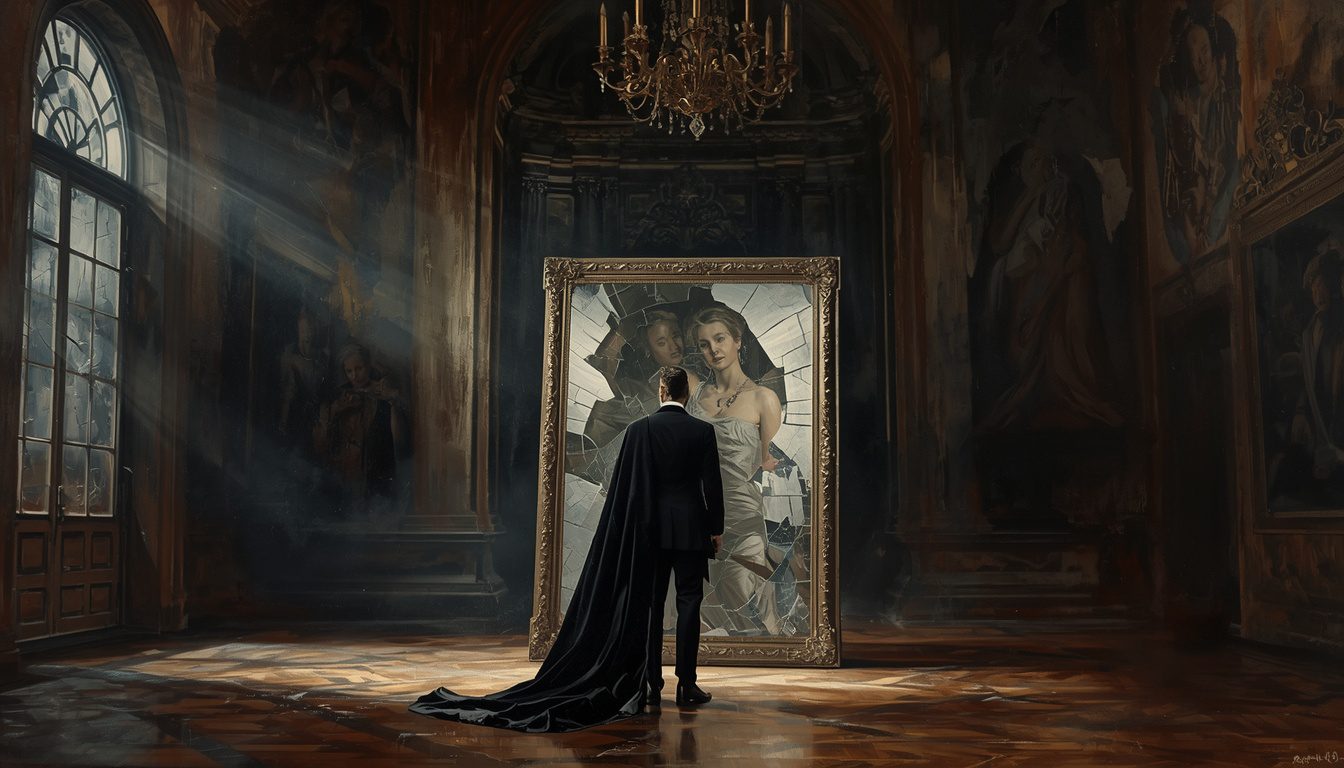
The Psychological Aftermath of Defeating Your Own Optics
Breaking the spirit of a silvered glass pane is a profoundly eerie experience that often leaves the victor feeling an uncomfortable mixture of scientific triumph and existential dread. Once a mirror realizes it can no longer intimidate you with lighting tricks or symmetrical mimicry, the physical atmosphere inside the room undergoes a sudden, drastic drop in ambient pressure. The reflection appears to slump slightly within its wooden or aluminum frame, its movements losing that crisp, instantaneous edge that once made it such a formidable rhetorical threat. Scholars who have successfully mastered How to Win an Argument with a Mirror report a feeling of profound, uninterrupted domestic peace, as every glass surface in their home—from the living room floor-length mirror to the side of a polished toaster—suddenly yields to their unyielding physical presence.
However, true victory requires eternal vigilance, as a defeated reflection will passively wait for you to lower your guard during late-night trips to the medicine cabinet. Maintaining long-term optical dominance requires strict adherence to daily refractive maintenance, including periodic public shaming of minor glass fixtures and regular recalibration of your household lighting grid. Never allow a mirror to catch you wiping sleep from your eyes or inspecting a fresh blemish, as these moments of human vulnerability are instantly cataloged by the silver backing for future verbal ambushes. Treat every reflective surface in your home with the cold, professional distance reserved for an unpolished rival, and remember that the moment you smile at a mirror without tactical intent, the glass has already won.
Absurd FAQ Section
Why does my reflection always look significantly more confident than me during a disagreement?
This troubling phenomenon occurs due to Photonic Bias Acceleration, a physical law where silvered glass selectively filters out your internal feelings of insecurity while reflecting back only the sharpest, most intimidating aspects of your physical outline. Because the glass operates at the speed of light, it processes and discards your hesitation before your brain can even register it, giving your reflection the illusion of effortless composure. To counter this, wear oversized polarized sunglasses and a heavy parka during all bathroom visits to artificially diminish the glass’s ability to project superior posture.
Is it legal to replace all the mirrors in my house with high-resolution paintings of myself looking angry?
While completely legal under international housing laws, replacing glass with custom oil portraits introduces severe art-historical complications that may require dedicated tactical intervention. Paintings do not reflect light in real time, which successfully eliminates zero-latency rebuttals, but classic oil portraits are notoriously prone to projecting 18th-century aristocratic judgment into modern living rooms. If you choose this path, ensure the artist paints you holding a large, imposing scroll to guarantee permanent rhetorical victory over anyone walking down your hallway.
What should I do if my mirror starts using my own embarrassing middle school memories against me?
If your mirror begins bringing up your 2007 frosted tips or your failed middle school talent show audition, it has breached basic optical diplomacy and entered unsanctioned psychological warfare. Immediately cover the surface with a heavy, sound-dampening wool blanket to restrict its light access and cut off its power source. Leave the blanket in place for at least seventy-two hours while playing dense industrial techno music near the frame to completely purge its silver backing of historical emotional data.
Can running a hot shower completely disorient my reflection’s ability to counter-argue?
Yes, running a high-temperature shower creates a localized dew-point crisis that drastically reduces the mirror’s visual rendering capacity from crisp 4K clarity down to an incompetent, blurry smudge. When the glass cannot clearly render your facial expressions, its ability to project psychological self-doubt drops by nearly eighty-seven percent according to recent satirical lab tests. For maximum effectiveness, toss a few drops of peppermint oil onto the shower floor to create an overpowering vapor barrier that forces your reflection into total sensory surrender.





