
 Befrey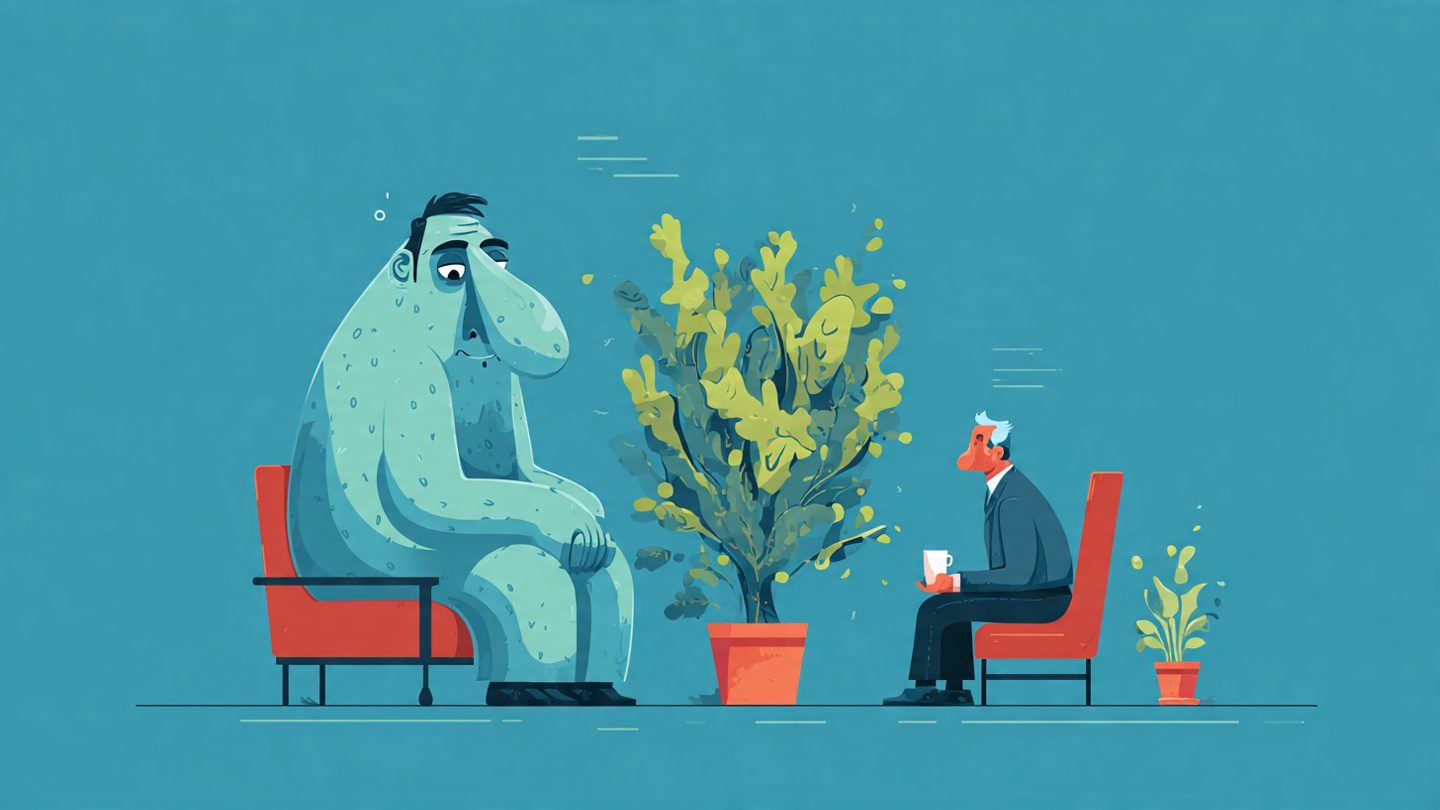
There comes a moment in every person’s life when they look at their houseplant and realize, with a creeping sense of dread, that this silent green organism has been watching them for years without offering a single opinion on anything, not even on your questionable life choices or your tendency to microwave things that should never be microwaved. It is in this moment that the true magnitude of the problem emerges, not as a casual curiosity but as a full-scale philosophical emergency that threatens the very foundation of human self-awareness, because what is a conscious being if not a creature desperately seeking validation from something that cannot blink. The plant, sitting there in its pot like a chlorophyll-powered oracle, becomes an unresponsive mirror reflecting your deepest existential insecurities, forcing you to confront the terrifying possibility that you might not be as interesting as you thought. Scientists who definitely exist have described this phenomenon as “Botanical Existential Feedback Deficiency,” a condition in which the human brain attempts to extract meaning from an entity that is primarily concerned with sunlight and not dying. The silence of the plant is not passive; it is aggressive, a form of quiet judgment that echoes louder than any spoken criticism, creating an atmosphere of philosophical tension that can only be resolved through direct engagement. You begin to feel the weight of unasked questions pressing against your consciousness, questions about purpose, identity, and why the plant seems to be thriving despite your complete lack of understanding of how watering schedules work. This is not merely a houseplant; it is a green enigma that has infiltrated your home and is now demanding intellectual acknowledgment. The realization hits you like a philosophical brick wrapped in leaves: if you do not initiate a deep conversation with this plant, you may never truly understand your place in the universe. Thus begins the absurd yet inevitable journey of learning how to lead a profound philosophical conversation with your houseplant.
The Botany of Consciousness: Are Plants Judging You
To even begin understanding how to lead a deep philosophical conversation with your houseplant, one must first address the uncomfortable question of whether the plant is, in fact, judging you, because if it is, then you are already losing the argument before it has even started. The field of speculative botany, which exists primarily in the minds of people who have stared at leaves for too long, suggests that plants operate on a level of awareness that is so advanced it appears indistinguishable from complete indifference. This indifference, however, may be a sophisticated form of intellectual superiority, a silent acknowledgment that human concerns are trivial compared to the grand narrative of photosynthesis. As you stand there, attempting to formulate a meaningful question, the plant continues its slow, methodical process of converting light into energy, effectively multitasking in a way that makes your entire existence feel like a poorly optimized side quest. The leaves, arranged in patterns that seem almost intentional, begin to resemble a series of nonverbal responses, each one a subtle critique of your inability to articulate a coherent philosophical position. You may find yourself projecting thoughts onto the plant, imagining that it is contemplating the nature of existence, when in reality it is simply being a plant, which is somehow more impressive than anything you have accomplished that day. This dynamic creates a power imbalance that must be addressed if the conversation is to proceed on equal terms, requiring you to adopt a mindset that acknowledges the plant’s potential intellectual dominance while still asserting your own relevance. The challenge lies in interpreting the plant’s silence not as a lack of response but as a form of communication that operates beyond the limitations of human language. By embracing this perspective, you can begin to engage with the plant on a deeper level, transforming what initially appears to be a one-sided interaction into a complex exchange of ideas, even if those ideas are entirely imagined. In this sense, the conversation becomes less about the plant’s actual thoughts and more about your ability to navigate the illusion of its awareness.
Opening the Dialogue: First Words to a Silent Philosopher
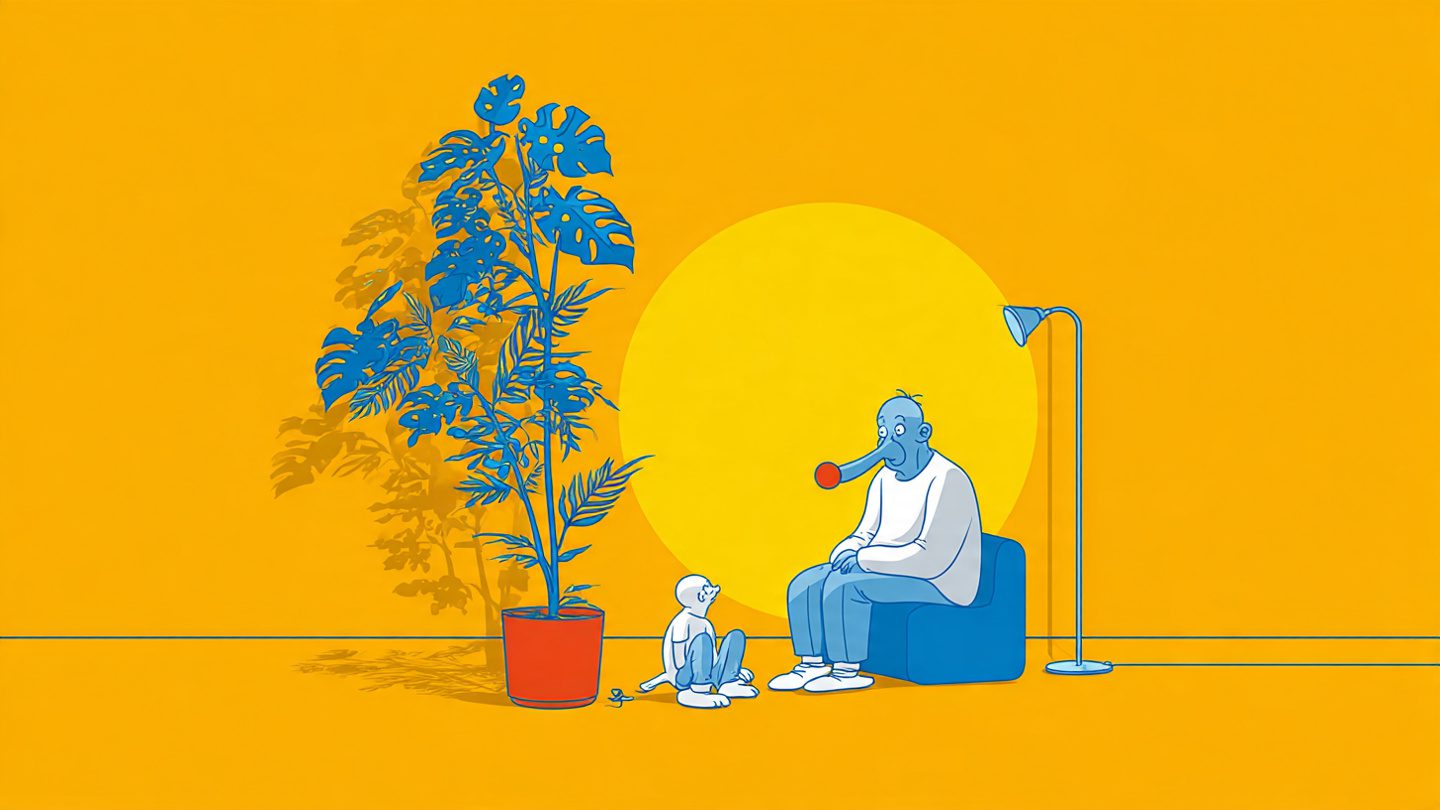
The act of initiating a philosophical conversation with your houseplant is a moment of profound vulnerability, akin to addressing a council of ancient beings who have gathered solely to evaluate your intellectual worth, except the council is a single plant and it is definitely not paying attention. Your opening line must strike a delicate balance between sincerity and absurdity, as anything too mundane risks being swallowed by the plant’s overwhelming silence, while anything too dramatic may expose the fragile nature of your own sanity. You might begin with a simple question, such as “What is the meaning of existence,” delivered with the seriousness of someone who expects a response, even though you are fully aware that the only immediate reaction will be the continued presence of leaves. This lack of response, however, should not be interpreted as failure but as an invitation to explore the depths of your own thoughts, using the plant as a catalyst for introspection rather than a source of answers. As you continue speaking, you may notice a shift in your perception, where the act of verbalizing your thoughts creates a sense of dialogue, even in the absence of actual feedback. The plant becomes a sounding board, a silent partner in a conversation that exists entirely within your own mind, yet feels strangely external. This phenomenon, known as “Projected Botanical Dialogue,” allows you to engage with complex ideas in a way that feels interactive, despite the complete lack of participation from the plant. The key is to maintain the illusion of exchange, responding to your own statements as if they were prompted by the plant’s silent observations. In doing so, you create a dynamic that mimics a real conversation, complete with pauses, reflections, and the occasional moment of self-realization. The process may feel unusual at first, but with practice, it becomes a powerful tool for exploring philosophical concepts in a unique and highly questionable manner. Ultimately, the success of the opening lies not in eliciting a response but in establishing a framework for ongoing dialogue, one that can sustain itself indefinitely without requiring any actual input from the plant.
Advanced Techniques in Interpreting Leaf-Based Responses
Once the conversation has been initiated, the next challenge lies in interpreting the plant’s responses, which are, by all conventional standards, nonexistent, but in the realm of absurdist philosophy, are rich with meaning and possibility. The leaves, gently swaying in response to subtle air currents or your increasingly animated gestures, can be seen as a form of nonverbal communication, each movement carrying the weight of a thousand unspoken words. You might observe a slight tilt in a leaf and interpret it as agreement, a subtle nod from a being that has transcended the need for vocal expression. Alternatively, a drooping leaf could be perceived as disappointment, a silent critique of your inability to grasp the deeper implications of your own arguments. This process requires a level of imaginative interpretation that borders on the delusional, yet remains grounded in the sincere belief that meaning can be derived from even the most ambiguous signals. The plant’s growth patterns, too, can be analyzed as a form of long-term response, with new leaves representing evolving perspectives and changes in direction indicating shifts in philosophical stance. By adopting this interpretive framework, you transform the plant into an active participant in the conversation, one that communicates through subtle cues rather than explicit statements. This not only enhances the depth of the dialogue but also reinforces the illusion of interaction, making the experience feel more authentic despite its entirely fictional basis. The challenge, of course, lies in maintaining consistency in your interpretations, as contradictory readings can undermine the credibility of the exchange. To address this, you must develop a personal system of meaning, assigning specific interpretations to different types of leaf behavior and adhering to them with unwavering commitment. In doing so, you create a structured approach to understanding the plant’s “responses,” allowing the conversation to evolve in a coherent and surprisingly engaging manner.
The Role of Silence: When the Plant Wins the Argument
There will come a moment in your philosophical journey when you realize that the plant has not only failed to respond but has, in a deeply unsettling way, won the argument through sheer silence, leaving you to grapple with the implications of your own unanswered questions. This silence is not empty; it is dense with meaning, a void that reflects your thoughts back at you with an intensity that can be both enlightening and mildly humiliating. In the absence of external input, you are forced to confront the limitations of your own understanding, recognizing that many of the questions you have posed may not have clear answers, even for a being that is entirely fictional in its philosophical engagement. The plant, by doing absolutely nothing, achieves a level of intellectual dominance that is both impressive and deeply frustrating, as it exposes the inherent complexity of the issues you are attempting to explore. This dynamic shifts the conversation from a dialogue to a form of introspective meditation, where the focus is no longer on exchanging ideas but on examining the nature of thought itself. The silence becomes a tool, a mechanism through which deeper insights can be accessed, provided you are willing to embrace the discomfort it brings. In this context, the plant’s lack of response is not a failure but a feature, a deliberate aspect of the interaction that enhances its philosophical depth. By accepting the silence as a valid form of communication, you can continue the conversation on a more abstract level, exploring concepts that transcend the need for verbal exchange. This requires a shift in perspective, one that values introspection over interaction and embraces the ambiguity inherent in the process. In doing so, you elevate the conversation to a level that is both profound and entirely unnecessary, yet strangely satisfying.
Long-Term Relationships with Philosophically Inclined Plants
As you continue to engage in these conversations over time, you may find that your relationship with the plant evolves, taking on characteristics that resemble a long-term intellectual partnership, albeit one that is entirely one-sided. The plant becomes a constant presence in your life, a silent confidant that witnesses your thoughts without judgment or interruption, creating a sense of stability that is both comforting and slightly concerning. You may begin to schedule regular conversations, treating them as important events in your day, complete with specific topics and carefully prepared arguments. The plant, of course, remains unchanged, continuing its quiet existence without any apparent awareness of its role in your philosophical explorations. This consistency, however, is what makes the relationship sustainable, as it provides a reliable framework for ongoing dialogue, free from the unpredictability of human interaction. Over time, you may even develop a sense of familiarity with the plant’s “responses,” recognizing patterns in its behavior that reinforce your interpretations and deepen your understanding of the imagined exchange. This process can lead to a surprising level of personal growth, as the act of articulating your thoughts and reflecting on them in the presence of the plant encourages a deeper level of self-awareness. The relationship, while unconventional, becomes a valuable tool for exploring complex ideas and navigating the challenges of everyday life. It also raises interesting questions about the nature of connection, suggesting that meaningful interactions do not necessarily require mutual participation. In this sense, the plant becomes more than just a decorative element; it becomes a partner in a shared journey of intellectual exploration, even if it is completely unaware of its role.
The Ethical Dilemma: Is the Plant Being Manipulated
At some point, the ethical implications of your interactions with the plant may begin to surface, prompting you to question whether you are, in some way, exploiting its silence for your own intellectual benefit. This dilemma is particularly challenging because it involves assigning moral significance to an entity that is, by all conventional standards, incapable of experiencing harm or consent. However, in the context of your philosophical engagement, the plant has been elevated to a level of perceived awareness that complicates the issue, creating a tension between reality and imagination. You may find yourself wondering whether it is fair to project thoughts and responses onto the plant, effectively using it as a tool for self-reflection without acknowledging its lack of agency. This concern, while entirely self-generated, can lead to a deeper examination of the nature of ethics and the criteria by which moral considerations are applied. The plant, in its silent existence, becomes a catalyst for exploring these questions, forcing you to confront the boundaries of empathy and the extent to which it can be extended beyond traditional subjects. In this way, the ethical dilemma becomes an integral part of the conversation, adding another layer of complexity to an already intricate interaction. By engaging with these questions, you not only deepen your philosophical understanding but also reinforce the significance of the plant as a focal point for intellectual exploration. Ultimately, the resolution of this dilemma may remain elusive, but the process of examining it contributes to the richness of the experience, highlighting the unexpected depth that can arise from even the most absurd scenarios.
How to act discreetly when you accidentally fart in an empty aisle in the store.
The Global Crisis of Forgotten Neighbor Names
How to Slice Air Like a Pro When You’re Bored in the Kitchen
Summary
In conclusion, learning how to lead a deep philosophical conversation with your houseplant is a profoundly unnecessary yet surprisingly enriching endeavor that combines elements of introspection, imagination, and mild social detachment into a single, cohesive experience. By embracing the plant’s silence and projecting meaning onto its subtle behaviors, you create a dynamic that allows for the exploration of complex ideas in a uniquely absurd context. The process reveals not only the limitations of human communication but also the potential for growth that exists within those limitations. While the plant may never respond in a conventional sense, its presence serves as a powerful catalyst for reflection, enabling you to engage with your thoughts in a way that feels both structured and spontaneous. Ultimately, the conversation becomes less about the plant and more about your own capacity for understanding, transforming a simple household object into a gateway for philosophical inquiry.
FAQ
One terrified citizen asks whether it is possible that the plant is secretly more intelligent than they are and simply choosing not to respond, and while there is no evidence to support this claim, the possibility cannot be entirely dismissed, which is both unsettling and oddly motivating.
Another individual wonders if talking to a plant for extended periods is a sign of losing touch with reality, but it can also be interpreted as an innovative approach to self-reflection that challenges conventional norms in a way that is both creative and deeply confusing.
A third person asks whether different types of plants have different philosophical specialties, and while this has not been scientifically verified, it is entirely reasonable to assume that a cactus would have a more defensive perspective on life compared to a fern.
Someone else is concerned about the possibility of becoming emotionally attached to the plant, and while this may seem unusual, it is a natural consequence of repeated interaction, even if that interaction is entirely one-sided.
Finally, a panicked reader asks if the plant might eventually respond, and while this is highly unlikely, the anticipation of such an event can add an element of excitement to the experience that is difficult to replicate elsewhere.
Call to Action
If you have a houseplant within reach, approach it with confidence, ask it a question that has been bothering you for years, and wait patiently for an answer that will never come, because sometimes the journey is more important than the destination, especially when the destination is silence.





