
 Befrey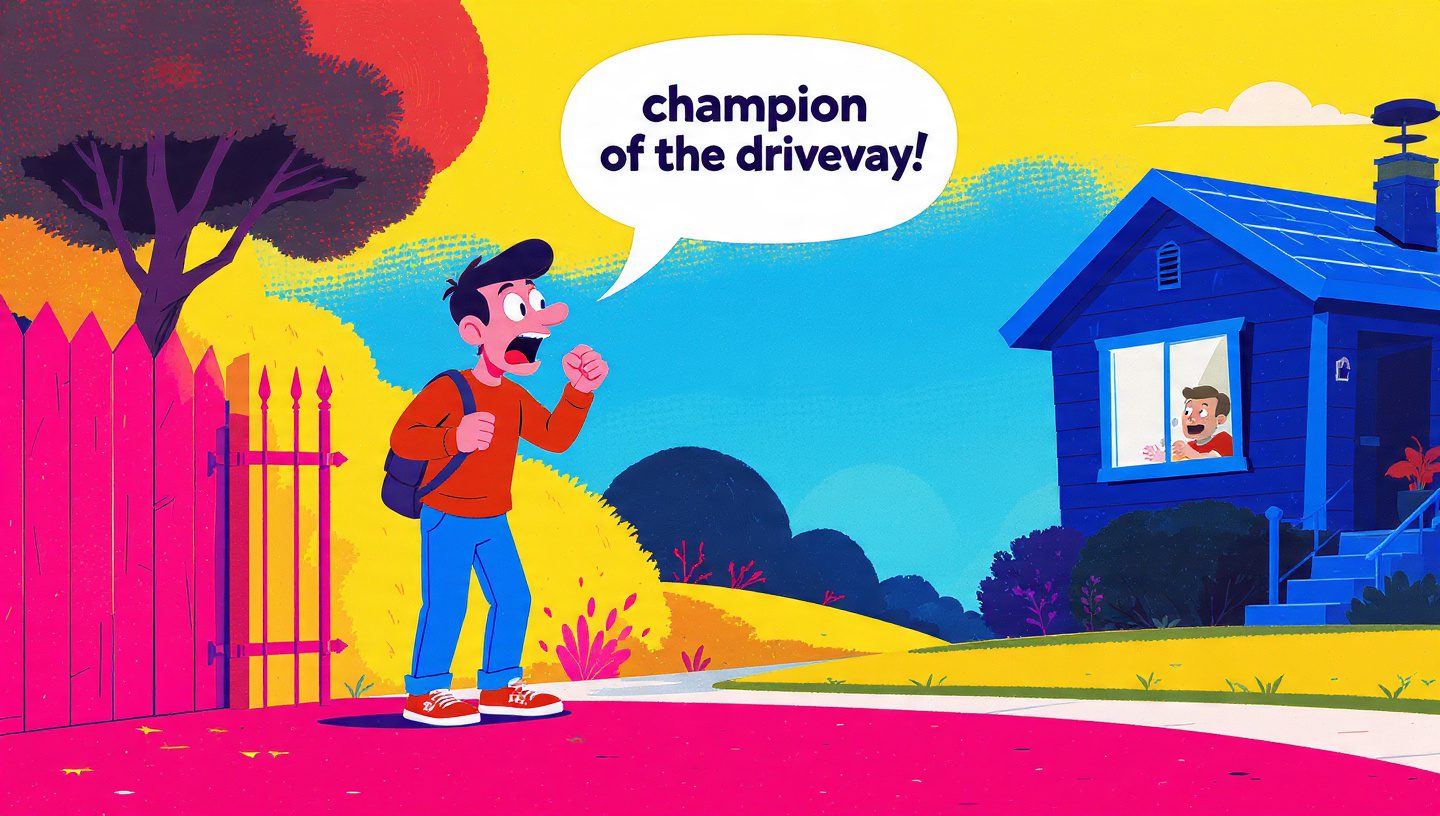
WARNING: This article is a work of pure fiction and satire. Read only if you possess a sense of humor and spare underwear.
There are many problems facing humanity today, but none carry the same quiet, suffocating dread as the realization that you have lived next to someone for five years and still do not know their name. Wars have been fought over less, empires have crumbled under lighter psychological burdens, and yet here you are, standing in your driveway, holding a bag of groceries, locking eyes with a human being whose identity has been erased from your memory like a corrupted hard drive. The situation escalates instantly into a high-stakes diplomatic encounter, where one wrong syllable could trigger irreversible social collapse, awkward nod loops, or worst of all, the dreaded “Hey… you.” Researchers in the entirely fabricated Institute of Social Panic have concluded that this phenomenon causes a spike in heart rate comparable to narrowly avoiding being hit by a bus, except the bus is wearing Crocs and asking about your weekend. The human brain, under pressure, begins generating names at random like a malfunctioning slot machine, none of which are correct and all of which sound increasingly offensive. You consider fleeing the scene, possibly relocating to another continent, but your neighbor has already raised their hand in greeting, and now the moment is irreversible. This is not merely a social inconvenience; it is a full-blown existential crisis wrapped in suburban politeness. The stakes are enormous, the risks are catastrophic, and your only weapon is humor—unhinged, absurd, reality-bending humor that may or may not save your dignity. Thus begins the journey into the chaotic art of greeting a neighbor whose name you forgot five years ago in a funny way.
The Psychology of Name Avoidance and Existential Dread
To understand how to greet a neighbor whose name you forgot five years ago in a funny way, one must first descend into the labyrinth of the human psyche, where memory, shame, and denial form a terrifying triad. The brain, when confronted with a forgotten name, does not simply admit defeat; it initiates a complex defense mechanism involving strategic avoidance, exaggerated enthusiasm, and the sudden development of a deep interest in inspecting your own shoes. Psychologists who definitely exist have identified this as “Nominal Amnesia Panic Syndrome,” a condition in which the victim oscillates between overcompensating friendliness and subtle attempts to extract the name through conversational espionage. You might find yourself saying things like “Hey buddy, my guy, my absolute legend,” stacking generic terms like a linguistic Jenga tower that threatens to collapse at any moment. Meanwhile, your internal monologue becomes a chaotic courtroom trial, with one part of your brain accusing you of social incompetence while another insists the neighbor’s name is probably Greg, even though you have no evidence. The fear is not just about being exposed; it is about the irreversible damage to your self-image as a competent adult who knows basic information about the humans living within a ten-meter radius. This fear manifests physically, causing awkward body language, unnatural laughter, and the sudden inability to remember how hands work. In this state, humor becomes not just a strategy but a survival mechanism, a way to deflect the incoming meteor of embarrassment. The goal is not to solve the problem but to transform it into something so absurd that the original issue becomes irrelevant. In essence, you are not greeting your neighbor; you are performing a high-risk social magic trick where the trick is pretending you are not panicking.
Historical Accounts of Name-Forgetting Catastrophes
Throughout history, there have been countless undocumented yet deeply traumatic incidents involving forgotten names, many of which have been deliberately erased from official records to protect civilization from collective shame. Ancient scrolls that were absolutely not invented for this article describe a Roman senator who avoided greeting his neighbor for twenty years, eventually building a second house to escape the situation entirely. During the medieval period, villagers reportedly communicated exclusively through vague nods and aggressive bread exchanges to avoid the risk of misnaming each other, leading to what historians call the Great Awkward Silence of 1347. In more recent times, suburban neighborhoods have become breeding grounds for these silent crises, where people engage in elaborate routines designed to minimize direct interaction, such as checking the mailbox exactly when the neighbor is not present or pretending to be on a very important phone call with nobody. The modern era has only intensified the problem, as social expectations demand friendliness while offering no practical solutions for memory failure, creating a paradox that scientists have described as “socially mandated panic.” There are whispered tales of individuals who attempted to guess the name and failed spectacularly, triggering years of passive-aggressive holiday greetings and suspiciously distant waves. These stories serve as cautionary tales, reminding us that the stakes are real, even if the problem itself is absurd. The lesson from history is clear: ignoring the issue only makes it worse, while confronting it without humor is a guaranteed disaster. Therefore, the only viable path forward is to embrace the absurdity fully, transforming the greeting into a performance so bizarre that it transcends the need for a name entirely. In doing so, you join a long tradition of humans who have faced this crisis head-on and survived, albeit with slightly damaged dignity.
Advanced Greeting Techniques: Weaponized Absurdity
When conventional methods fail, it is time to deploy advanced greeting techniques that operate on the principle of overwhelming absurdity, effectively short-circuiting the social expectations that make the situation dangerous in the first place. Imagine approaching your neighbor with the confidence of someone who definitely knows their name, only to greet them with a dramatic bow and declare, “Ah, the legend returns,” as if you are addressing a mythical figure rather than a person who once borrowed your lawn mower. This approach works by replacing the missing information with an exaggerated narrative, creating a new reality in which names are irrelevant and everything is slightly theatrical. Alternatively, you could adopt a persona, such as a time traveler who has “forgotten all names due to temporal turbulence,” thereby reframing the problem as a consequence of interdimensional travel rather than poor memory. The key is commitment; any hesitation will expose the underlying panic, so you must fully inhabit the absurdity like an actor who has lost the script but refuses to leave the stage. Some individuals have reported success with overly specific but incorrect greetings, such as “Good afternoon, champion of the driveway,” which, while nonsensical, carries enough confidence to avoid suspicion. The neighbor, caught off guard, is unlikely to question the greeting and may even respond in kind, creating a mutually confusing but socially acceptable interaction. This technique effectively shifts the burden of normalcy away from you, allowing the conversation to exist in a strange, undefined space where names are optional. In this realm, you are no longer a person who forgot a name; you are a visionary redefining the boundaries of human interaction. It is a risky strategy, but in the world of forgotten names, risk is inevitable, and absurdity is your greatest ally.
The Science of Humor as a Defensive Mechanism
From a pseudo-scientific perspective, humor serves as a powerful defensive mechanism that can neutralize the threat of social embarrassment by reframing it as intentional behavior. When you greet a neighbor in a funny way, you are essentially performing a cognitive sleight of hand, redirecting attention away from the missing name and toward the absurdity of the interaction. This process, known as “Comedic Deflection Theory,” suggests that the brain prioritizes humor over accuracy, allowing both parties to engage in a shared experience that feels intentional rather than awkward. In practical terms, this means that a well-timed joke can erase the need for a name entirely, replacing it with a moment of connection that transcends conventional social norms. The effectiveness of this approach depends on timing, delivery, and the willingness to embrace the ridiculous without reservation. If executed correctly, the neighbor will not only fail to notice the missing name but may also perceive you as charming, creative, and slightly unhinged in an endearing way. However, this strategy is not without risks, as poorly executed humor can amplify the awkwardness, transforming a minor issue into a full-blown social catastrophe. The key is to maintain a balance between absurdity and relatability, ensuring that the humor feels intentional rather than desperate. In this context, the greeting becomes a performance, a carefully crafted moment designed to distract, entertain, and ultimately conceal the underlying panic. It is a delicate art, requiring both courage and a complete disregard for conventional social rules. But for those who master it, the rewards are immense, including the ability to navigate social situations with confidence and the occasional reputation as the “funny neighbor.”
The Role of Confidence in Name-Free Interactions
Confidence is the invisible force that determines whether your attempt to greet a neighbor whose name you forgot five years ago in a funny way will succeed or fail spectacularly. Without confidence, even the most brilliant comedic strategy will crumble under the weight of self-doubt, revealing the underlying insecurity that you are trying to hide. With confidence, however, even the most absurd greeting can appear intentional, transforming potential embarrassment into a moment of shared amusement. This is because confidence signals control, suggesting that you are not reacting to a problem but actively shaping the interaction according to your own rules. In the context of forgotten names, confidence acts as a shield, protecting you from scrutiny and allowing you to navigate the situation with a sense of authority. It is not about believing that your approach is normal; it is about convincing others that normality is irrelevant. This mindset requires a fundamental shift in perspective, where the goal is not to remember the name but to render it unnecessary through sheer force of personality. Achieving this level of confidence may require practice, including rehearsing absurd greetings in front of a mirror or embracing minor social risks in low-stakes situations. Over time, this practice can build the resilience needed to handle more challenging encounters, including the dreaded neighbor greeting. Ultimately, confidence is not just a tool but a philosophy, a way of approaching social interactions with a sense of humor and a willingness to embrace the unexpected. In this philosophy, forgetting a name is not a failure but an opportunity to create something memorable, even if that something is slightly ridiculous.
Long-Term Survival Strategies for Ongoing Name Ignorance
While humor can provide a temporary solution, the long-term challenge of not knowing your neighbor’s name requires a more sustainable strategy, one that allows you to coexist peacefully without ever addressing the issue directly. This involves creating a social ecosystem in which names are rarely used, relying instead on context, body language, and carefully constructed conversations that avoid direct references. Over time, this approach can become second nature, allowing you to interact with your neighbor as if the name were never important in the first place. Some individuals have even reported forming genuine friendships under these conditions, proving that human connection does not necessarily require accurate labeling. However, this strategy also requires vigilance, as certain situations, such as introductions to third parties, can expose the underlying gap in knowledge. In these moments, humor once again becomes essential, providing a way to navigate the situation without revealing the truth. For example, you might say, “I refuse to use names; it keeps life mysterious,” framing your ignorance as a deliberate choice rather than an oversight. This approach, while unconventional, can be surprisingly effective, especially when combined with consistent behavior over time. Eventually, the absence of a name becomes part of the relationship, an unspoken understanding that both parties accept without question. In this way, the problem is not solved but transformed, becoming a unique aspect of your social dynamic rather than a source of anxiety. It is a strange solution, but in the world of forgotten names, strange solutions are often the most effective.
The Ethical Implications of Never Learning the Name
At some point, one must confront the ethical implications of continuing to interact with a neighbor without ever learning their name, raising questions about responsibility, honesty, and the nature of social relationships. Is it morally acceptable to maintain this illusion indefinitely, or does one have a duty to eventually address the issue and seek the truth? Philosophers who definitely exist have debated this question extensively, often reaching no clear conclusion but agreeing that the situation is deeply uncomfortable. On one hand, admitting the truth could lead to embarrassment and potential damage to the relationship, while on the other hand, continuing the charade requires a level of deception that may feel increasingly unsustainable. However, in the context of absurdist humor, the ethical dilemma becomes less about right and wrong and more about narrative consistency, as the ongoing avoidance of the name becomes part of a larger, self-contained story. In this story, you are not a person who forgot a name but a character navigating a bizarre social experiment, where the rules are flexible and the outcomes are unpredictable. This perspective allows you to approach the situation with a sense of curiosity rather than guilt, viewing each interaction as an opportunity to explore the boundaries of human behavior. Ultimately, the ethical question may never be fully resolved, but it is precisely this ambiguity that makes the situation so compelling. In a world where everything is expected to be clear and defined, the forgotten name represents a rare moment of uncertainty, a reminder that not all problems need to be solved in order to be meaningful.
How to Slice Air Like a Pro When You’re Bored in the Kitchen
How to Build a Tower of Coins on the Back of a Sleeping Cat
How to Lick Your Elbow Properly
Summary
In conclusion, learning how to greet a neighbor whose name you forgot five years ago in a funny way is less about recovering lost information and more about embracing the absurdity of the situation with confidence, creativity, and a complete disregard for conventional social norms. By leveraging humor, historical denial, and advanced techniques of conversational misdirection, one can transform a potentially catastrophic moment into an opportunity for connection and entertainment. The problem, while ridiculous, reveals deeper truths about human interaction, memory, and the ways in which we navigate uncertainty. Ultimately, the name may remain forgotten, but the experience becomes unforgettable, which is arguably more important in the grand scheme of things.
FAQ
One terrified citizen asks whether it is acceptable to fake a sudden coughing fit every time they see their neighbor in order to avoid speaking, and the answer is that while this strategy may work temporarily, it risks creating a long-term reputation as the most medically unstable person in the neighborhood, which introduces a completely different set of social challenges that may be even harder to manage.
Another individual wonders if it is possible to extract the neighbor’s name through indirect questioning, such as asking about mail deliveries or pretending to fill out a form, but this approach requires a level of subtlety and improvisation that most people cannot maintain under pressure, often resulting in suspiciously specific questions that raise more concerns than they resolve.
A third person asks whether it is better to simply admit the truth and apologize for forgetting the name, and while honesty is generally a good policy, in this particular scenario it may feel like confessing to a minor crime that nobody noticed, potentially creating awkwardness where none existed before.
Someone else is deeply concerned about the possibility that the neighbor has also forgotten their name, leading to a mutually assured state of ignorance, and in this case, the situation becomes a fascinating social equilibrium where both parties are equally invested in maintaining the illusion, effectively canceling out the problem entirely.
Finally, a panicked reader asks if moving to another city is a reasonable solution, and while it would technically solve the issue, it is generally considered an overreaction unless the situation has escalated to the point where even eye contact feels like a high-risk negotiation.
Call to Action
If you or someone you love is currently trapped in a five-year name-forgetting situation, do not panic, do not run, and under no circumstances attempt to guess the name; instead, embrace the chaos, commit to the absurdity, and greet your neighbor like a mysterious legend emerging from the fog, because at this point, reality is optional.





