
How to act discreetly when you accidentally fart in an empty aisle in the store.
 Befrey
WARNING: This article is a work of pure fiction and satire. Read only if you possess a sense of humor and spare underwear.
There are moments in human history that define entire civilizations, and then there is the exact second your body betrays you in a supermarket aisle that was, until recently, empty enough to hear your own dignity breathing. You stand there, perhaps comparing two brands of pasta with the intensity of a philosopher confronting mortality, when suddenly the universe shifts, time dilates, and a sound escapes that can only be described as a betrayal authored by your own internal organs. The aisle, previously a sanctuary of solitude, transforms instantly into a crime scene, a laboratory, and a courtroom where you are simultaneously the suspect, the victim, and the deeply unqualified forensic expert. The initial shock is followed by a wave of existential panic as you realize that emptiness is not safety but a vacuum waiting to be filled by witnesses, judgment, and possibly a confused employee stocking canned beans. In this moment, the air itself becomes an accomplice, carrying evidence with ruthless efficiency, expanding outward like a slow-motion scandal. Your brain, overwhelmed, begins generating solutions that range from plausible to legally questionable, including pretending to faint or attempting to merge with the shelf as if you were always part of the cereal display. The problem is not merely the act itself but the uncertainty of its consequences, the invisible ripple effect that could summon strangers into your personal disaster at any moment. This is not just a social mishap; it is a full-scale psychological emergency that demands immediate, calculated action. Understanding how to act discreetly when you accidentally fart in an empty aisle in the store is therefore not a trivial skill but a survival mechanism in a world that refuses to provide clear guidelines for such events. And so, we begin our descent into the absurd science of handling one of humanity’s most overlooked crises.

The Physics of Betrayal: Gas Dynamics in Retail Environments
To fully grasp how to act discreetly when you accidentally fart in an empty aisle in the store, one must first confront the horrifying reality that this is not just a social issue but a physical phenomenon governed by laws that do not care about your feelings. The release, hereafter referred to as the Event, initiates a complex interaction between pressure, temperature, and airflow that would impress even the most fictional of physicists if they were not too busy avoiding eye contact. The gas, liberated from its previous containment, begins to expand with an enthusiasm that suggests it has been waiting its entire life for this moment, diffusing into the surrounding environment with a persistence that borders on personal. Supermarket aisles, with their long corridors and unpredictable ventilation systems, act as both conduits and traps, creating currents that can carry the evidence far beyond its origin point while simultaneously allowing pockets of concentrated horror to linger like uninvited guests. The absence of immediate witnesses does not eliminate the risk; it merely delays the inevitable, turning the situation into a ticking clock where every second increases the probability of detection. Your position relative to the airflow becomes critical, as standing still may allow the cloud to envelop you, while moving too quickly may create a visible trail of suspicion that even the least observant shopper could follow. The situation is further complicated by the presence of reflective surfaces, such as polished floors and shiny packaging, which offer no actual assistance but somehow make you feel more exposed. In this environment, discretion becomes a matter of strategic positioning, requiring a level of spatial awareness that you did not realize was necessary for buying groceries. The key is to understand that you are not just a person in an aisle but a participant in a dynamic system where every movement has consequences. By acknowledging the physics of the situation, you can begin to formulate a response that minimizes risk and maximizes your chances of escaping unnoticed.
Psychological Collapse and Immediate Damage Control
The human mind is not designed to handle the sudden realization that it has become the epicenter of an invisible disaster, and as such, the immediate aftermath of the Event often triggers a cascade of psychological responses that range from denial to full-blown internal screaming. You may attempt to convince yourself that nothing happened, that the sound was merely a distant cart wheel or a ghost expressing mild disappointment, but deep down you know the truth, and the truth is both undeniable and deeply personal. This internal conflict manifests externally in subtle but telling ways, such as an unnatural stillness, a sudden fascination with product labels, or the kind of forced nonchalance that would not convince even a particularly forgiving houseplant. The challenge in this moment is to regain control of your behavior before it betrays you more effectively than the original incident, as panic is far more visible than the cause of the panic itself. Experts in entirely made-up fields recommend adopting a calm, deliberate demeanor, as if you are a person who has never experienced embarrassment and is therefore immune to its effects. This involves regulating your breathing, maintaining a neutral facial expression, and resisting the urge to flee the scene like a character in a low-budget crime drama. At the same time, you must remain alert to your surroundings, scanning for potential witnesses while avoiding any movements that could be interpreted as suspicious. The goal is to create the illusion of normalcy, to blend seamlessly into the environment as if you were always meant to be there, quietly contemplating the merits of different brands of rice. This requires a level of mental discipline that is rarely discussed in everyday life but becomes essential in moments of crisis. By stabilizing your psychological state, you lay the foundation for a successful and discreet resolution of the situation.
Advanced Techniques in Discreet Behavioral Camouflage
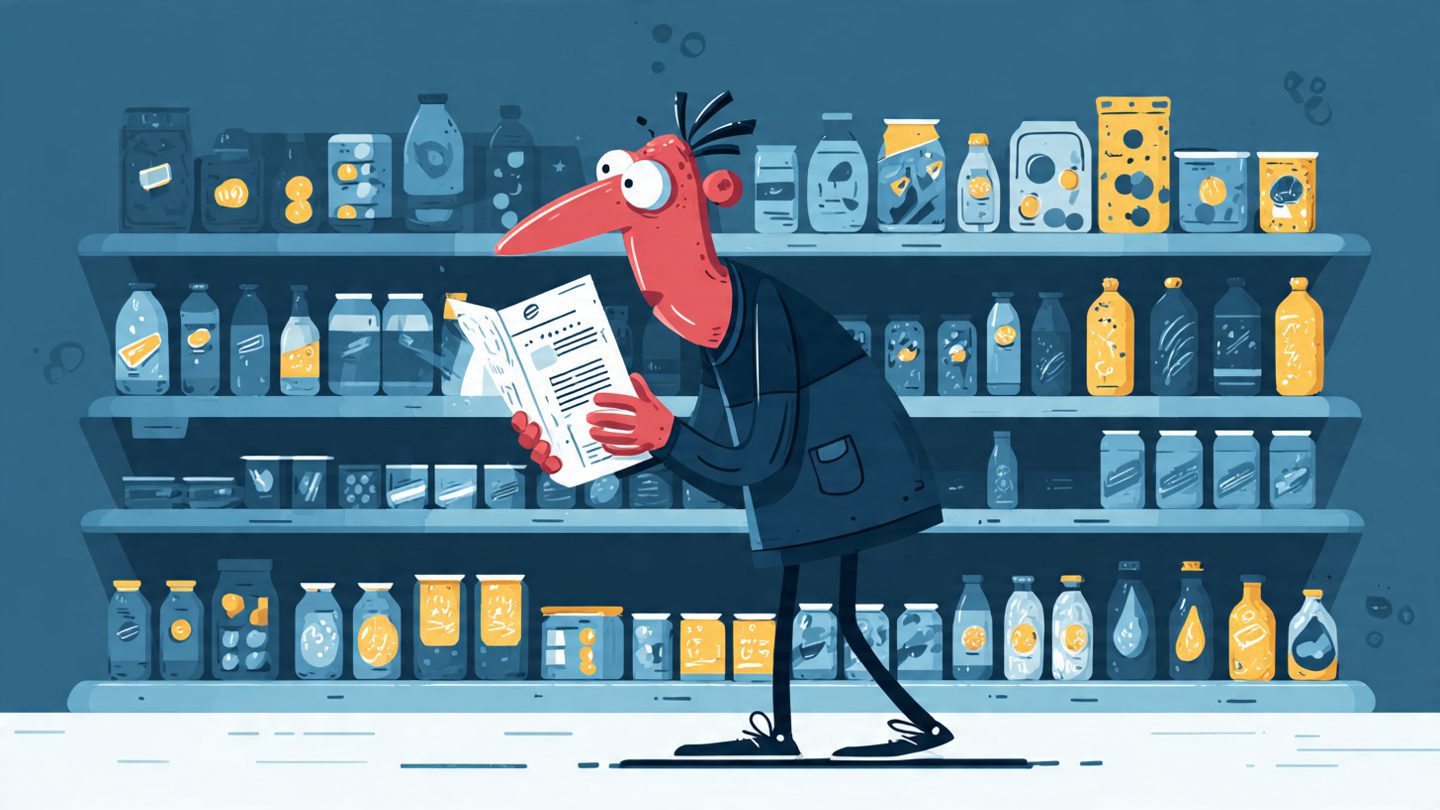
Once the initial shock has been managed, the next phase involves implementing advanced techniques of behavioral camouflage designed to obscure any connection between you and the Event. This is where the art of subtlety reaches its peak, requiring you to perform a delicate balance between action and inaction, movement and stillness, existence and plausible deniability. One effective approach is the gradual relocation strategy, in which you slowly and casually move away from the source without drawing attention to the act of moving itself, as if guided by a sudden but entirely innocent interest in a different section of the aisle. The key here is timing, as moving too quickly suggests urgency while moving too slowly risks prolonged exposure to your own creation, a situation that no one deserves. Another technique involves the strategic use of props, such as a shopping cart or basket, which can serve as both a physical barrier and a psychological distraction, allowing you to focus on an external task while the situation resolves itself behind you. Some individuals have reported success with the “product inspection method,” in which they engage deeply with an item, reading its label with the intensity of someone decoding ancient text, thereby signaling to any potential observers that their attention is entirely occupied. The effectiveness of these techniques depends on your ability to maintain consistency, as any sudden change in behavior can undermine the illusion you are trying to create. It is also important to avoid overcompensation, as excessive normality can appear just as suspicious as obvious panic, creating a paradox that must be navigated with care. In this phase, you are essentially performing a role, adopting the persona of a calm, collected shopper who is blissfully unaware of any unusual circumstances. Mastery of this performance can significantly reduce the likelihood of detection, allowing you to navigate the situation with a degree of control that borders on impressive.
The Role of External Variables: Witnesses, Timing, and Fate
No matter how well you execute your strategy, the outcome of the situation is ultimately influenced by a range of external variables that are beyond your control, including the sudden appearance of other shoppers, the unpredictable movements of store employees, and the cruel whims of fate itself. The empty aisle, once a sanctuary, can quickly become a stage as individuals enter from either end, each one a potential witness to the aftermath of your actions. The timing of their arrival is critical, as it determines whether they encounter the situation in its early stages or at a point where the evidence has dissipated sufficiently to avoid detection. Unfortunately, timing is not something you can control, and as such, you must be prepared to adapt to changing circumstances with a level of flexibility that would impress even the most seasoned improvisational actor. This may involve altering your trajectory, adjusting your pace, or engaging in spontaneous interactions that serve to divert attention away from the situation. For example, you might suddenly remember that you need to check the price of something in a different aisle, creating a natural reason to relocate without appearing evasive. Alternatively, you could engage in a brief but harmless interaction with another shopper, thereby establishing yourself as a normal participant in the environment rather than a source of concern. These strategies rely on your ability to read the situation and respond accordingly, making decisions in real time based on incomplete information. It is a high-stakes game of social chess, where each move carries potential consequences and the margin for error is surprisingly small. By acknowledging the role of external variables, you can better prepare yourself for the unpredictable nature of the situation, increasing your chances of a successful outcome.
Long-Term Reputation Management and Social Recovery
While the immediate goal is to handle the situation discreetly, one must also consider the long-term implications of the Event, particularly in terms of reputation and future interactions within the store. Even if you believe you have escaped unnoticed, there is always the possibility that someone observed something, whether it be your behavior, your movement, or the subtle shift in the atmosphere that only a trained nose could detect. In such cases, your actions in the aftermath become crucial, as they can either reinforce suspicion or gradually dissolve it over time. The key to long-term recovery is consistency, as maintaining a pattern of normal behavior can help to overwrite any fleeting impressions that may have been formed. This involves returning to the store with confidence, engaging in routine activities, and avoiding any behavior that could be interpreted as avoidance or guilt. Over time, the memory of the Event, if it exists at all, will fade into the background, replaced by more recent and less questionable interactions. However, this process requires patience, as rushing the recovery can lead to overcompensation, which in turn can reignite suspicion. It is also important to resist the urge to discuss the incident, as bringing attention to it only increases the likelihood of it becoming a topic of conversation. In this sense, silence is your greatest ally, allowing the situation to resolve itself without unnecessary interference. By focusing on long-term reputation management, you can ensure that the Event remains an isolated incident rather than a defining moment in your social history.
The Philosophical Implications of the Invisible Incident
At its core, the experience of accidentally farting in an empty aisle raises profound philosophical questions about the nature of existence, perception, and the human condition. If an event occurs without witnesses, does it truly exist, or is it merely a fleeting disturbance in the fabric of reality that leaves no lasting trace? This question, while seemingly absurd, touches on deeper issues related to accountability, awareness, and the limits of human perception. In the context of the supermarket aisle, the absence of witnesses creates a unique situation in which the Event exists only in your own mind, a private experience that may never be acknowledged by others. This can be both liberating and unsettling, as it challenges the notion that our actions are always subject to external judgment. At the same time, the possibility of unseen observers introduces an element of uncertainty, blurring the line between reality and perception in a way that is both fascinating and deeply uncomfortable. This duality reflects the broader human experience, in which we are constantly navigating the tension between what is known and what is suspected, what is seen and what is hidden. By examining the philosophical implications of the situation, we can gain a deeper understanding of the forces that shape our behavior and the ways in which we respond to uncertainty. In doing so, we may come to appreciate the absurdity of the situation not as a source of embarrassment but as a reflection of the complexity of human existence.
The Global Crisis of Forgotten Neighbor Names
How to Slice Air Like a Pro When You’re Bored in the Kitchen
How to Build a Tower of Coins on the Back of a Sleeping Cat
Summary
In summary, learning how to act discreetly when you accidentally fart in an empty aisle in the store is a multifaceted challenge that combines elements of physics, psychology, strategy, and philosophy into a single, deeply uncomfortable experience. By understanding the dynamics of the situation and employing a combination of calm behavior, subtle movement, and strategic distraction, one can navigate the crisis with a reasonable chance of avoiding detection. While the problem itself may seem trivial, it reveals deeper truths about human behavior and the ways in which we respond to unexpected challenges. Ultimately, success lies not in preventing the Event but in managing its consequences with grace, composure, and a willingness to embrace the absurd.
FAQ
One terrified citizen asks whether it is better to remain completely still after the Event, hoping to become invisible through sheer lack of movement, and the answer is that while stillness can reduce immediate attention, it also increases the duration of exposure, creating a paradox in which you are both safer and more at risk at the same time.
Another individual wonders if blaming an imaginary third party is a viable strategy, such as muttering about “someone else” who must have been responsible, but this approach carries significant risk, as it introduces unnecessary complexity and may draw attention to the very thing you are trying to avoid.
A third person asks whether leaving the store immediately is the safest option, and while it may seem appealing, sudden departure can appear suspicious, especially if it is not consistent with your usual shopping behavior, potentially raising more questions than it answers.
Someone else is concerned about the possibility of recurring incidents, questioning whether it is possible to build immunity to embarrassment over time, and while repeated exposure may reduce sensitivity, it does not eliminate the fundamental unpredictability of the situation.
Finally, a panicked reader asks if wearing headphones and pretending not to hear anything could provide plausible deniability, and while this may offer some psychological comfort, it does little to address the underlying issue, as the problem is not what you hear but what others might perceive.
Call to Action
If you have ever faced the silent horror of an empty aisle betrayal, stand tall, breathe carefully, and continue shopping as if nothing happened, because in the grand scheme of the universe, you are just a tiny human in a giant store, and the bread still needs to be bought.





