
Warning: The destruction of the city of Troy (according to legend, around the 12th century B.C.) Finally Explained
 Befrey
The destruction of the city of Troy (according to legend, around the 12th century B.C.) remains one of the most fascinating events in ancient storytelling. The fall of Troy, the legendary Trojan War, and the collapse of the powerful city described in ancient Greek tradition have captured human imagination for thousands of years. Historians, archaeologists, writers, and mythologists continue to debate how The destruction of the city of Troy (according to legend, around the 12th century B.C.) really happened, whether the famous conflict was historical, and why this legendary catastrophe became one of the greatest stories ever told. Even today, the destruction of ancient Troy symbolizes betrayal, warfare, heroism, ambition, and the tragic downfall of civilizations.
The Legendary Origins of the Trojan War
Before the destruction itself, the story begins with a chain of events rooted in mythology, divine intervention, and human ambition. According to ancient Greek legends, the Trojan War started because of a conflict among the gods. At the center of this dispute stood a golden apple labeled “for the fairest,” thrown into a divine gathering by Eris, the goddess of discord. Three powerful goddesses claimed the prize: Hera, Athena, and Aphrodite. The Trojan prince Paris was chosen to decide which goddess deserved the apple.
Each goddess attempted to bribe Paris with extraordinary rewards. Hera promised political power. Athena offered wisdom and military success. Aphrodite promised him the love of the most beautiful woman in the world. Paris selected Aphrodite, and this decision changed history forever. The woman promised to him was Helen, the wife of Menelaus, king of Sparta. Paris traveled to Sparta, and Helen eventually left with him for Troy.
This event became the direct cause of the Trojan War. Menelaus and his brother Agamemnon gathered a massive coalition of Greek kings and warriors to recover Helen and punish Troy. Legendary heroes such as Achilles, Odysseus, Ajax, and Nestor joined the expedition. Ancient poets described thousands of ships crossing the Aegean Sea toward the walls of Troy. The conflict would supposedly last ten years and end in one of the most famous military deceptions in history.
The emotional power of this legend is one reason why the story survived for millennia. It combines romance, revenge, political ambition, divine manipulation, and human tragedy into a single narrative. Ancient audiences saw the story as both entertainment and moral instruction. The war represented the destructive consequences of pride, desire, and vengeance.
The earliest detailed version of the story appears in the works traditionally attributed to Homer. These epic poems shaped Western literature and deeply influenced ancient Greek identity. Although many parts of the story contain mythical elements, scholars believe they may preserve memories of real Bronze Age conflicts in the eastern Mediterranean.
The Trojan War became more than a military story. It transformed into a cultural symbol. The destruction of Troy represented the inevitable collapse that follows arrogance, greed, and endless violence. This deeper meaning helped ensure that the legend would remain alive across generations and civilizations.
Archaeological evidence of Troy and the search for the lost city
For centuries, many people believed Troy was entirely fictional. Ancient poets described towering walls, heroic warriors, and divine interventions so vividly that the story seemed more mythological than historical. However, modern archaeology dramatically changed this perception. The search for Troy became one of the greatest archaeological quests in history.
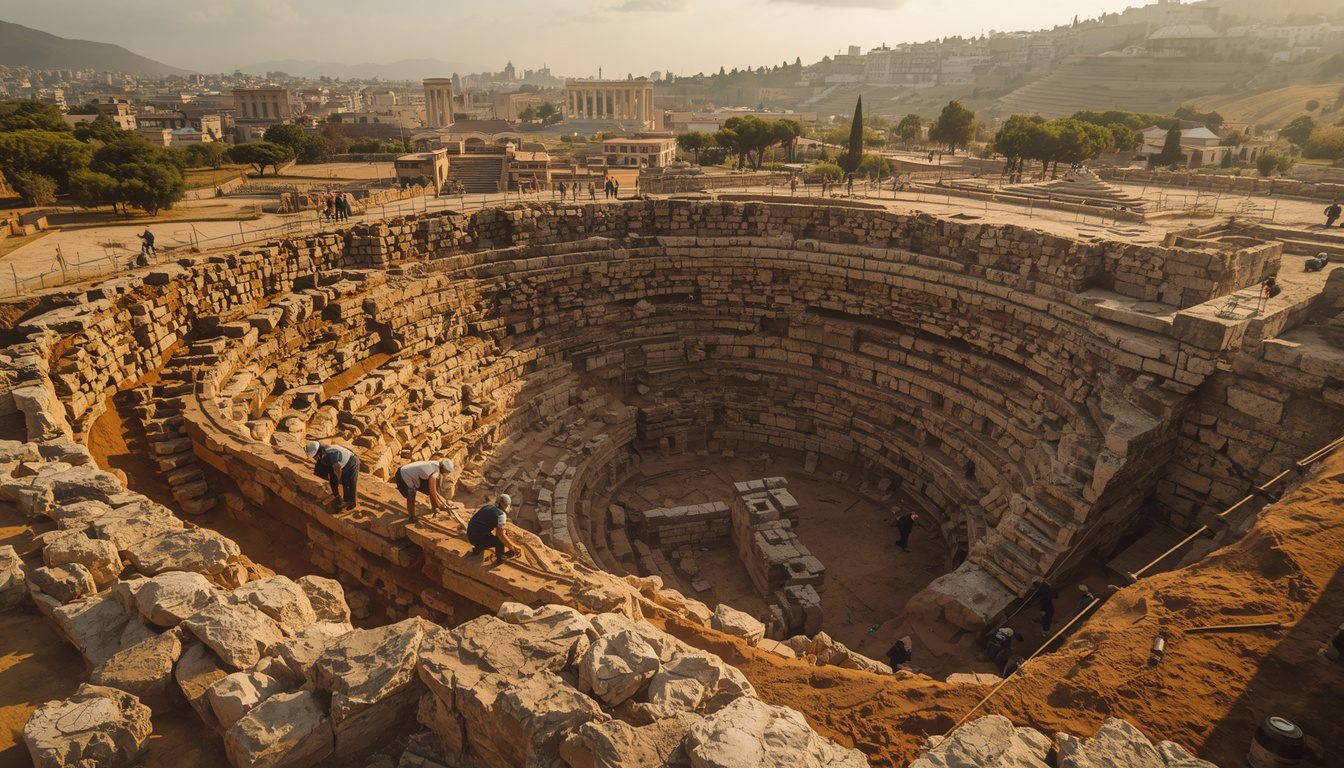
In the nineteenth century, a German businessman and amateur archaeologist named Heinrich Schliemann became obsessed with proving that Troy was real. Guided by ancient literary descriptions, he traveled to what is now northwestern Turkey. Near the Dardanelles, at a site called Hisarlik, he began excavations that shocked the world.
Schliemann discovered multiple layers of ancient settlements buried beneath one another. These cities had been destroyed and rebuilt repeatedly over centuries. Archaeologists eventually identified at least nine major layers of occupation at the site. One or more of these layers may correspond to the legendary Troy described in Greek tradition.
The discoveries included massive defensive walls, towers, houses, pottery, weapons, jewelry, and evidence of violent destruction. Some layers showed signs of earthquakes, while others contained evidence of fire and warfare. These findings suggested that the region experienced repeated catastrophes throughout the Bronze Age.
Modern scholars often focus on Troy VI and Troy VIIa as possible candidates for the city connected to the Trojan War legend. Troy VI was a wealthy and fortified city destroyed around 1300 B.C., possibly by an earthquake. Troy VIIa, which followed shortly afterward, showed evidence of overcrowding, food storage preparation, and violent destruction by fire around the late thirteenth or early twelfth century B.C.
These discoveries transformed academic debate. While no evidence directly confirms every detail from Homer’s epics, archaeology proved that a major city existed in the correct location during the correct era. This city possessed significant defenses and experienced destruction during a period of widespread instability in the eastern Mediterranean.
The archaeological evidence of Troy also revealed the city’s strategic importance. Located near the entrance to the Dardanelles, Troy controlled trade routes between the Aegean and Black Seas. This position likely made it economically valuable and politically contested. Such strategic significance could easily have contributed to conflicts between regional powers.
Today, Troy stands as one of the world’s most famous archaeological sites. Researchers continue to investigate the ruins using advanced technology and scientific analysis. Each new discovery helps separate historical possibility from legendary embellishment. Yet the mystery remains powerful precisely because absolute certainty is impossible.
The intersection of myth and archaeology makes Troy unique. Few ancient legends have inspired such intense scientific investigation. The ruins remind humanity that myths often preserve fragments of historical truth hidden beneath layers of storytelling and cultural memory.
The Trojan Horse strategy that changed warfare forever
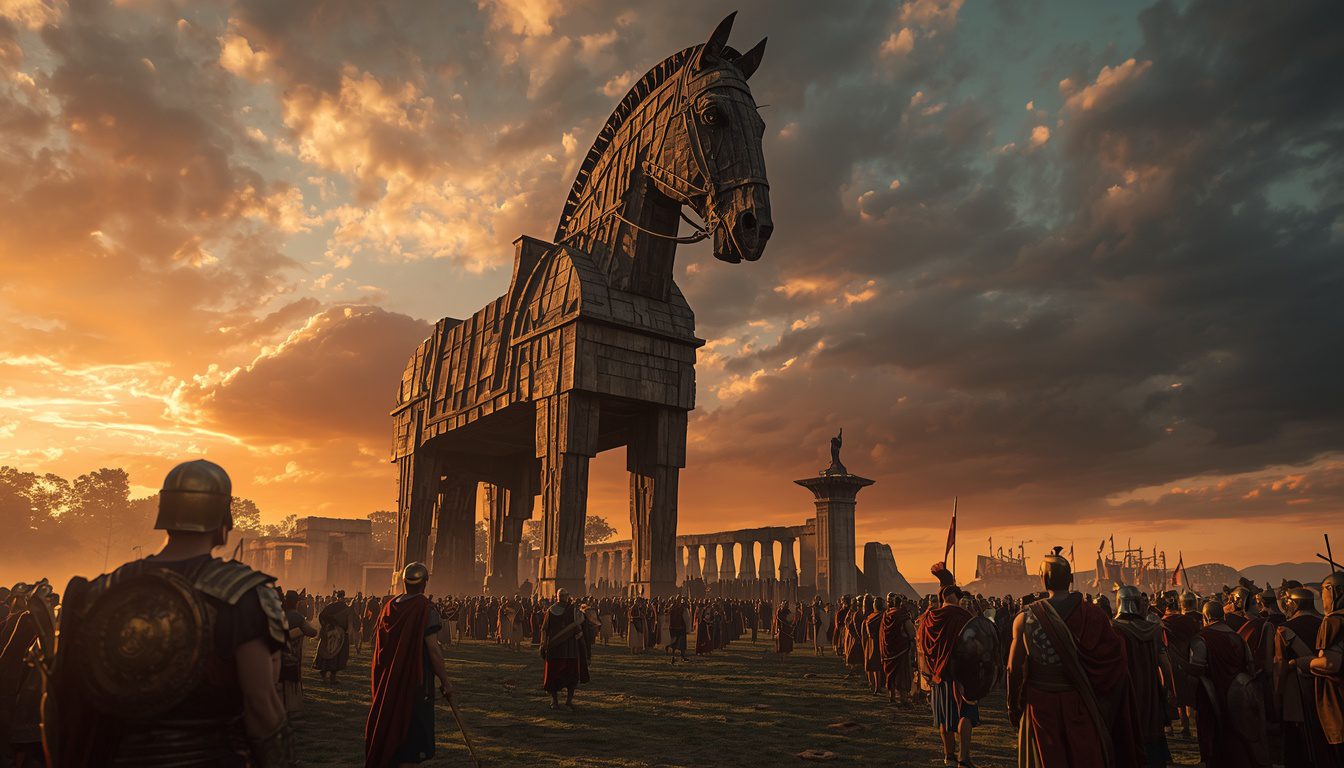
No symbol from the Trojan War is more famous than the Trojan Horse. The story of the giant wooden horse became one of history’s most enduring examples of deception, psychological warfare, and military strategy. Whether entirely factual or partly symbolic, the tale remains deeply influential even today.
According to legend, after ten exhausting years of failed siege warfare, the Greeks appeared ready to surrender. They supposedly burned their camps, boarded their ships, and sailed away. Left behind on the beach stood a gigantic wooden horse. The Greeks claimed it was an offering to the gods and a symbol of peace.
The Trojans debated what to do with the mysterious structure. Some suspected a trap. Others believed it represented victory and divine favor. Despite warnings from figures like Laocoon and Cassandra, the Trojans ultimately dragged the horse into the city as a trophy.
Hidden inside the horse were elite Greek warriors led by Odysseus. During the night, while the Trojans celebrated and slept, the soldiers emerged from the horse, opened the city gates, and allowed the returning Greek army to enter Troy. The city was then destroyed in a brutal assault.
The Trojan Horse story survives because it reflects timeless military principles. Direct force often fails against strong defenses. Deception, intelligence, patience, and manipulation can achieve what armies cannot accomplish openly. Even in modern language, the term “Trojan horse” describes hidden threats disguised as gifts or harmless objects.
Some historians believe the horse may symbolize something other than a literal wooden structure. It could represent a siege engine, a naval strategy, or even an earthquake. In ancient mythology, horses were associated with Poseidon, the god connected to earthquakes. If Troy suffered earthquake damage before an invasion, later storytellers may have transformed this memory into the famous horse legend.
Regardless of its historical accuracy, the story profoundly influenced literature, politics, psychology, and military theory. Generals throughout history studied deception tactics inspired by Troy. The narrative also became a moral warning about misplaced trust, arrogance, and internal division.
The Trojan Horse represents more than a clever trick. It symbolizes the vulnerability of civilizations that believe victory guarantees safety. The Trojans survived years of siege but ultimately fell because they underestimated hidden dangers. This lesson continues to resonate in political and military discussions even today.
The emotional power of the story also comes from its dramatic irony. The audience knows the horse contains danger while the Trojans celebrate what they believe is triumph. This tension creates one of the most memorable scenes in all ancient literature.
Centuries later, the Trojan Horse remains one of humanity’s greatest storytelling symbols. It captures the terrifying idea that destruction sometimes enters not through force, but through invitation.
Bronze Age collapse and the fall of ancient civilizations
The destruction of Troy did not happen in isolation. Around the end of the Bronze Age, numerous powerful civilizations across the eastern Mediterranean collapsed almost simultaneously. This period of chaos, often called the Bronze Age collapse, remains one of ancient history’s greatest mysteries.
During the Late Bronze Age, major powers such as the Mycenaean Greeks, the Hittite Empire, Egypt, and various Levantine kingdoms formed a complex interconnected world. Trade networks carried copper, tin, gold, textiles, grain, and luxury goods across enormous distances. Diplomatic relationships linked kings through treaties and royal marriages.
Then, between approximately 1200 and 1150 B.C., this sophisticated system began to disintegrate rapidly. Cities burned. Kingdoms vanished. Trade routes collapsed. Literacy declined in some regions. Population movements increased dramatically. The entire eastern Mediterranean experienced a prolonged period of instability and destruction.
Troy may have been one victim of this larger regional catastrophe. Archaeological evidence suggests widespread violence and economic disruption throughout the era. Scholars debate the exact causes of the collapse, but most believe multiple factors combined simultaneously.
Climate change likely played a major role. Evidence indicates periods of severe drought that damaged agriculture and caused famine. Food shortages weakened governments and increased social unrest. Earthquakes may also have destroyed important cities and infrastructure across the region.
Another major factor involved invasions and migrations. Ancient Egyptian records mention mysterious groups called the Sea Peoples, who attacked coastal settlements and challenged major kingdoms. Some historians believe these groups consisted of displaced populations fleeing economic hardship and environmental crisis.
Internal political instability further weakened Bronze Age states. Large palace economies depended on centralized administration and long-distance trade. Once disruptions began, these systems became fragile and vulnerable to collapse. Rebellions, civil wars, and declining authority accelerated the destruction.
The fall of Troy fits naturally into this broader historical context. Rather than representing a single isolated war caused only by Helen and Paris, the city’s destruction may reflect a larger era of international instability. Regional competition, trade disruption, migration, and warfare likely combined to create the conditions for catastrophe.
Understanding the Bronze Age collapse changes how people interpret the Trojan War legend. The story may preserve cultural memories of a terrifying age when entire civilizations disappeared. Ancient storytellers transformed these traumatic events into heroic epics centered around memorable individuals and dramatic conflicts.
This perspective also explains why the legend feels so emotionally powerful. The fall of Troy represents not merely one city’s defeat but the collapse of an entire world order. It symbolizes the fragility of civilization itself.
Modern historians continue investigating this period using archaeology, climate science, and textual analysis. Each discovery reveals how interconnected ancient societies truly were. Troy’s destruction becomes even more fascinating when viewed as part of a continental crisis rather than an isolated mythological episode.
Homer’s Iliad and the birth of epic storytelling
The survival of Troy’s story owes much to one extraordinary literary achievement: Homer’s Iliad. This epic poem became one of the foundational texts of Western civilization and shaped how later generations imagined heroism, warfare, and human destiny.
The Iliad does not actually describe the complete destruction of Troy. Instead, it focuses on a short period during the final year of the war, especially the anger of Achilles. Yet through its characters, themes, and emotional depth, the poem created the framework through which the Trojan War became immortal.
Homer’s portrayal of war is remarkably complex. Heroes seek glory and honor, but they also experience grief, fear, rage, and despair. Achilles stands as the greatest warrior among the Greeks, yet his personal pride leads to devastating consequences. Hector, prince of Troy, emerges as a tragic defender fighting to protect his family and city despite knowing the odds are hopeless.
One reason the Iliad remains powerful is its human realism. Although gods intervene constantly, the emotional struggles of the characters feel authentic. Parents mourn children. Friends die violently. Soldiers fear death. Leaders make catastrophic decisions driven by ego and ambition.
The poem also explores the cost of war in extraordinary detail. Troy’s eventual destruction is foreshadowed throughout the narrative. Readers understand that even bravery and nobility cannot save the city forever. This sense of unavoidable tragedy gives the story immense emotional weight.
The oral storytelling tradition behind the Iliad also contributed to its survival. Before being written down, these stories were performed by traveling poets who memorized vast sections of verse. Each performance helped preserve cultural memory and reinforce shared values among ancient Greek communities.
Homer’s influence extended far beyond literature. Philosophers, historians, generals, playwrights, and political leaders studied the Iliad for centuries. Alexander the Great reportedly carried a copy during his military campaigns. Roman poets adapted the story for new audiences. Medieval and Renaissance writers continued retelling the legend in countless forms.
The Iliad also helped shape ideals of heroism and honor in Western culture. Achilles became the archetype of the powerful but flawed warrior. Hector represented duty and sacrifice. Odysseus symbolized intelligence and cunning. These character models influenced storytelling traditions for thousands of years.
Importantly, the Iliad never presents war as simple or glorious. Victory comes at enormous human cost. Even the triumphant Greeks suffer loss, betrayal, and moral compromise. This nuanced portrayal gives the poem lasting relevance.
The destruction of Troy became unforgettable not only because of historical possibility but because Homer transformed the event into timeless literature. Through epic storytelling, a regional Bronze Age conflict evolved into a universal meditation on humanity, violence, mortality, and memory.
Ancient Greek mythology and the gods behind Troy’s destruction
The Trojan War cannot be separated from ancient Greek mythology because divine forces shaped nearly every aspect of the story. In Greek tradition, gods were not distant observers. They actively interfered in human affairs, influenced battles, manipulated emotions, and determined destinies.
The conflict surrounding Troy began with divine rivalry. The Judgment of Paris directly involved the gods, and each deity chose sides during the war. Hera and Athena supported the Greeks because Paris rejected them during the contest over the golden apple. Aphrodite protected Troy because Paris selected her as the fairest goddess.
This divine involvement reflected how ancient Greeks understood the world. Natural disasters, military victories, plagues, and political changes were often interpreted as expressions of divine will. Human beings possessed agency, but gods could alter outcomes dramatically.
Zeus, king of the gods, attempted to maintain balance during the conflict, though even he struggled to control the competing ambitions of other deities. Athena guided Greek warriors strategically, while Apollo defended Trojan fighters and punished Greek arrogance. Poseidon sometimes aided the Greeks despite having earlier connections to Troy’s construction myths.
The gods in Greek mythology behaved much like powerful humans. They experienced jealousy, pride, revenge, desire, and favoritism. This made them relatable but also terrifying. Mortals could never fully predict divine behavior or guarantee protection.
One of the most tragic figures in the Trojan legend is Cassandra, daughter of King Priam. Apollo granted her the gift of prophecy but cursed her so nobody would believe her warnings. She foresaw Troy’s destruction repeatedly, including the danger of the Trojan Horse, but her predictions were ignored. Cassandra symbolizes the agony of knowing disaster is coming while remaining powerless to prevent it.
The role of fate also dominates the mythology surrounding Troy. Many characters understand that destiny cannot be escaped. Achilles knows he will die young if he chooses glory in battle. Hector realizes Troy will eventually fall. Yet both continue forward because honor and duty demand action.
Greek mythology transformed the Trojan War into more than a political conflict. It became a cosmic drama involving divine justice, human weakness, and inevitable destiny. These themes helped the story resonate across generations because they address universal fears and questions.
Even modern audiences remain fascinated by the gods of Troy because they embody powerful psychological and emotional forces. Pride destroys relationships. Desire triggers conflict. Revenge perpetuates violence. Fear clouds judgment. Ancient myths expressed these truths through divine characters and supernatural events.
The destruction of Troy therefore operates on multiple levels simultaneously. It is a military disaster, a moral warning, a mythological tragedy, and a reflection of human nature itself.
The real history behind King Priam, Hector, and Achilles
Many legendary characters from the Trojan War may contain elements inspired by real historical figures, though separating fact from myth remains difficult. King Priam, Hector, Achilles, and other famous personalities likely evolved through centuries of storytelling and oral tradition.
King Priam appears in Greek tradition as the elderly ruler of Troy during its final days. He represents dignity, sorrow, and tragic leadership. One of the most emotional scenes in the Iliad occurs when Priam secretly visits Achilles to beg for the return of Hector’s body. The scene emphasizes shared humanity even between enemies.
Although no direct historical evidence confirms Priam’s existence, powerful rulers almost certainly governed Bronze Age Troy. Archaeological discoveries suggest the city possessed significant political and economic importance. The image of a royal dynasty defending the city against invaders fits historical realities of the period.
Hector stands as Troy’s greatest defender and one of ancient literature’s most admired heroes. Unlike Achilles, who seeks personal glory, Hector fights primarily for his family and city. His farewell scene with his wife Andromache and infant son remains one of literature’s most heartbreaking depictions of impending tragedy.
Many scholars believe Hector’s popularity reflects admiration for defensive courage and responsibility. Ancient audiences respected not only victorious conquerors but also noble defenders facing impossible odds. Hector embodies loyalty, sacrifice, and moral integrity under extreme pressure.
Achilles represents a different heroic ideal. He is nearly invincible, unmatched in battle, and obsessed with eternal fame. Yet his rage and pride create devastating consequences for both allies and enemies. Achilles illustrates the dangerous tension between personal ambition and collective responsibility.
Some historians speculate that stories about Achilles may preserve memories of elite Mycenaean warriors who fought during the Late Bronze Age. His armor, combat style, and social status reflect aspects of warrior aristocracy common in ancient Greece.
Odysseus, meanwhile, became famous for intelligence rather than physical strength. His role in the Trojan Horse story established him as the ultimate strategist. This emphasis on cunning reflected growing appreciation for diplomacy and intellect alongside brute force.
The legendary characters of Troy survived because they represent timeless human archetypes. Priam symbolizes tragic leadership. Hector embodies duty. Achilles reflects destructive pride and heroic ambition. Odysseus represents intelligence and adaptability.
Historical reality probably differed greatly from the later myths. The actual conflict may have involved smaller armies, regional politics, economic competition, and shifting alliances. Yet oral tradition transformed these events into emotionally powerful narratives centered on unforgettable individuals.
This transformation is common in human history. Real events become mythologized over time as societies seek meaning, identity, and moral lessons through storytelling. Troy’s heroes therefore matter not because every detail is historically verifiable but because they continue expressing universal human experiences.
The destruction of Troy in literature, movies, and modern culture
The fall of Troy never disappeared after antiquity. Instead, it evolved continuously through literature, art, theater, film, and modern popular culture. Every era reinterpreted the legend according to its own fears, values, and political concerns.
Ancient Roman culture adopted the Trojan story enthusiastically. Virgil’s Aeneid presented Trojan survivors as ancestors of Rome itself. This narrative gave Romans a prestigious mythical origin connected to heroic endurance and divine destiny.
During the Middle Ages, European writers adapted Trojan legends into chivalric romances. Medieval audiences viewed Trojan heroes through the lens of knightly ideals. The story became integrated into broader European cultural identity.
Renaissance artists revived interest in classical mythology and produced countless paintings, sculptures, and dramatic works inspired by Troy. Scenes involving Helen, Achilles, Hector, and the Trojan Horse became especially popular because they combined beauty, violence, and emotional intensity.
Modern literature continued reimagining the Trojan War from fresh perspectives. Some authors focused on psychological realism. Others explored overlooked characters such as women, slaves, or ordinary soldiers. Contemporary retellings often question traditional heroic ideals and emphasize war’s brutality.
Cinema brought Troy to global audiences on an unprecedented scale. Epic films recreated massive battles, burning cities, and legendary duels using modern technology. While these adaptations often simplify historical complexities, they demonstrate the story’s enduring visual and emotional appeal.
The Trojan Horse concept also entered political language, cybersecurity terminology, and military theory. In computer science, “Trojan horse” malware refers to harmful software disguised as legitimate programs. This modern usage shows how ancient myths continue shaping contemporary vocabulary and thought.
Troy also influences psychology and philosophy. The story raises enduring questions about fate, morality, violence, leadership, and memory. Why do civilizations repeat destructive patterns? Can pride destroy entire societies? Is glory worth immense suffering? These themes remain relevant in every era.
Modern audiences often interpret Troy differently than ancient listeners did. Contemporary readers may sympathize more with civilians trapped by war rather than celebrating military conquest. This shift reflects changing cultural attitudes toward violence and heroism.
The destruction of Troy continues inspiring artists because it combines universal themes with unforgettable imagery. Burning walls, doomed heroes, betrayed trust, grieving families, and collapsing civilizations create emotional material that remains endlessly compelling.
Few ancient stories achieved such extraordinary longevity. Troy survived because it constantly adapts to new cultural contexts while preserving its core emotional truths. The legend continues reminding humanity that power, ambition, and conflict can destroy even the mightiest civilizations.
Why the legend of Troy still matters today
At first glance, the destruction of an ancient Bronze Age city may seem distant from modern life. Yet Troy continues to matter because the story addresses timeless human realities that remain painfully relevant.
War still devastates civilizations. Political ambition still causes enormous suffering. Pride and revenge still escalate conflicts beyond reason. The Trojan legend demonstrates how personal choices and collective decisions can trigger catastrophic consequences lasting generations.
The story also warns against arrogance. Troy’s defenders believed their walls guaranteed safety. The Greeks believed military victory justified immense destruction. Both sides suffered deeply. Modern societies continue facing similar dangers when leaders underestimate risks or overestimate power.
Troy additionally highlights the fragility of civilization. Advanced Bronze Age societies collapsed rapidly despite wealth, trade, technology, and political organization. This historical lesson resonates strongly in an interconnected modern world vulnerable to environmental crisis, economic instability, and geopolitical conflict.
The legend’s emotional complexity also remains powerful. There are no purely perfect heroes. Achilles is brilliant but destructive. Hector is noble but trapped by circumstance. Helen becomes both victim and symbol. These morally complicated characters feel realistic because human beings themselves are complicated.
Another reason Troy matters involves cultural memory. Myths preserve emotional truths even when historical details remain uncertain. The Trojan War may not have occurred exactly as Homer described, yet the story still communicates profound insights about humanity, violence, love, ambition, and mortality.
Modern archaeology further strengthens public fascination because it bridges myth and reality. Discovering real ruins connected to legendary stories creates a rare connection between imagination and evidence. Troy feels simultaneously historical and mythical, which makes it uniquely captivating.
The endurance of the story also demonstrates the extraordinary power of storytelling itself. Generations preserved Troy not through official documents but through poetry, oral tradition, art, and shared cultural memory. Stories shape civilizations as profoundly as armies or governments.
Ultimately, the destruction of Troy remains relevant because it reflects enduring patterns in human history. Civilizations rise and fall. Leaders make disastrous decisions. Individuals seek glory, love, revenge, and meaning. Societies struggle against forces larger than themselves.
The ruins of Troy therefore symbolize more than an ancient catastrophe. They represent humanity’s recurring struggle between wisdom and arrogance, cooperation and conflict, memory and destruction. That is why the legend continues surviving after more than three thousand years.
The Nebula and Accretion of Earth: Formation of Our Planet Explained
Geological Processes in the Early Formation of Earth
How Multicellular Organisms Developed in Prehistoric Times
Summary
The destruction of the city of Troy (according to legend, around the 12th century B.C.) stands as one of history’s most influential legends. Rooted in mythology but supported by intriguing archaeological discoveries, the story combines war, love, betrayal, heroism, and civilizational collapse. From the Judgment of Paris to the Trojan Horse and the burning of the city, Troy became a timeless symbol of human ambition and tragedy. Archaeological excavations at Hisarlik revealed that a powerful Bronze Age city truly existed, giving historical depth to the legendary narrative. Homer’s Iliad immortalized the war and shaped Western storytelling forever. Today, Troy remains relevant because its themes of pride, warfare, deception, and societal fragility continue echoing across the modern world.
FAQ
Was the Trojan War a real historical event?
Many historians believe a real conflict may have inspired the legend, although the exact details from mythology cannot be confirmed. Archaeological evidence shows that Troy existed and experienced destruction during the Late Bronze Age.
Where was the ancient city of Troy located?
Troy was located near modern-day northwestern Turkey, close to the Dardanelles Strait. The archaeological site is called Hisarlik.
Did the Trojan Horse really exist?
There is no definitive proof that a literal wooden horse existed. Some scholars think it may symbolize a siege tactic, earthquake, or military deception later transformed into legend.
Who wrote the story of Troy?
The most famous version comes from Homer’s Iliad, an ancient Greek epic poem traditionally dated to around the 8th century B.C.
Why is Troy still important today?
The story explores universal themes such as war, pride, betrayal, leadership, and the collapse of civilizations. These themes remain relevant in modern politics, culture, and human behavior.
CTA
If you enjoyed this deep exploration of Troy’s destruction, continue exploring ancient history, mythology, archaeology, and legendary civilizations. Share this article with fellow history enthusiasts and discover how ancient stories still shape the modern world.





