Befrey
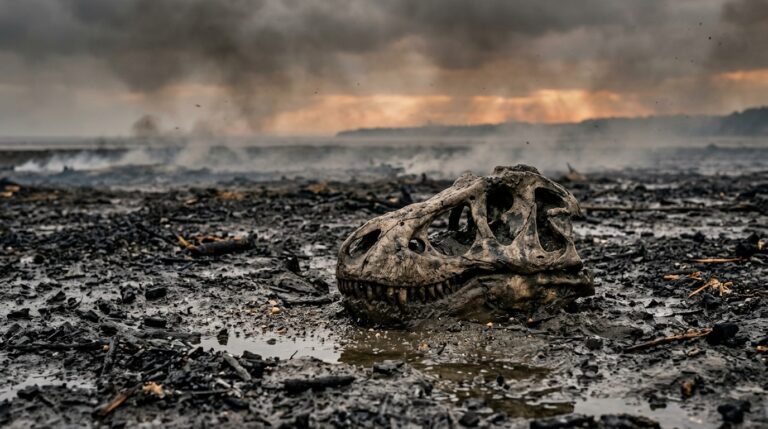
The story of Earth begins long before Prehistory Dinosaurs, prehistoric reptiles, or even the first complex plants. This earliest chapter of our planet’s timeline is called the Precambrian era, and it covers almost 90% of Earth’s entire history. When people hear the word prehistory, they often imagine dinosaurs, giant predators, or enormous herbivores. Yet “prehistory dinosaurs” and similar terms are often misunderstood, because no dinosaurs existed in the Precambrian at all. Still, this ancient time set the stage for everything that came after—including dinosaurs, mammals, and humans. In this article, we explore the hidden world before life became complex, breaking down key ideas so beginners can understand them while still offering the depth professionals expect.
Precambrian Timeline
The Precambrian is divided into three major eons: Hadean, Archean, and Proterozoic. These eons stretch from Earth’s formation 4.6 billion years ago to 541 million years ago.
Hadean Eon
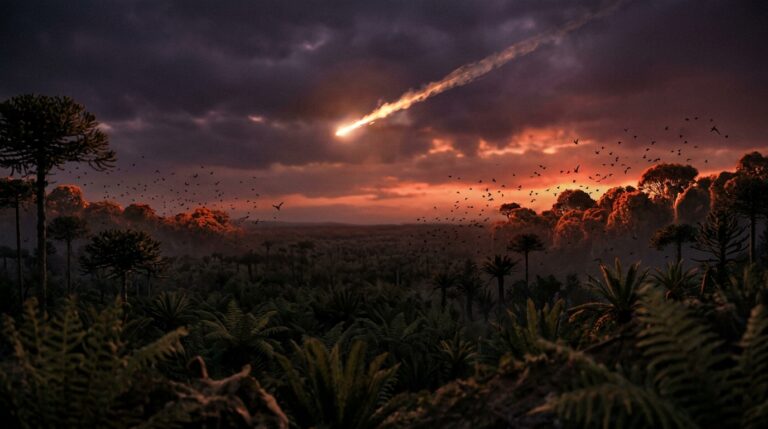
The Hadean marks Earth’s violent beginning. The planet formed from cosmic dust, molten rock, and constant asteroid impacts. Temperatures were extreme. There was no oxygen. No oceans. No continents. Certainly no Prehistory Dinosaurs or any life at all.
Yet the foundation for life began forming here—water vapor cooled into oceans, and the crust started stabilizing.
Archean Eon
Around 4–2.5 billion years ago, Earth finally cooled enough for oceans to exist. Life emerged in the form of simple single-celled organisms, likely near hydrothermal vents. These organisms performed basic chemical processes that later evolved into photosynthesis.
This slow accumulation of oxygen is one of the most important events in Earth’s early history.
Proterozoic Eon
The Proterozoic introduced the rise of atmospheric oxygen, the first multicellular lifeforms, and eventually the earliest animals such as sponges and jellyfish-like creatures. Here we also see the first supercontinents, long ice ages, and evolutionary steps that made later ecosystems possible.

Early Earth Environment
The early Earth environment would be unrecognizable to us today. There were no trees, no oxygen-rich atmosphere, and no protective ozone layer. Instead, the air was filled with volcanic gases such as methane, ammonia, and sulfur dioxide.
The surface was a mix of lava flows, shallow oceans, and unstable land masses. Temperatures fluctuated drastically. Solar radiation was intense.
Despite these extreme conditions, the building blocks of life formed. Simple organic molecules combined, broke apart, and recombined, eventually creating structures that could replicate themselves. These early self-replicating molecules are considered the ancestors of all life—long before Prehistory Dinosaurs and other creatures evolved.
Origin of Life
Scientists believe life began between 3.5 and 4 billion years ago. The exact mechanism is still debated, but several theories dominate scientific research:
Hydrothermal Vent Theory
Life may have begun near hydrothermal vents deep in the ocean. These vents provide heat, minerals, and chemical gradients—perfect conditions for early microbial life.
Primordial Soup Theory
This theory suggests that lightning, ultraviolet light, and chemical reactions in shallow pools allowed simple molecules to form more complex compounds.
Panspermia
A more speculative idea suggests that life’s building blocks could have come from space, delivered by meteorites.
Whichever process occurred, the result was the first prokaryotic cells. These were tiny, single-celled organisms without nuclei. They ruled Earth for billions of years.
Microbial Evolution
Microbes dominated the Precambrian. They shaped the planet’s atmosphere, oceans, and climate. Their evolution can be summarized in several milestones:
1. Photosynthesis
About 2.7 billion years ago, cyanobacteria developed oxygen-producing photosynthesis. This changed Earth forever.
2. Great Oxygenation Event
The oxygen released by microbes accumulated in the atmosphere. This event was catastrophic for many early organisms but allowed new types of life to evolve.
3. Eukaryotes
These are more complex cells containing nuclei. They appeared around 1.8 billion years ago and eventually evolved into all plants, animals, and fungi.
4. Multicellular Life
In the late Proterozoic, multicellular organisms emerged. They included early algae, sponges, and soft-bodied animals.
This period is critical for understanding evolution, even though Prehistory Dinosaurs did not appear until much later in the Mesozoic Era.
Precambrian Fossils
Fossils from the Precambrian are rare because most organisms were soft-bodied. Still, several important fossil types provide evidence of early life.
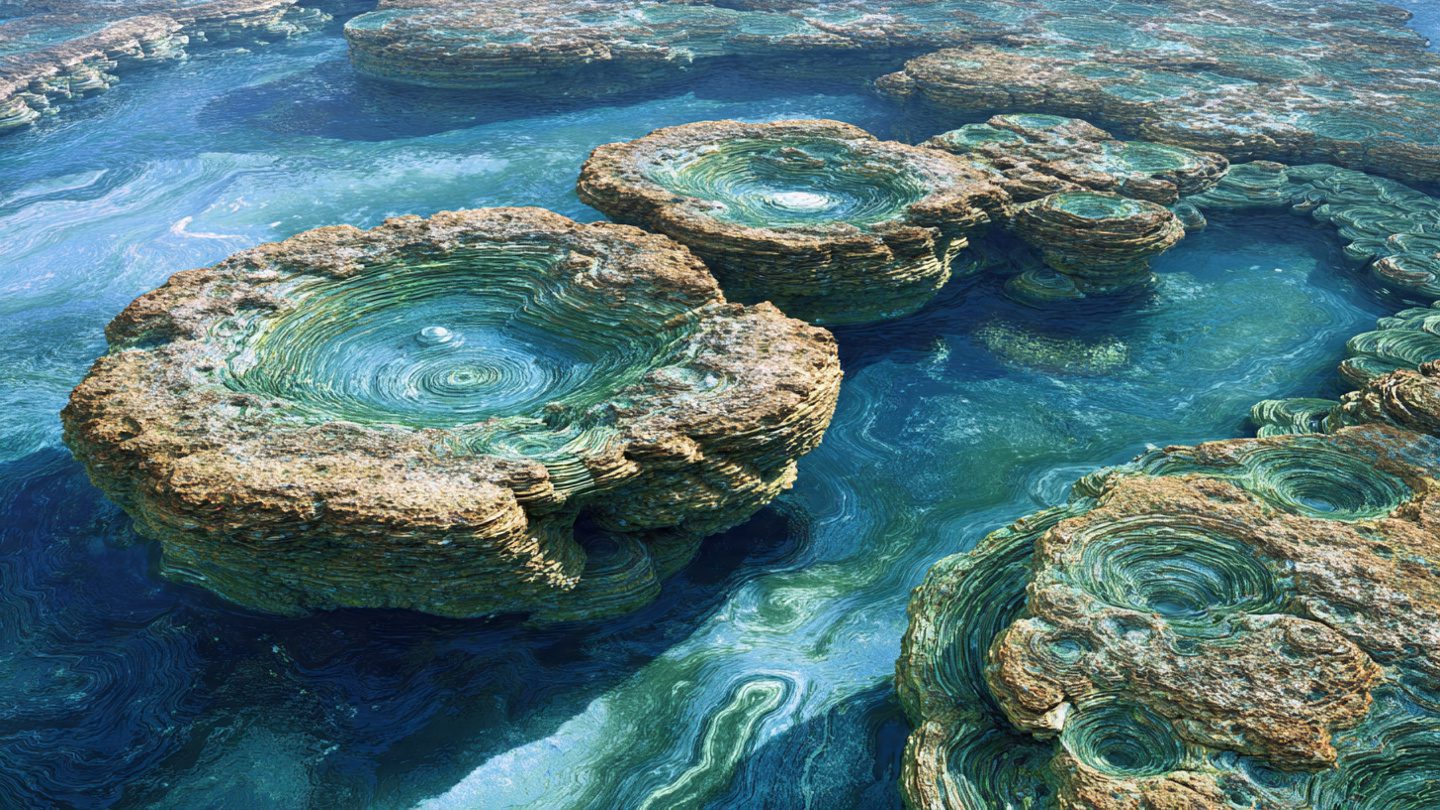
Stromatolites
Layered structures built by cyanobacteria. They remain one of the oldest signs of life.
Microfossils
Microscopic remnants of early cells preserved in ancient rocks.
Ediacaran Fauna
Soft-bodied animals that lived just before the Cambrian Explosion. These are some of the earliest complex organisms.
Although fascinating, these fossils differ completely from Prehistory Dinosaurs, which evolved hundreds of millions of years later. Understanding this contrast helps us see how slowly and gradually life transformed.

Prehistory Context
When discussing “prehistory,” many people immediately think of dinosaurs. While it is true that dinosaurs dominate much of prehistoric imagination, they are part of a much later chapter.
Prehistory Dinosaurs belong to the Mesozoic Era, not the Precambrian. Prehistory simply means “before written records,” but scientifically, we divide ancient time into precise geological eras.
The Precambrian built the foundation for life’s complexity. Without its oxygenation events, tectonic shifts, and early microbial ecosystems, dinosaurs could never have existed.
Prehistory is therefore not only about massive reptiles—it includes all of Earth’s story before humans began writing it down.
Geologic Processes
Earth changed dramatically throughout the Precambrian due to several planetary processes:
Plate Tectonics
Continents formed, broke apart, and reassembled many times. These supercontinents influenced climate and ocean circulation.
Volcanism
Intense volcanic activity released gases that shaped the atmosphere and provided nutrients to the oceans.
Glaciations
Earth experienced severe ice ages, including the famous “Snowball Earth” events where ice may have covered most of the planet.
Atmospheric Evolution
From toxic gases to oxygen-rich air, the atmosphere underwent massive transformations driven by microbial activity.
Ediacaran Biota
The Ediacaran period (635–541 million years ago) represents the final chapter of the Precambrian. Here we find the earliest large, complex organisms.
These creatures include:
-
Disc-shaped fossils
-
Soft-bodied worms
-
Frond-like organisms
-
Early mobility traces
They were unlike anything living today. Yet they paved the way for the Cambrian Explosion, when animals diversified rapidly and set the stage for future evolutionary giants—including Prehistory Dinosaurs millions of years later.
Precambrian Significance
Why study a time when no dinosaurs existed? Because the Precambrian era explains:
-
How life began
-
How ecosystems originated
-
How oxygen accumulated
-
How continents formed
-
How early evolution shaped future species
Without understanding the Precambrian, we cannot fully understand dinosaurs, mammals, or humans. It is the foundation of everything in biology and geology.
Modern Research
Scientists continue to explore Precambrian rocks, fossils, and minerals to uncover hidden clues. Modern tools include:
-
Isotope analysis
-
High-resolution microscopy
-
Genetic comparison studies
-
Astrobiology simulations
These technologies reveal how early Earth compares with other planets, helping scientists search for life beyond our world.
Summary
The Precambrian era is Earth’s longest and most mysterious chapter. Although Prehistory Dinosaurs did not exist during this time, the events of the Precambrian made their evolution possible. From simple molecules to multicellular organisms, life evolved slowly but steadily.
Understanding this era gives us a deeper appreciation for Earth’s complexity and the incredible journey from tiny microbes to the giant dinosaurs of prehistory.
Secrets of the Brain and Consciousness: Unlocking the Mind’s Hidden Power
FAQ
1. Did dinosaurs exist in the Precambrian?
No. Dinosaurs appeared much later in the Mesozoic Era.
2. Why is the Precambrian important?
Because it includes the origin of life, early evolution, and the buildup of oxygen.
3. What organisms lived in the Precambrian?
Mainly microbes, algae, and soft-bodied animals like those from the Ediacaran period.
4. How long was the Precambrian?
Nearly 4 billion years.
5. What are stromatolites?
Layered fossils created by cyanobacteria, some of the oldest lifeforms on Earth.
Call to Action
Want more deep-dive articles about Earth’s history, evolution, and prehistoric life?
Follow our page, share this article, and explore the mysteries of early Earth with us!