Befrey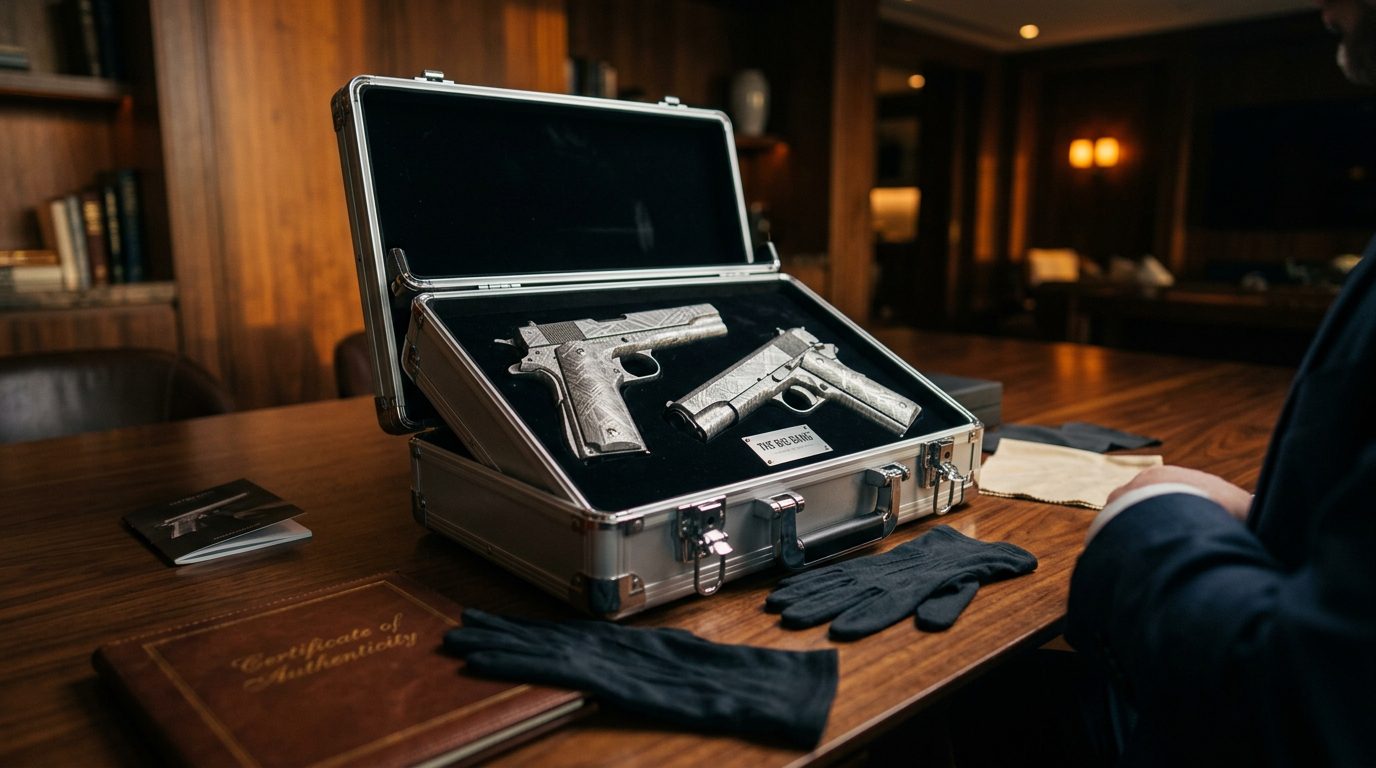
In the hyper-exclusive world of high-end firearm collecting, few creations evoke as much sheer awe as a firearm forged not from Earth, but from the frozen cosmic void. Imagine holding a weapon crafted from a celestial body that drifted through deep space for 4.5 billion years before slamming into planet Earth. This isn’t science fiction or a prop from a Hollywood blockbuster. It is the real-world reality of the meteorite 1911 pistol. By taking an ancient, extraterrestrial nickel-iron rock and turning it into a fully functional firearm, master gunsmiths have bridged the gap between modern ballistics, mechanical engineering, and cosmic history.
When a pair of these unbelievable handguns hit the luxury market, the firearm community stood still. Gun enthusiasts, metallurgical engineers, and ultra-high-net-worth art collectors all converged around a single question: How do you take a brittle celestial artifact and turn it into a high-pressure firearm? The answer lies in years of groundbreaking research, cutting-edge precision engineering, and an unrelenting passion for pushing the absolute limits of mechanical craftsmanship.
The Origin of the Cosmic Iron: The Gibeon Meteorite
To fully appreciate the creation of a pistol carved from meteorite material, one must first understand the raw material itself. Long before humans walked the Earth, a massive iron asteroid hurtled through space. Approximately 4.5 billion years ago, during the formation of our solar system, this molten cosmic body slowly cooled in the vacuum of space. As it cooled over millions of years, the iron and nickel within the asteroid crystallized into unique crystalline formations that cannot be replicated on Earth under atmospheric pressure.
Eventually, thousands of years ago, this massive celestial object entered Earth’s atmosphere, exploding high above what is now prehistoric Namibia, Africa. The resulting debris field created what scientists call the Gibeon meteorite. The Gibeon meteorite 1911 pistols trace their roots directly back to this ancient impact site. The iron recovered from Gibeon is renowned among geologists and custom gunsmiths alike for its distinctive internal structure, known as the Widmanstätten pattern. This interlocking, crisscross lattice of nickel-iron alloys forms only when molten cosmic metal cools at an excruciatingly slow rate of one degree per million years.
When gunmakers selected a massive 77-pound chunk of the Gibeon iron meteorite firearms material, they were not just buying raw steel. They were purchasing a piece of deep-space time. However, transforming a real meteorite firearm into a mechanical masterpiece proved to be one of the most perilous engineering undertakings in modern history. The crystalline structures that make space rock so breathtakingly beautiful also make it notoriously difficult to machine without destroying the entire chunk.
Crafting the Uncraftable: Engineering a Space Rock Gun
Machining standard steel for a custom 1911 build is a well-understood science. Gunsmiths know exactly how high-grade carbon steel or stainless steel behaves under heavy CNC milling, drilling, and heat treating. However, working with a 4.5 billion year old meteorite pistol is an entirely different battle. Space iron is far from uniform. Because it survived atmospheric entry, a space rock gun is riddled with random inclusions, micro-cracks, cosmic radiation pockets, and varying densities of cobalt, nickel, and pure iron.
When Cabot Guns undertook the ambitious project to build the iconic Cabot Guns Big Bang Set, their team of aerospace engineers and master toolmakers faced enormous risk. A single wrong cut or thermal shock from high-speed drilling could cause the irreplaceable extraterrestrial rock to shatter into dust. Standard drill bits instantly dulled or fractured against the irregular pockets of natural cosmic iron. To overcome this, gunsmiths had to utilize advanced electron discharge machining (EDM), 3D laser scanning, and specialized ultrasonic cutting tools.
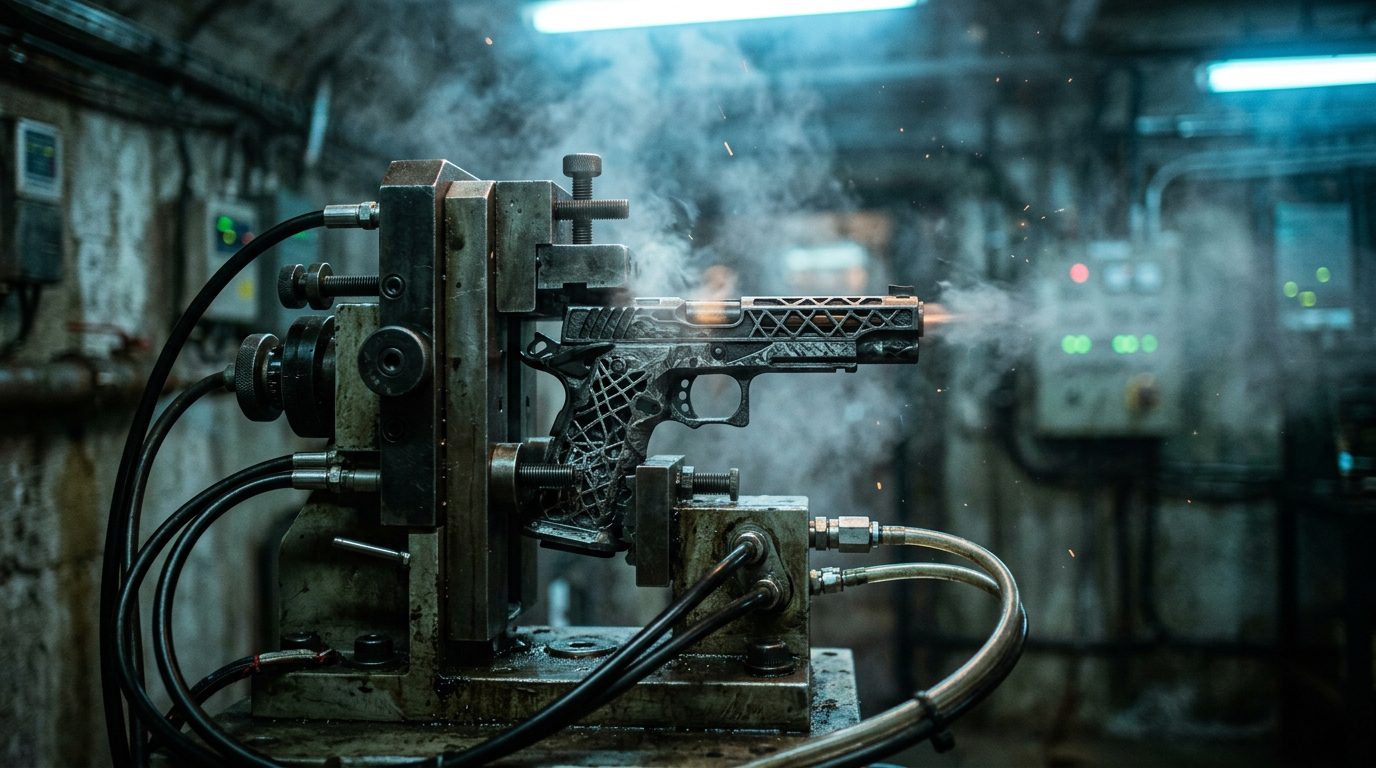
Every individual component—including the slide, frame, trigger, and magazine release—was mapped out within the physical meteorite chunk using high-resolution 3D imagery. Engineers had to scan the rock’s interior to avoid internal void spaces that could compromise structural integrity under the high pressures of live firing. The result was an iron meteorite pistol manufacturing process that relied heavily on techniques typically reserved for aerospace satellites and jet propulsion systems.
Metallurgical Profile of Cosmic Iron
-
Chemical Composition: Approximately 90 percent pure iron, 8 percent nickel, with delicate trace amounts of cobalt, phosphorus, and cosmic minerals.
-
Geological Age: Estimated at roughly 4.5 billion years old, predating the formation of Earth’s solid continental crust.
-
Structural Pattern: Naturally occurring Widmanstätten crystalline lattice that remains physically impossible to replicate in terrestrial manufacturing laboratories.
-
Primary Machining Challenges: Severe natural brittleness, non-uniform metal density, micro-fractures from atmospheric impact, and erratic mineral inclusions.
The Art of the Widmanstätten Pattern and Surface Aesthetics
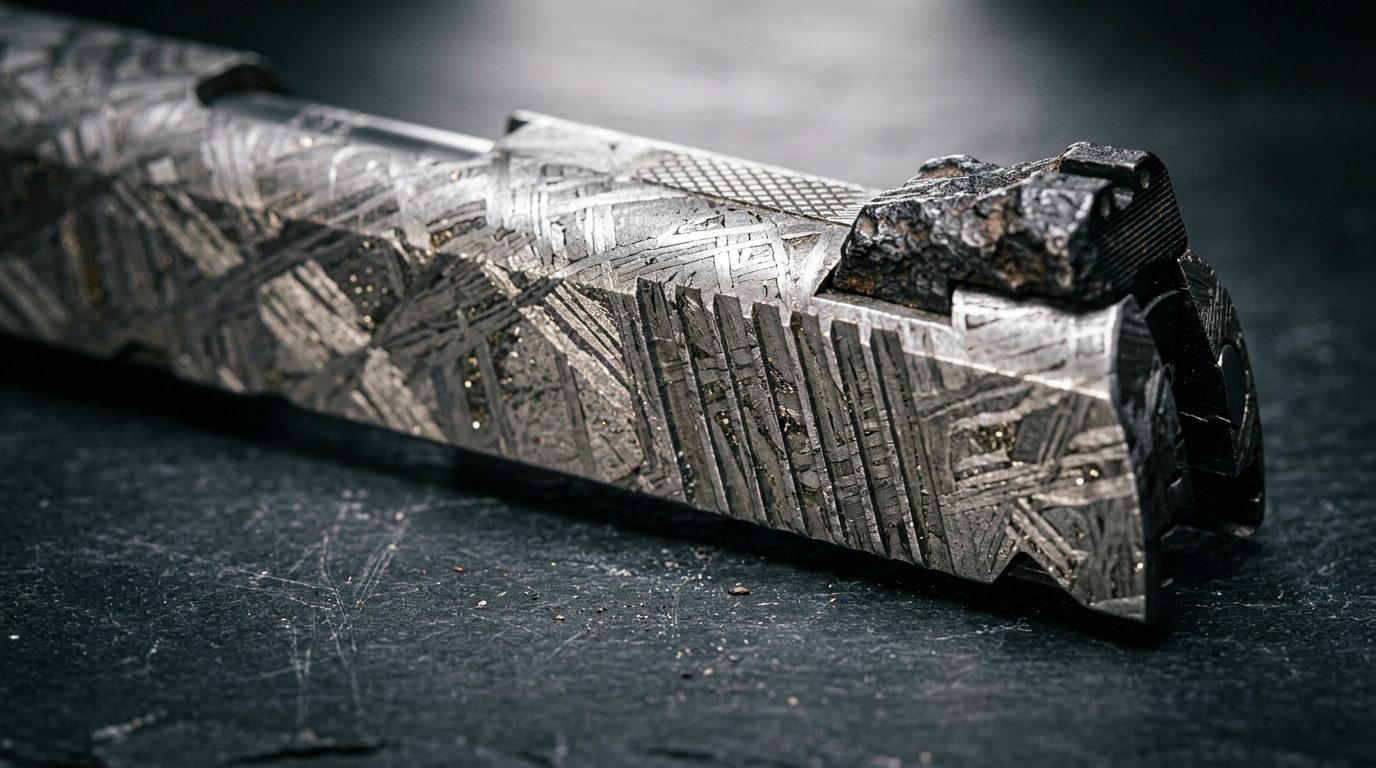
What makes a custom meteorite 1911 build visually captivating is that no two components ever look the same. The natural cross-hatched pattern revealed on the metal’s surface is completely unique to every square millimeter of the meteorite. Once the rough components of the firearm made from space rock are machined to microscopic tolerances, gunsmiths submerge the parts in a carefully controlled acid bath.
This delicate acid etching process selectively eats away the lower-nickel iron, leaving the higher-nickel bands standing out in sharp relief. The resulting aesthetic reveals the mesmerizing Widmanstätten pattern across the slide, frame, and grips. When light hits the surface of a rare space rock handguns set, it catches metallic facets that took billions of years to form across galaxy space lanes.
To preserve the raw cosmic texture while ensuring smooth mechanical operation, master gunsmiths leave certain exterior faces coarsely etched to highlight the natural bark of the meteorite. Meanwhile, internal sliding surfaces are lined or fitted with precise tolerances to guarantee that the metal-on-metal friction does not damage the delicate extraterrestrial structure. The end result is a high-contrast juxtaposition between rough cosmic crust and sleek, mirror-polished functional gun parts.
Firearm Mechanics: Is a Solid Meteorite 1911 Price Justified by Functionality?
A common question among firearms collectors and investors revolves around practical functionality: Can a pistol carved from a meteorite actually shoot live ammunition? The short answer is yes. However, firing such a piece comes with immense thermal and structural risks.
Because natural iron meteorite material lacks the modern tensile strength and stress resistance of forged gun steel, firing standard high-pressure cartridges through a pure meteorite barrel could prove catastrophic. To overcome this limitation, gunmakers engineered a brilliant hybrid solution. While the frame, slide, grips, sight, and controls are completely carved from the original space rock, the inner barrel rifling and pressure-bearing sleeves are lined with modern high-strength steel. This internal reinforcement ensures that the weapon can safely handle the high pressures of standard .45 ACP ammunition without risking the destruction of a multi-million dollar masterpiece.
-
Slide and Frame: Fully machined directly from Gibeon meteorite iron, displaying high-contrast full-face acid etching.
-
Grips and Controls: Precision carved from dense sections of space rock to preserve textural visual continuity.
-
Barrel Core: High-tensile steel lining inserted internally within the outer meteorite barrel shroud for extreme pressure containment.
-
Sights: Sculpted directly from the weathered, unrefined outer crust bark of the original extraterrestrial rock.
The mechanical smooth action achieved on these builds is a testament to top-tier meteorite gun craftsmanship. Despite using an erratic, non-terrestrial material, every tolerance is held to fractions of a thousandth of an inch. The slide glides along the frame rails with the silk-like fluidity expected from a modern competition-grade firearm.
Valuations, Auctions, and the Astronomical Price Tag
When talking about ultra-luxury collectibles, the meteorite gun price routinely shatters world records. Upon their public debut, the famous Cabot Guns meteorite set was listed with an astounding asking price of $4.5 million USD. This staggering figure instantly established them as the most expensive set of handguns ever crafted in human history.
Why is the meteorite handguns value set so astronomically high? The valuation stems from three critical factors:
-
Rarity of Material: High-quality iron meteorites large enough to yield full 1911 frames are extraordinarily rare. Namibia banned the export of Gibeon meteorites decades ago, making existing raw specimens priceless artifacts.
-
Extreme Manufacturing Risk: The sheer difficulty of machining brittle space metal means that one wrong cut could ruin a multi-hundred-thousand-dollar piece of raw meteorite in milliseconds.
-
Historical Uniqueness: The dual set—named “Big Bang”—represents the world’s first true functional set of twin handguns built entirely from an extraterrestrial body.
At high-end auctions, the Cabot meteorite 1911 cost reflects far more than just raw material value. It represents the intersection of luxury lifestyle, prehistoric history, fine art, and defense engineering. When a meteorite pistol auction price reaches multi-million dollar levels, buyers are paying for an unrepeatable historical milestone—a literal piece of the cosmos held right in the palm of their hand.
Summary of Key Takeaways
-
Extraterrestrial Origins: The pistols are carved from the Gibeon meteorite, an ancient nickel-iron space rock that crashed to Earth in prehistoric Namibia roughly 4.5 billion years ago.
-
Unmatchable Crystalline Aesthetic: The striking crisscross pattern on the metal surface—known as the Widmanstätten pattern—took millions of years to form in deep space and cannot be artificially recreated.
-
Extreme Mechanical Engineering: Precision tools like 3D laser scanning and electron discharge machining (EDM) were required to carve the rock without shattering its brittle internal structures.
-
Fully Functional Craftsmanship: While engineered primarily as million-dollar art pieces, the handguns feature internal steel barrel liners allowing them to safely cycle live .45 ACP ammunition.
-
Record-Breaking Valuation: Priced at an unprecedented $4.5 million, these firearms stand among the rarest, most valuable, and most exclusive mechanical art objects ever produced.
Frequently Asked Questions
Can you legally buy meteorite iron guns for sale on the open market?
Yes, purchasing a firearm made from meteorite material is legal in many jurisdictions, provided the buyer complies with standard local firearm purchase regulations. However, because authentic space iron is extremely scarce and machining costs are astronomical, true solid meteorite firearms are exceedingly rare items available almost exclusively through specialized auctions or custom ultra-luxury commissions.
500-Year-Old Armor for the Modern Millionaire: Why Buy It?
Kevlar body armor: It looks like something out of a Bond movie, but it can stop a bullet from a handgun.
A Watch with a Miniature V16 Engine? How Is That Possible?
How much does a Cabot meteorite 1911 cost today?
The famous two-pistol set crafted by Cabot Guns was originally valued at $4.5 million USD. Individual custom 1911 firearms featuring genuine meteorite grips or meteorite slide accents can range anywhere from $10,000 to over $150,000 depending on the percentage of space rock used in the build.
Will a real meteorite firearm rust over time?
Yes, because iron meteorites consist primarily of natural iron and nickel, they are susceptible to oxidation and corrosion if exposed to moisture or humidity. To protect these museum-grade weapons, owners must store them in climate-controlled environments and apply micro-crystalline wax coatings regularly to shield the metal from ambient air.
What is the Gibeon meteorite gun history?
The material used in these historic builds originated from the Gibeon meteorite field in Namibia. Falling to Earth in prehistoric times, the meteorite was discovered by indigenous populations who used fragments to craft basic tools. In modern times, master gunsmiths secured legally exported pre-ban pieces of this space rock to create the world’s first cosmic handguns.
Why is the Widmanstätten pattern so special on a meteorite pistol?
The Widmanstätten pattern is a distinct crystalline arrangement of nickel-iron alloys that only forms when liquid metal cools extraordinarily slowly in zero-gravity environments over millions of years. Its presence on a gun surface serves as scientific proof that the material originated from deep space rather than an earthly steel mill.
Experience Cosmic Craftsmanship
Are you fascinated by the world where extreme mechanical engineering meets cosmic history? Step into the world of luxury firearm collecting, bespoke metallurgy, and rare historical artifacts today. Explore our full library of deep-dive features, custom gunsmith spotlights, and rare auction reviews now to discover the world’s most extraordinary mechanical creations!