Befrey
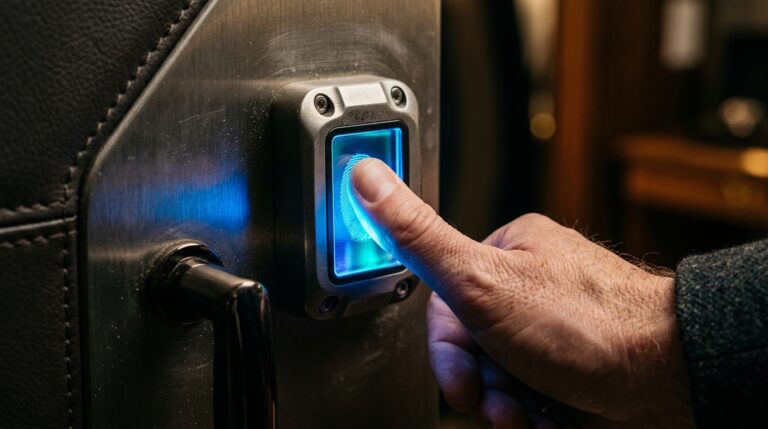
In the sprawling world of luxury horology, where intricate hands and skeletonized movements usually reign supreme, a watch without a dial represents the ultimate radical statement. At first glance, this enigmatic object appears to be nothing more than a seamless, heavy ingot of 18-karat precious metal clasped around a wrist. There are no hour markers, no ticking second hands, and no visible crystal screen. It looks like an exclusive, solid gold sculptural cuff or luxury bracelet. However, the moment you press a discreet side pusher, vibrant crimson numbers instantly pierce through the golden surface, revealing the exact hour and minute before fading back into complete visual anonymity.
This counter-intuitive concept—a luxury timepiece that actively conceals its primary function—shook the horological establishment to its core. By blending avant-garde industrial design with cutting-edge micro-electronics, master watchmakers introduced a mysterious luxury watch hidden display that transformed timekeeping from a passive passive display into an intimate, deliberate physical action. To understand why collectors and design purists remain obsessed with these solid gold digital luxury timepieces, one must venture into the thrilling intersection of 1970s futuristic design, secret optical metallurgy, and high-stakes luxury collecting.
The Birth of Invisible Timekeeping: Reimagining the Wristwatch Case
The architectural concept of an invisible dial watch gold design originated from a desire to challenge traditional watchmaking conventions. For centuries, watchmakers treated the dial as a canvas for hand-painted enamel, intricate guilloché engraving, or precious gemstone settings. However, during the mid-20th century, forward-thinking designers began asking a provocative question: What if the watch case itself absorbed the entire face of the timepiece?
By eliminating the conventional glass crystal and open watch face, designers created a fluid, unbroken metallic silhouette. This design language allowed the timepiece to masquerade as an extravagant gold watch that looks like a cuff bracelet. Worn under the cuff of a tailored tuxedo or bespoke suit, it projects absolute minimalist wealth without advertising itself as a utility instrument. The aesthetic appeal lies in its total opacity. It offers no visual clues to passersby, making it the ultimate conversation piece for those who appreciate stealth luxury.
Engineers had to overcome massive metallurgical challenges to achieve this seamless aesthetic. Creating a polished solid gold casing that houses micro-electronic circuits required extreme precision. Gold is naturally dense, heavy, and prone to micro-scratches. Furthermore, the push-button mechanism required watertight gaskets that could withstand thousands of manual depressions without compromising the internal electronic module.
The Revolutionary Mechanics of the Push-Button LED Display
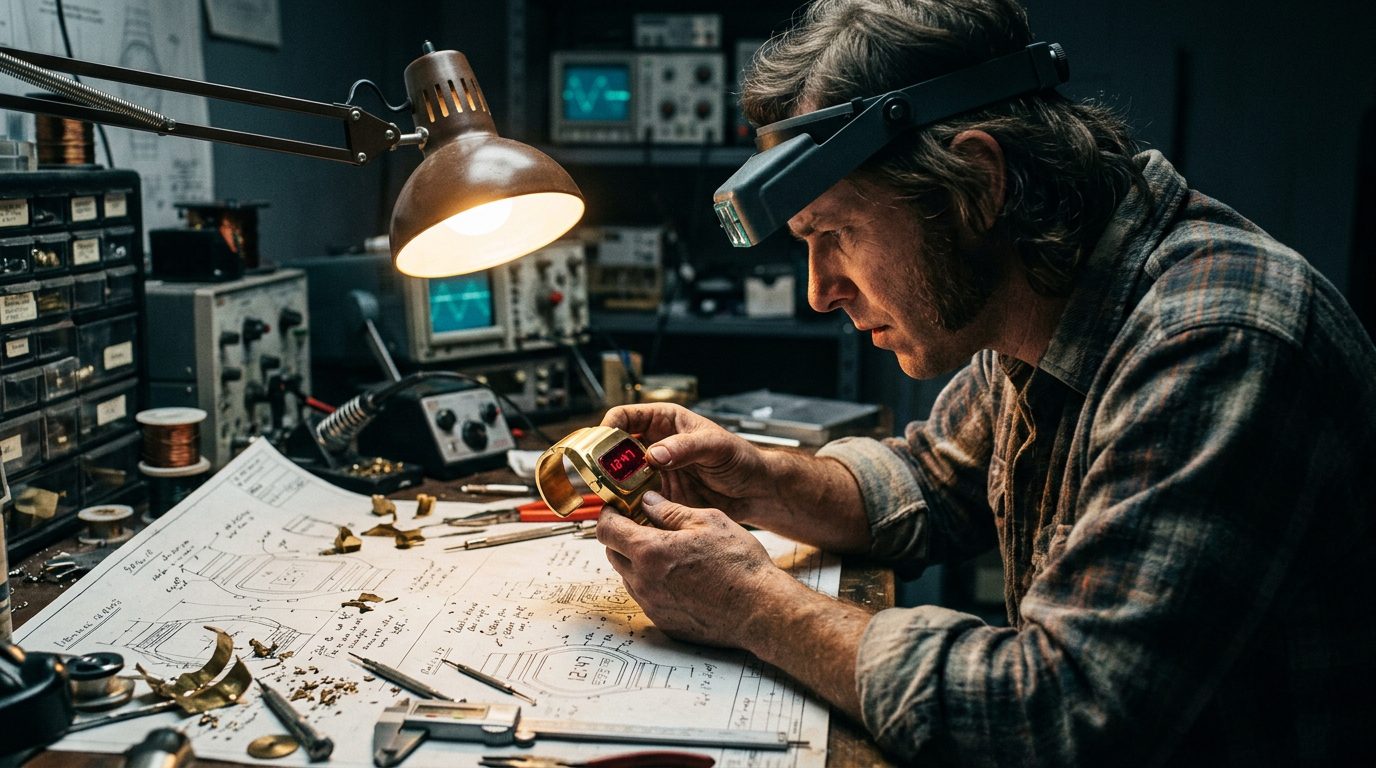
To understand how these futuristic timepieces function, one must explore how do LED digital watches work under heavy metallic shrouds. Unlike modern smartwatches with continuous always-on organic displays, classic luxury LED modules remain completely dormant until manually triggered. Inside the heavy casing sits a tiny quartz crystal oscillator vibrating at 32,768 Hz, powered by specialized silver-oxide micro-batteries.
When a wearer activates the external pusher, the internal integrated circuit instantly routes electrical current to an array of light-emitting diode segments. This mechanism powers the famous luxury watch push button LED display. The light produced by these tiny gallium arsenide diodes passes through specialized red synthetic ruby filters or micro-machined optical slits embedded directly within the gold structure.
-
Dormant State: The watch casing presents a continuous, highly polished, or brushed solid gold facade with zero visible glass borders.
-
Activation Phase: Pressing the side pusher closes an internal mechanical contact, sending electricity from the quartz battery to the LED module.
-
Optical Illumination: Bright red light projects through ruby-tinted synthetic crystals or micro-perforated gold filters, making the numbers legible even under direct sunlight.
-
Auto-Shutoff Sequence: To conserve precious battery power, the illuminated display stays lit for approximately 1.5 to 3 seconds before automatically fading back into total darkness.
This interactive design created an entirely new tactile experience. Rather than glancing down passively to check the time during a business meeting, the wearer had to make a conscious physical gesture. That deliberate act transformed time-telling into an exclusive secret shared only between the watch and its owner.
The Golden Era of High-End Digital Horology in the 1970s
During the early 1970s, digital technology was considered the absolute pinnacle of space-age luxury. Before mass production reduced microchips to bargain commodities, a solid gold red LED digital watch was significantly more expensive than a traditional mechanical Rolex, Patek Philippe, or Audemars Piguet. Wealthy elite buyers, Hollywood celebrities, and political icons lined up to purchase these space-age gadgets as status symbols of the future.
The pioneer of this movement was the Hamilton Watch Company, which unveiled the solid gold Hamilton Pulsar solid gold price tag of $2,100 in 1972—a sum that could purchase a brand-new luxury sedan at the time. Soon after, Swiss haute horology manufactures responded with their own avant-garde creations. Among the most iconic was the driver-style Girard Perregaux Casquette gold price model, which displayed time laterally on the side of the wrist so drivers could check speed without removing their hands from the steering wheel.
These timepieces represented a brief, glorious period where luxury and cutting-edge electronic innovation were one and the same. Owning a watch that shows time when you press a button signaled that you were a pioneer living at the absolute forefront of technological progress.
The Quartz Crisis and the Fall of First-Generation Electronic Luxury
The dominance of ultra-luxury digital watches was short-lived. To answer why did gold LED watches fail in the 1970s, one must examine the rapid economics of semiconductor manufacturing. Within five years of Pulsar’s triumphant release, cheap Asian quartz imports flooded the global market. Plastic LED and LCD watches began selling at drugstores for under ten dollars, rapidly eroding the elite prestige of digital timekeeping.
Furthermore, early LED technology suffered from severe energy inefficiency. The bright red diode displays consumed so much power that pressing the button frequently would drain the tiny batteries within a few weeks. If a user left the button pressed accidentally inside a pocket or tight sleeve, the watch would go dead in hours. This severe battery drag forced manufacturers to transition toward grey liquid crystal displays (LCD), which offered continuous visibility but lacked the dramatic flare of glowing red numbers against polished gold.
As the traditional Swiss industry collapsed during the devastating quartz crisis solid gold LED watches were rapidly discarded by style-conscious buyers. High-end collectors turned their backs on digital modules, retreating to classical mechanical craftsmanship. Consequently, manufactures melted down thousands of unsold solid gold LED cases for their raw bullion value, making surviving original specimens extraordinarily rare today.
The Modern Revival: Stealth Luxury and High-End Collecting
Decades after their sudden demise, high end gold LED watch collectors have sparked a massive global resurgence in demand for these retro-futuristic icons. In an era saturated with generic smartwatches that constantly buzz with notifications, tastemakers are turning back toward the quiet elegance of a luxury digital watch without dial. Modern watchmakers are answering this demand by combining vintage 1970s silhouettes with modern battery efficiency and scratch-resistant sapphire metallurgy.
Independent haute horology ateliers now produce bespoke iterations of the modern luxury watch without hands or dial. These contemporary masterpieces utilize hidden micro-LEDs concealed behind ultra-thin layers of genuine gold foil or semi-translucent sapphire crystals coated in metallic vapor deposition. The result is a piece that retains the pure sculptural aesthetic of a solid gold cuff while offering modern battery longevity that lasts for years.
-
Exclusivity: Limited production runs ensure these pieces remain ultra-rare status symbols at elite global gatherings.
-
Stealth Aesthetic: The complete lack of visible brand logos or screens delivers pure under-the-radar luxury.
-
Artisan Finishing: Modern hand-polishing and beveling elevate the solid gold chassis to fine jewelry standards.
-
Tactile Engagement: Re-establishing the physical push-button connection brings joy back to checking the time.
For affluent collectors, acquiring a rare vintage gold LED watch auction piece represents owning a monumental chapter of design history. It is a striking monument to an era when the future was bright, bold, and crafted from solid gold.
World’s Most Expensive Lighter: The $500K S.T. Dupont
Meteorite 1911 Pistol: The $4.5M Space Rock Gun
500-Year-Old Armor for the Modern Millionaire: Why Buy It?
Collector’s Guide: Evaluating Vintage Gold LED Timepieces
Navigating the market for a vintage LED gold watch value assessment requires deep technical knowledge and careful physical inspection. Because these watches rely on sensitive 50-year-old micro-circuits, buying a vintage specimen involves distinct risks compared to servicing a mechanical watch.
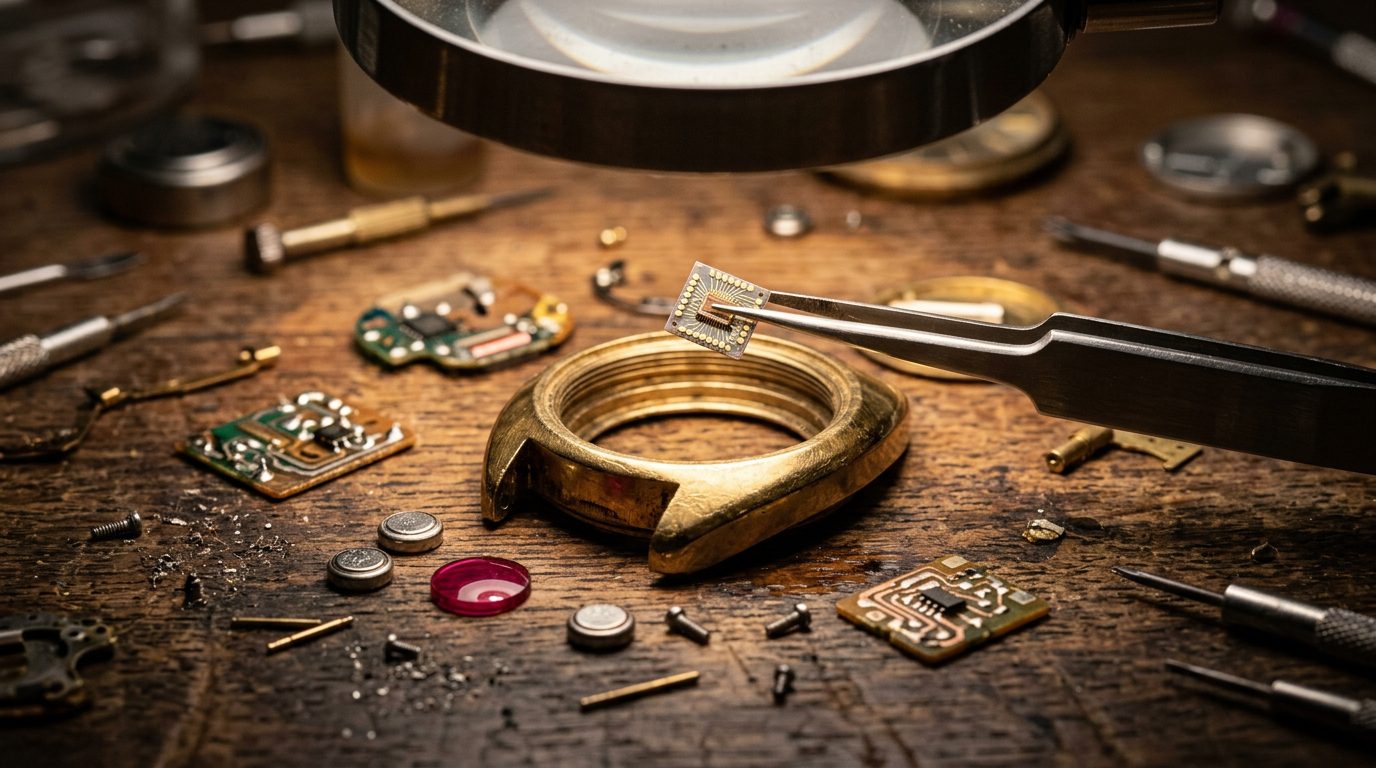
First, always verify the integrity of the electronic module. Original circuit boards from the 1970s can suffer from battery acid leakage, trace corrosion, or wire bond degradation. Many collectors seek out watches that have been retrofitted with modern custom-built SAS (Solid State) replacement modules, which fit perfectly inside original gold cases while providing superior power efficiency and water resistance.
Second, examine the solid gold bracelet and case for heavy polishing. Because gold is a soft metal, aggressive polishing by inexperienced jewelers can wash away sharp architectural facets, crisp bevel lines, and original serial number engravings. A heavily worn or over-polished case drastically reduces overall market value.
Finally, confirm whether the piece retains its original solid gold integrated bracelet or if it has been retrofitted with an aftermarket strap. An intact, full-length LED digital watch solid gold bracelet adds immense value, both in physical gold bullion weight and historical completeness.
Summary of Key Takeaways
-
Radical Aesthetic Concept: A dial-less gold watch conceals its timekeeping function behind a seamless, polished 18k gold casing, functioning visually as a solid luxury cuff bracelet.
-
Interactive LED Technology: Time is revealed only when activating a side button, lighting up red LED digits through optical filters before fading back into dark metal.
-
1970s Luxury Peak: Iconic models like the solid gold Hamilton Pulsar P1 and Girard Perregaux Casquette were priced higher than traditional mechanical luxury watches upon launch.
-
Rarity Born from Scarcity: Mass market semiconductor devaluation caused many gold cases to be melted down in the late 1970s, making surviving original pieces extremely valuable today.
-
Modern Renaissance: Contemporary haute horology manufactures are reviving the stealth, button-activated digital concept for modern collectors seeking unique luxury design.
Frequently Asked Questions
What is a watch without a dial called?
A watch without a dial is often referred to as a hidden-display watch, an invisible-dial watch, or a driver-style digital watch. In historical contexts, 1970s models featuring solid metallic facades with push-button activation were broadly categorized as solid-state LED digital timepieces.
How do you read the time on a dial-less gold watch?
To read the time, the wearer presses an external button or pusher located on the side of the case. This action completes an internal electronic circuit that illuminates glowing red or green LED digits through optical slits or semi-translucent filters for a few seconds.
Are vintage solid gold LED watches worth buying today?
Yes, vintage solid gold LED watches are highly prized by horological collectors due to their extreme historical significance, unique design, and rarity. Models in good working condition with unpolished cases command strong prices at major international auctions.
Why did early LED watches require a button press to show the time?
Early light-emitting diodes consumed significant electrical power. If the LED screen remained continuously lit, the small silver-oxide batteries inside the watch would drain completely within a matter of hours. The push-button mechanism was an engineering solution to conserve battery power.
Can you repair an old 1970s LED watch module?
Yes, specialized watchmakers can repair original vintage modules by replacing corroded quartz crystals, repairing broken wire bonds, or installing modern, power-efficient replacement circuits specifically engineered to fit inside original 1970s casings.
Experience Stealth Luxury
Are you fascinated by the world where revolutionary micro-electronics meet high-end precious metallurgy? Explore our complete library of deep-dive horology features, vintage auction reports, and bespoke watchmaking spotlights today. Uncover the hidden stories behind the world’s most extraordinary status symbols now!