Befrey
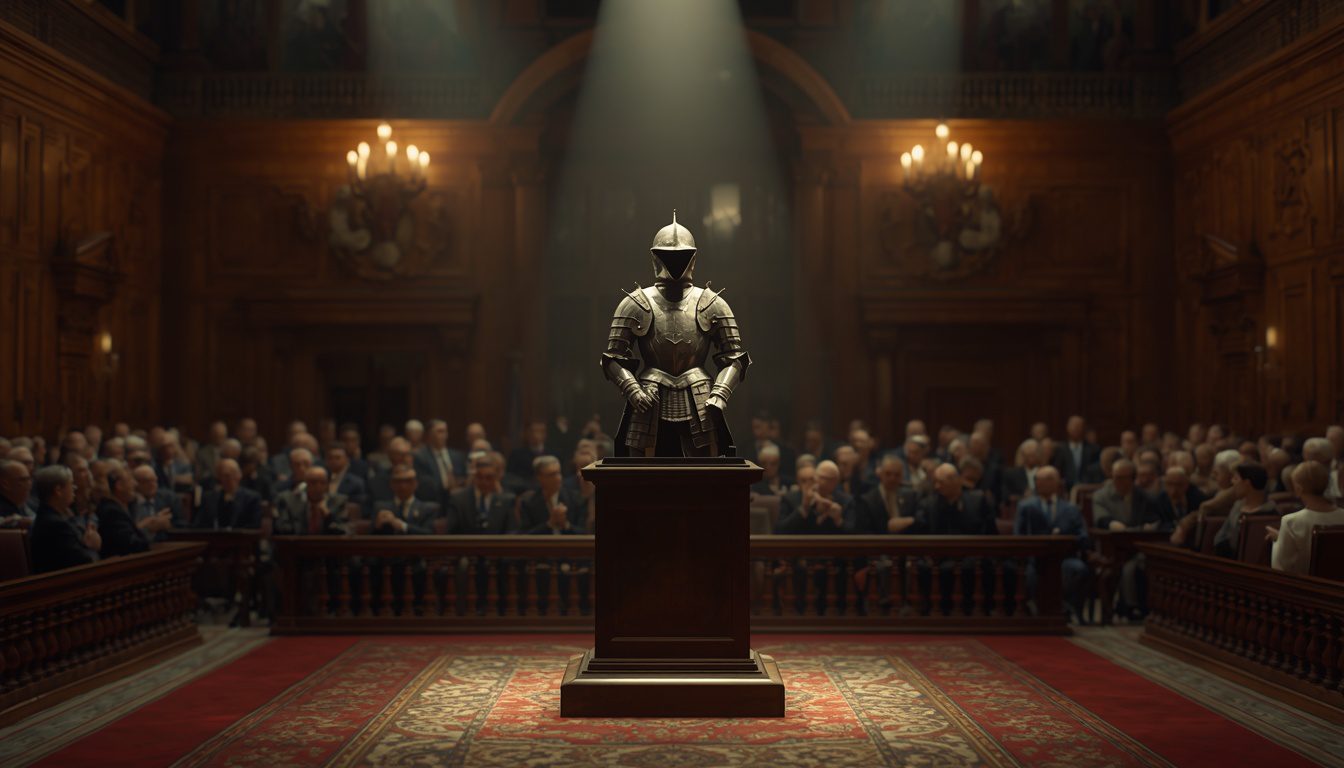
500-year-old armor for the modern millionaire is not a metaphor. It is a real, thriving corner of the luxury collectibles market, where billionaires, hedge fund managers, and old-money families quietly bid millions on genuine antique samurai suits and medieval European plate armor. This is not costume armor or movie prop replicas. It is authentic, centuries-old battlefield and ceremonial armor, hand-forged by named master craftsmen, sold through Christie’s, Sotheby’s, and Bonhams to buyers who treat it the way others treat fine art or vintage cars. Why would someone with unlimited buying power choose a rusted, dented suit of steel over a Picasso or a Ferrari? The answer involves history, scarcity, craftsmanship, and a very particular kind of status that no modern object can replicate.
Authentic Samurai Armor Investment: The $600,000 Wake-Up Call
Most people assume antique armor is a niche hobby for museum curators, not a serious investment category. That assumption collapsed on April 23, 2009, when a Christie’s auction in New York changed how collectors viewed Japanese armor forever. A Honkozane Nimai Do Gusoku suit, dating back to the Edo period, sold for $602,500, well above its original estimate of $250,000 to $300,000. The piece had genuine royal provenance, having once belonged to the Tokugawa family of the Kishu Domain, one of the most powerful ruling families in Japanese history. The winning bidder was not a private collector at all but the Minneapolis Institute of Art, proving that institutional buyers now compete directly with private wealth for the finest pieces. This single sale demonstrated something crucial: a suit of armor with the right pedigree behaves less like a curiosity and more like a blue-chip asset. Ordinary Japanese armor without royal or samurai-clan history still trades for meaningful sums, typically ranging anywhere from around €250 for fragmentary pieces up to €75,000 for complete, well-preserved suits. Once a piece carries documented ownership by a named samurai family, however, its value can jump by an order of magnitude overnight. Aucties + 2
Antique Knight Armor Auction Records That Defy Belief
European armor plays by the same rules, just with even higher ceilings. According to Guinness World Records, the highest price ever paid for a suit of armour at auction was £1,925,000, roughly $3,038,998, at Sotheby’s in London on May 5, 1983. The buyer, American collector B.H. Trupin, acquired a piece with an almost unbelievable backstory. The armor was crafted in Milan in 1545 by the legendary armorer Giovanni Negroli, made specifically for King Henri II of France, and came from the historic Hever Castle Collection in Kent. That sale happened over forty years ago, yet it still stands as the benchmark figure the entire antique armor market measures itself against. What makes this record so remarkable is the combination of factors driving it: a documented royal commission, a world-famous workshop, and a chain of ownership traceable across five centuries. Very few objects on Earth carry that exact combination of scarcity and story. This is precisely why serious European armor still routinely commands six and seven figures at major auction houses, decades after that record was set. FloridaweeklyFloridaweekly

Provenance of Historic Armor: Why Paperwork Beats Steel
Ask any serious collector what actually drives price, and they will not talk about steel thickness or decoration first. They will talk about provenance. The provenance of historic armor determines whether a piece is worth thousands or millions, because armor, unlike paintings, was frequently mixed, matched, and “improved” by later owners and dealers. Nineteenth-century collectors, especially during the Victorian Grand Tour era, often combined mismatched helmets, breastplates, and limb protection from different suits to create a more complete-looking display piece, and some of those composite suits still circulate today disguised as originals. Auction houses now spend enormous resources tracing a suit’s specific documented history, its attributed workshop or armorer, and any recorded ownership by named historical figures before ever printing an estimate. A Bonhams sale of samurai armor, for instance, priced individual Myōchin-school pieces from established eighteenth-century workshops between roughly $45,000 and $150,000, depending entirely on the specific school, maker, and documented history behind each piece. Buyers who skip this due diligence risk paying premium prices for what turns out to be a skillfully reassembled composite rather than a single coherent historical object. This is why every reputable transaction now involves independent scholarly authentication, not just a seller’s word. Swordis
Famous Arms and Armor Collectors Who Started the Trend
The modern millionaire buying antique armor is following a well-worn path laid down by some of America’s wealthiest industrialists a century ago. Publishing magnate William Randolph Hearst became one of history’s most aggressive armor buyers, and it is believed that Hearst alone accounted for roughly 25 percent of the entire world art market during the 1920s and 1930s. Hearst kept much of his collection not at his famous California estate but overseas, since he specifically purchased a real castle in Wales, St. Donat’s, to properly house his growing arms and armor collection. He had genuine competition too, because fellow collector Clarence Mackay was Hearst’s chief rival in the saleroom, and the two men repeatedly pushed prices for arms and armor to astronomical levels. Much of this rivalry still shapes major museum collections today, since a large portion of the Detroit Institute of Arts’ arms and armor holdings originally came from a loan by Hearst in the 1940s, later becoming a permanent gift after his death in 1951. Financier J. Pierpont Morgan took a more selective approach, owning essentially just one legendary piece: a parade helmet crafted by master armorer Filippo Negroli of Milan in 1543, which he donated to the Metropolitan Museum in 1919. These early twentieth-century collectors did not just buy armor as decoration. They built the institutional infrastructure, expertise, and market legitimacy that today’s buyers now rely on. Peabody Museum + 3
Armor as an Alternative Investment for the Ultra-Wealthy
Modern collectors rarely admit it publicly, but armor functions as a genuine alternative investment inside diversified wealth portfolios. Unlike stocks or bonds, a five-hundred-year-old suit of armor cannot be printed, diluted, or replaced, since the supply is permanently fixed by history itself. Every year, more surviving suits move into museum collections and become permanently unavailable, which means the pool of purchasable, investment-grade pieces only shrinks over time. This scarcity dynamic mirrors what drives prices in fine art and rare wine, except armor combines that same scarcity with tangible, physical, display-worthy presence that a stock certificate simply cannot offer. Wealthy buyers increasingly treat these purchases the way they treat classic cars or rare watches, as assets that provide enjoyment while potentially appreciating alongside broader collectible markets. Unlike equities, armor also carries near-zero correlation with financial markets, since its value depends almost entirely on art-historical scholarship, condition, and provenance rather than interest rates or corporate earnings. This is precisely why family offices and wealth advisors increasingly categorize museum-quality armor alongside other “passion assets” in estate planning conversations.

Caring for Antique Armor Collections: The Hidden Cost of Ownership
Buying the armor is genuinely the easy part; caring for antique armor collections properly is where real expertise and ongoing expense begin. Steel armor is extraordinarily vulnerable to humidity, and even brief exposure to moisture can trigger corrosion that permanently damages centuries-old surface detail and original finish. Serious collectors install museum-grade climate control systems specifically calibrated to maintain stable humidity levels, since fluctuating conditions cause more long-term damage than steady, even slightly imperfect environments. Japanese armor introduces an additional challenge, since it combines steel plates with silk lacing, lacquer, and leather components that each demand completely different conservation approaches than European steel alone. Professional conservators specializing in historic arms and armor charge substantial fees for periodic inspection, cleaning, and any necessary stabilization work, and most serious collectors budget for this as an ongoing cost rather than a one-time expense. Insurance for museum-quality armor also requires specialized fine art policies, since standard homeowner coverage rarely accounts for the true replacement impossibility of a unique historical object. Collectors who skip proper conservation planning often watch their six-figure investment quietly deteriorate within a single generation of neglect.
What Makes a Suit of Armor Museum-Worthy
Not every antique suit deserves museum-level pricing, and understanding the difference separates serious buyers from casual ones. Completeness matters enormously, since a full, matching, original suit commands far more than a collection of individually authentic but mismatched pieces. Attribution to a specific named workshop or master armorer, whether it is Italy’s Negroli family or Japan’s Myōchin school, dramatically increases both scholarly interest and resale value. Decorative sophistication also plays a major role, since heavily embossed, gilded, or lacquered pieces required exponentially more skilled labor than plain field armor made purely for battlefield function. Documented historical use, particularly evidence connecting a piece to a specific named battle, campaign, or notable warrior, adds a storytelling dimension that pure aesthetics cannot replicate. Condition matters too, though buyers should expect visible age; a suit that has been over-polished or aggressively “restored” often loses more value than one showing honest, stable wear consistent with its true age. The very best pieces satisfy all five criteria simultaneously, which is exactly why they remain vanishingly rare and command the highest prices at auction.
Samurai Armor vs. European Armor: Two Philosophies of Protection
Placing a samurai gusoku next to a European suit of plate reveals two completely different engineering philosophies solving the same problem. European armorers, working primarily in cold climates with abundant iron and steel, prioritized maximum coverage and rigidity, producing heavy, fully articulated steel suits that could weigh well over forty pounds. Japanese armorers instead built flexible, lightweight systems using small lacquered iron or leather plates called kozane, laced together with silk cord into moving, breathable panels suited to Japan’s climate and fighting style. This difference shows up directly in collector preferences today, since European armor buyers often prize raw craftsmanship in metalworking and engraving, while samurai armor buyers frequently focus on the intricate lacing patterns, lacquer artistry, and symbolic clan decoration. Both traditions eventually shifted from purely functional battlefield gear toward increasingly ornamental ceremonial and parade versions as firearms made traditional armor obsolete on real battlefields. That shift actually benefits today’s collectors, since many surviving pieces were built specifically for display and preservation rather than combat, which is part of why they survived in wearable condition at all. Understanding this cultural divergence helps new collectors decide which tradition genuinely resonates with their own taste, rather than simply chasing whichever category currently commands headlines.
The Modern Collector’s Playbook: How to Start Buying Real Armor
Anyone serious about entering this market should start by attending, not bidding at, a few major auction house sales first. Christie’s, Sotheby’s, and Bonhams all run dedicated arms and armor or samurai art sales annually, and simply watching how experienced bidders behave teaches more than any single article can. Building a relationship with an independent arms and armor specialist, separate from the auction house’s own experts, provides an unbiased second opinion before committing serious money to any single lot. New collectors should resist the urge to chase the flashiest, most decorated pieces first, since well-documented but visually modest armor often represents better long-term value than showy but poorly attributed suits. Setting a realistic entry budget matters too, since genuinely collectible pieces with real provenance rarely appear below the low five figures, even for relatively modest examples. Finally, budgeting immediately for proper storage, climate control, and periodic professional conservation prevents the common mistake of spending everything on acquisition and nothing on preservation. Collectors who follow this disciplined approach tend to build collections that both appreciate financially and hold genuine historical significance for generations.
A Watch with a Miniature V16 Engine? How Is That Possible?
Kevlar body armor: It looks like something out of a Bond movie, but it can stop a bullet from a handgun.
The World’s Most Expensive Pocket Knife: Why a Pocket Knife Set with Diamonds Costs More Than a New Villa.
Summary
The market for authentic antique armor has quietly grown into a legitimate alternative asset class, anchored by record sales like the $602,500 Tokugawa-provenance samurai suit sold at Christie’s in 2009 and the $3 million Negroli armor made for Henri II of France, sold at Sotheby’s in 1983. Wealthy collectors from William Randolph Hearst to today’s family offices have treated armor as far more than decoration, valuing it for scarcity, documented provenance, and irreplaceable craftsmanship. Samurai and European armor represent two distinct engineering traditions, each with its own collecting culture, pricing logic, and conservation demands. Buying well requires understanding provenance, completeness, attribution, and ongoing conservation costs, not just the initial purchase price.
FAQ
Is antique armor actually a good financial investment?
It behaves more like fine art than a traditional financial asset. Well-provenanced pieces have shown strong long-term appreciation, but liquidity is limited and returns depend heavily on documented history and condition rather than predictable market cycles.
How can I tell if a suit of armor is a genuine composite rather than original?
Independent scholarly authentication is essential. Reputable auction houses employ specialists who examine construction techniques, metallurgy, and stylistic consistency across every component to detect later “marriages” of mismatched original pieces.
Why do samurai and European armor prices vary so widely?
Price depends almost entirely on documented provenance, attributed workshop or armorer, completeness, and decorative complexity rather than age alone. A plain, undocumented piece can sell for a fraction of a suit with royal or clan ownership history.
Do I need special insurance for an antique armor collection?
Yes. Standard homeowner policies rarely reflect the true, often irreplaceable value of historic armor, so most serious collectors work with fine art and collectibles insurers who specialize in valuing unique historical objects.
Where do serious collectors actually buy authentic pieces?
Major auction houses including Christie’s, Sotheby’s, and Bonhams run dedicated arms and armor and samurai art sales, and working with independent specialists alongside these venues helps verify authenticity before any serious purchase.
Call to Action
If the idea of owning a genuine piece of five-hundred-year-old craftsmanship fascinates you as much as it fascinates us, stick around. We break down the real stories behind history’s most remarkable objects every week, so follow along and tell us in the comments which era of armor you’d want us to cover next.