Real Witches: The Untold Trials Where More Than Just Superstition Was at Stake
 Befrey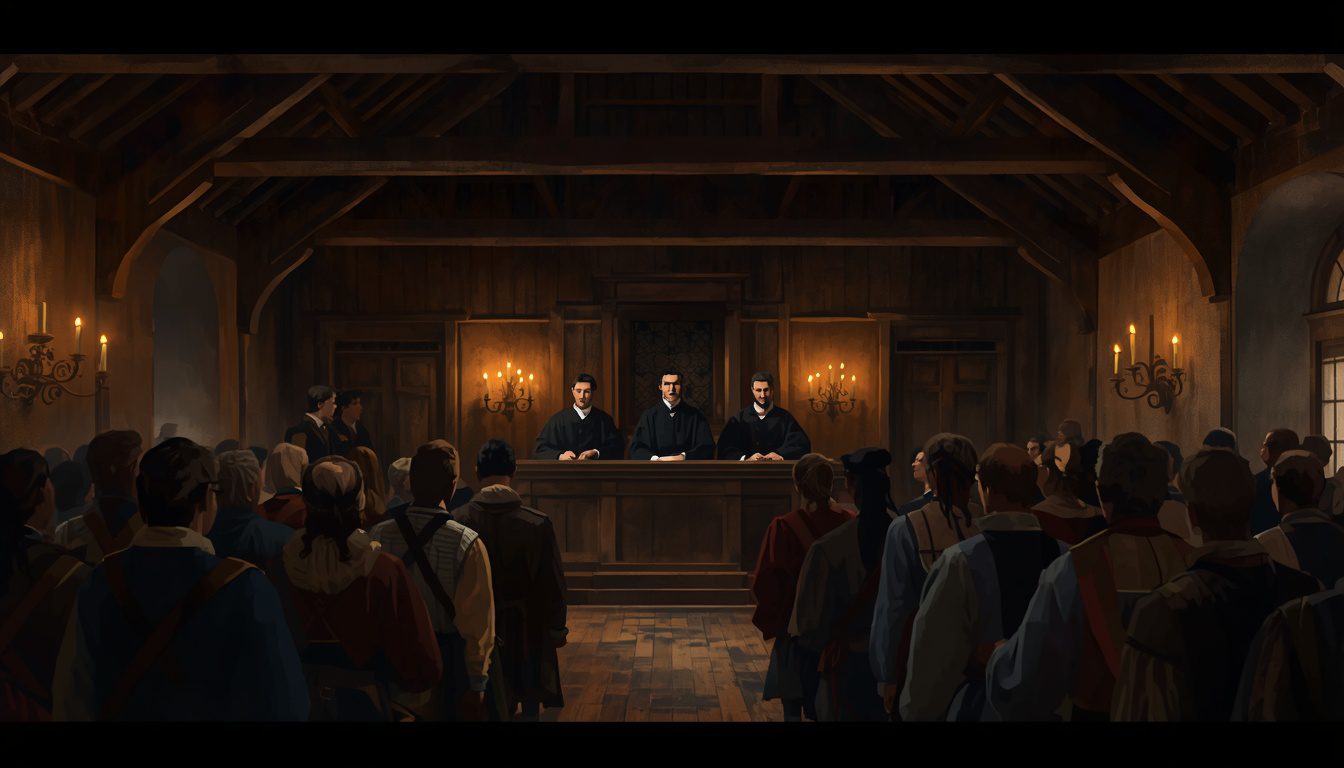
Real witches, or at least the fear of them, shaped courtrooms, villages, and entire nations for more than three centuries. When most people picture witch trials, they imagine little more than superstition: black cats, pointed hats, and frightened peasants pointing fingers at the local outcast. But the true history of witch persecution is far darker and far more human than that image suggests. Behind almost every accusation of witchcraft sat something else entirely: land disputes, political rivalries, personal grudges, and desperate struggles for power. This article pulls back the curtain on real witches, real trials, and the very real stakes that went far beyond superstition. By the end, you will understand why these events still matter today, and why calling them “just superstition” does a disservice to the thousands of people who paid with their lives.
European Witch Hunt Persecution: How the Terror Began
The story does not start in Massachusetts. It starts in medieval and early modern Europe, where fear, religion, and social chaos collided in a uniquely violent way. In 1487, a Catholic clergyman named Heinrich Kramer published the Malleus Maleficarum, a manual that framed witchcraft as a real, organized threat and argued that women were especially susceptible to it. This single text acted like gasoline poured on smoldering anxieties. Europe at the time was already reeling from famine, plague, war, and the religious upheaval of the Reformation, and communities needed someone to blame for their suffering. Historians estimate that somewhere between forty thousand and sixty thousand people were executed for witchcraft across Europe between roughly 1450 and 1750, though exact numbers remain debated because record-keeping varied wildly by region. What makes this wave of European witch hunt persecution so chilling is that it was not random chaos; it was organized, legally sanctioned, and often deeply intertwined with local politics. Villages that experienced sudden crop failure, livestock death, or unexplained illness frequently turned to witchcraft accusations as a way of making sense of an unpredictable world, and once one accusation stuck, it often triggered a chain reaction of further denunciations.
Witch Trial Interrogation Methods: How Confessions Were Forced
Once someone was accused, the legal system rarely gave them a fair chance. Witch trial interrogation methods were designed less to uncover truth and more to guarantee a confession. One common technique was the “swimming test,” in which the accused was bound and thrown into water; if they floated, this was taken as proof the water was rejecting them, and floating meant guilt. If they sank, they were declared innocent, though by then they had often already drowned. Another method involved “pricking,” where interrogators searched the accused’s body for a supposed “devil’s mark,” a spot that did not bleed or feel pain when pierced with a needle. Sleep deprivation was also widely used, sometimes called “waking” a suspect, where guards kept a prisoner awake for days until exhaustion produced disoriented, incoherent statements that could be twisted into a confession. In Scotland, court records describe how accused individuals were kept from sleeping for extended stretches by paid watchers until they broke down mentally and admitted to whatever they were accused of. One documented case describes a woman held in a freezing church steeple and deliberately kept awake by soldiers paid for the task. These interrogation methods created a brutal trap: the accused was guilty if they confessed under torture, and often still treated with suspicion even if they somehow survived without confessing. Atlas Obscura

Salem Witch Trials History: America’s Most Infamous Panic
No discussion of this topic is complete without Salem, and Salem witch trials history remains the most studied witch panic in the Western world. In 1692, a small group of girls in Salem Village, Massachusetts, began experiencing strange fits, and when questioned, they claimed they were being tormented by the specters of local residents. What followed was a legal and social collapse. Courts accepted “spectral evidence,” meaning testimony that a victim’s spirit alone had seen the accused’s ghostly form committing harm, which meant literally anyone could be accused based on someone else’s dream or vision. More than two hundred people across Massachusetts were formally accused of witchcraft during this single panic. Of those convicted, nineteen were hanged, and one man was crushed to death under heavy stones during his interrogation, a punishment used to force him to enter a plea. Several more accused people died awaiting trial in filthy, overcrowded jail cells. What makes Salem so instructive is how quickly a local dispute among neighbors, combined with religious anxiety and colonial insecurity, spiraled into a legal catastrophe that consumed an entire community in less than a year. Fox News

Famous Witch Trial Victims Whose Names Still Echo Today
History remembers certain names because their stories capture just how arbitrary and unjust these trials really were. Among the famous witch trial victims of Salem, Bridget Bishop stands out as the first person executed, condemned largely because of her unconventional lifestyle and reputation for gossip rather than any real evidence. Rebecca Nurse, an elderly and deeply respected church member, was accused almost inexplicably, and her conviction shocked many in the community who could not believe someone so pious could be guilty. Giles Corey, an eighty-year-old farmer, refused to enter a plea at all, and according to long-standing historical accounts, he was pressed under stones for days, reportedly demanding more weight be added rather than confess to a crime he did not commit. Across the Atlantic, Agnes Sampson was tortured and executed in Scotland in 1591 after being accused of using witchcraft to raise storms against King James VI’s ship. In Germany, Katharina Kepler, mother of the famous astronomer Johannes Kepler, spent over a year imprisoned on witchcraft charges before her son successfully defended her in court. In Switzerland, a woman named Anna Göldi was executed in 1782, an event now widely regarded as the last legal execution for witchcraft in Europe. Each of these individuals had a real life, real relationships, and real reasons their community turned against them, and none of those reasons had anything to do with actual sorcery.
The Economic and Political Motives Behind Witch Accusations
Here is where the story stops being about superstition and starts being about something much more calculated. The economic and political motives behind witch accusations shaped almost every major trial in history, and once you understand this, the entire pattern of persecution starts to make disturbing sense. In Salem, historians have long noted that accusations tended to flow between rival families locked in property and land disputes, with accusers frequently belonging to one faction and the accused to another. A convicted witch’s property could sometimes be seized or forfeited, which created a direct financial incentive for accusations against wealthy widows or landowners who had no male heir to protect their estate. Widows and unmarried women who controlled land independently were disproportionately targeted throughout Europe precisely because their property could be redistributed once they were removed. Political leaders also weaponized witchcraft accusations to eliminate rivals or consolidate authority; King James VI of Scotland personally involved himself in witch trials partly to reinforce his own authority as a divinely protected monarch threatened by supposed dark forces. In Germany, the Trier and Würzburg witch trials of the late sixteenth and early seventeenth centuries were closely tied to local bishops and rulers using persecution to tighten religious and political control over their territories, sweeping up wealthy citizens, government officials, and even clergy whose property or influence made them convenient targets. Once you strip away the language of sorcery, what remains looks remarkably familiar: greed, jealousy, and the ruthless pursuit of power dressed up in religious justification.

Beyond Salem: Witch Panics That Swept Across the Globe
Salem was dramatic, but it was actually a relatively small and late chapter in a much larger global story. The Würzburg witch trials in Germany, occurring between 1626 and 1631 under a powerful local bishop, are estimated to have resulted in the executions of hundreds of people, including children and even clergy members caught up in the hysteria. The Trier witch trials, decades earlier, are considered among the largest witch persecutions in European history, with entire villages losing significant portions of their population. Not every region embraced the panic equally, though, which is an important and often overlooked detail. In Spain, an Inquisitor named Alonso de Salazar Frías investigated the Basque witch trials around 1610 and grew deeply skeptical of the confessions being extracted, ultimately arguing that most accusations were unreliable and that the Spanish Inquisition should exercise far greater caution going forward. This skepticism actually made Spain comparatively less deadly for accused witches than many of its neighbors. In France, the notorious “Affair of the Poisons” during the reign of King Louis XIV blended real criminal poisoning plots with witchcraft accusations at the royal court, showing how genuine crime and supernatural panic could become tangled together at the highest levels of society. These global variations prove that witch hunts were never a single uniform phenomenon; they were shaped by local politics, local law, and local ambition just as much as by shared superstition.
The Church, the Crown, and the Machinery of Persecution
Witch trials did not happen in a vacuum; they were built on formal legal and religious infrastructure that made mass persecution possible. The Malleus Maleficarum gave both Catholic and later Protestant authorities a shared theological framework for treating witchcraft as a real, prosecutable crime rather than folk superstition. Legal codes reinforced this framework directly, including Scotland’s Witchcraft Act of 1563 and England’s Witchcraft Act of 1604, both of which made practicing or even suspected witchcraft a capital offense under formal law. King James VI added fuel to the fire personally by writing Daemonologie in 1597, a text intended to prove that witches were real and dangerous, which lent royal authority to ongoing persecutions. Perhaps most disturbing was the rise of professional “witch-finders,” private individuals hired to travel between villages identifying suspected witches for a fee. Matthew Hopkins, self-styled “Witchfinder General,” operated in England during the 1640s and is believed to have been responsible for more witch trial deaths in a few short years than had occurred in the previous century combined, earning money for every conviction he helped secure. This combination of religious doctrine, royal endorsement, formal law, and financial incentive turned isolated local panics into a systematic machine capable of destroying entire communities with terrifying efficiency.
How the Witch Trials Finally Came to an End
Persecution on this scale could not last forever, and its decline reveals just as much about human psychology as its rise did. Skepticism grew steadily among educated elites during the late seventeenth and eighteenth centuries as Enlightenment thinking took hold and demanded stronger evidence before accepting supernatural claims. In New England, the Salem panic itself became a turning point when respected minister Increase Mather publicly criticized the court’s reliance on spectral evidence, arguing it was better for guilty persons to escape than for one innocent person to be condemned. Legal systems across Europe gradually stopped treating witchcraft as a literal, prosecutable crime, and by 1735, England’s revised Witchcraft Act redefined witchcraft claims as a form of fraud rather than genuine sorcery, effectively ending large-scale prosecutions. Print culture played an underappreciated role here too, as pamphlets and books documenting wrongful executions circulated widely and forced uncomfortable public reckoning with what had happened. By the time Anna Göldi was executed in Switzerland in 1782, such prosecutions were already an outlier rather than the norm, a grim final chapter rather than business as usual. The end of the witch trials was not a single dramatic event but a slow erosion of belief, driven by science, skepticism, and growing horror at the human cost of the panic.

Modern Witch Hunts and Their Lasting Legacy Today
It would be comforting to say this is all ancient history, but modern witch hunts and their legacy today prove otherwise in two very different ways. On one hand, formal legal reckoning has finally begun. Scotland’s government estimates that around four thousand people, most of them women, were formally accused of witchcraft between 1563 and 1736, and more than twenty-five hundred were executed, roughly four-fifths of them women, typically strangled and then burned. In March 2022, Scotland’s First Minister issued a formal apology to everyone persecuted under the country’s Witchcraft Act, acknowledging the injustice publicly for the first time in the nation’s history. That same year, Massachusetts finally closed its own final chapter when lawmakers formally exonerated Elizabeth Johnson Jr., the last remaining unpardoned victim of the Salem trials, through legislation signed into law in July 2022, more than three centuries after her original conviction. On the other hand, actual witch-hunting violence has never fully stopped. In Papua New Guinea, more than one hundred fifty witch-hunting cases occur annually in Simbu province alone, and local activists estimate over fifty thousand people have been driven from their homes due to witchcraft accusations, prompting the government to declare witch-hunting a capital offense in 2013. In Ghana, accused women are sometimes forced into so-called “witch camps,” living in exile from their communities, while in Tanzania elderly women have been attacked because smoke-clouded red eyes from a lifetime of cooking over open fires are misread as evidence of sorcery. In parts of sub-Saharan Africa, researchers estimate tens of thousands of children have been branded witches and orphaned as a result, with one estimate placing the number of such children in Kinshasa alone near forty thousand. The legacy of witch persecution, in other words, is not a closed book. It is simultaneously a story of overdue justice and a story that, tragically, is still being written in real time. bbci + 6
Lessons the Witch Trials Still Teach Us Today
Stepping back from the individual cases, a clear pattern emerges across four centuries and multiple continents. Fear alone rarely built a witch trial; fear needed to be paired with opportunity, whether that opportunity was land, money, political power, or simple personal revenge against a difficult neighbor. Marginalized people, especially widows, the poor, and those without strong family protection, were consistently the easiest targets because they had the least ability to defend themselves in court or in public opinion. Legal systems that abandoned normal evidentiary standards, like Salem’s acceptance of spectral evidence, created conditions where literally anyone could be accused and convicted based on nothing more than a rumor or a bad dream. The presence of financial incentives, whether through property seizure or paid witch-finders, turned persecution into a self-sustaining industry rather than a rare emergency measure. Perhaps most importantly, the trials remind us how quickly ordinary communities can turn on their own members when fear, scarcity, and weak legal safeguards combine. Understanding this history is not just an academic exercise; it is a warning about how easily justice can collapse when accusation alone becomes treated as proof.
Lost Manuscripts of Black Magic – Books That Changed Their Readers Forever
The Call of Darkness: Rituals That Were Never Meant to Be Spoken Aloud
Demonic Entities Hidden Behind “Innocent” Games – From Ouija Boards to Modern Apps
Summary
Real witches, in the sense the world once feared, never existed, but real people absolutely suffered and died because of the accusations against them. From the Malleus Maleficarum’s influence on European witch hunt persecution, to the brutal witch trial interrogation methods used to extract false confessions, to the infamous Salem witch trials history that still captures public imagination, this was never simply a story about superstition. Famous witch trial victims like Bridget Bishop, Giles Corey, and countless others across Europe lost their lives largely because of the economic and political motives behind witch accusations, from land disputes to royal power struggles to the profit motive of professional witch-finders. Modern witch hunts and their legacy today show this history is not fully closed, with formal apologies and exonerations happening alongside ongoing violence in parts of the world today. The real lesson is not about magic at all. It is about how fear, greed, and power can combine to destroy innocent lives when legal protections fail.
Frequently Asked Questions
What actually caused the witch trials to happen?
A combination of religious anxiety, social upheaval, economic hardship, and weak legal protections created the conditions for mass witchcraft accusations. Many individual accusations were also driven by land disputes, personal grudges, or political rivalries rather than genuine belief in sorcery.
How were people “proven” to be witches?
Courts relied on deeply flawed methods including forced confessions extracted through torture, the “swimming test,” searching for so-called devil’s marks, and spectral evidence, meaning testimony that someone’s ghost or spirit had caused harm. None of these methods provided reliable proof of anything.
Who were the most famous witch trial victims?
Notable names include Bridget Bishop and Giles Corey from the Salem trials, Agnes Sampson from Scotland’s North Berwick trials, Katharina Kepler in Germany, and Anna Göldi in Switzerland, widely regarded as the last person legally executed for witchcraft in Europe.
Are witch hunts still happening today?
Yes. Witchcraft accusations continue to drive real violence in parts of Papua New Guinea, Ghana, Tanzania, and other regions, with tens of thousands of people, including children, affected by displacement, exile, or worse.
Has anyone accused of witchcraft ever been officially pardoned?
Yes. Massachusetts formally exonerated the last unpardoned Salem victim, Elizabeth Johnson Jr., in 2022, and Scotland’s government issued a formal apology that same year to everyone persecuted under its historic Witchcraft Act.
Call to Action
History has a way of repeating the same mistakes when we stop paying attention to them. If this deep dive into real witches and the trials behind them fascinated you, share it with someone who thinks these stories are just old superstition, and follow along for more deep, myth-busting dives into the darkest corners of history.