Befrey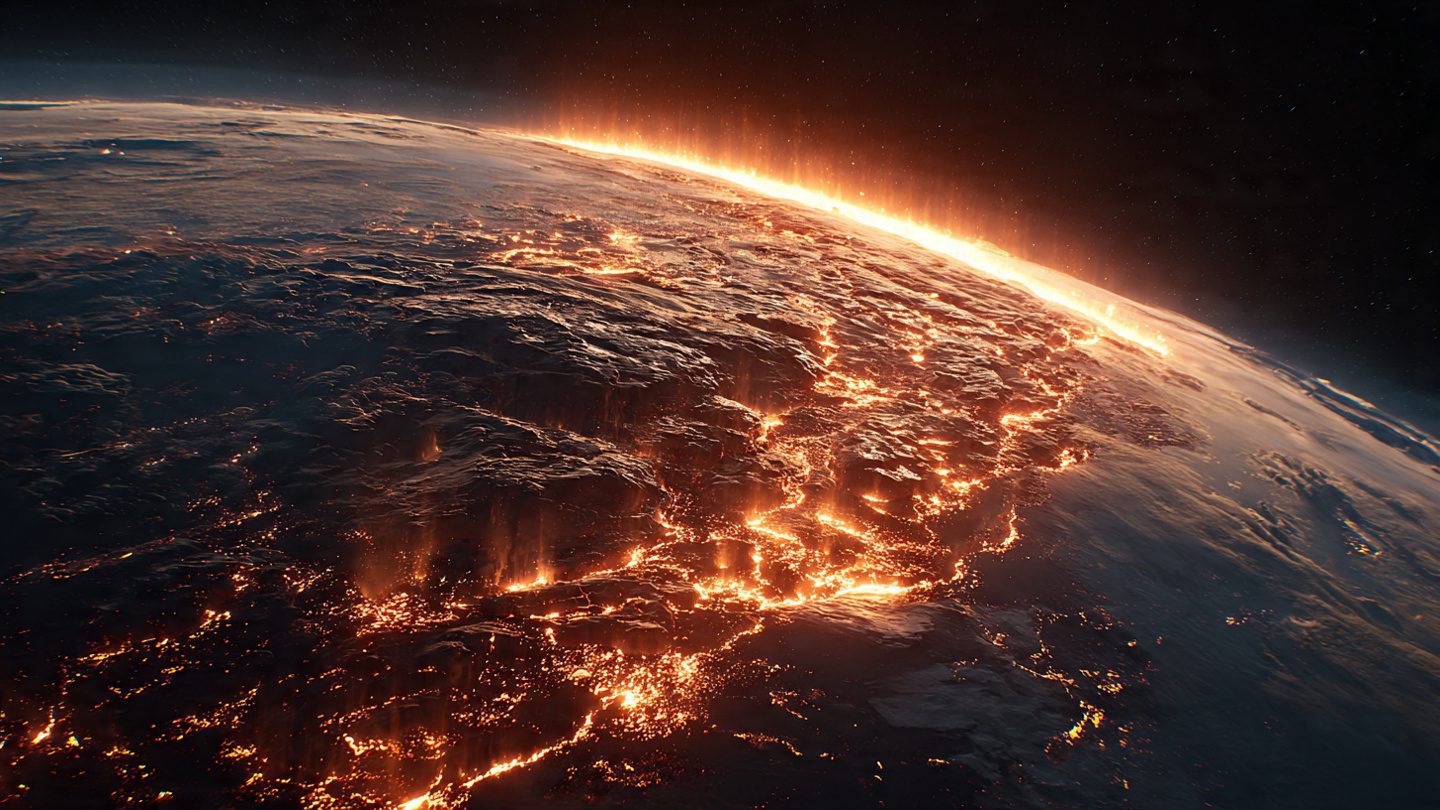
Introduction: When Earth Was Hell
More than 4.5 billion years ago, Earth was nothing like the planet we know today. There were no oceans, no breathable atmosphere, and certainly no life. Instead, the surface was a raging inferno of molten rock, constantly reshaped by violent cosmic events.
The topic Hadean Formation of the Earth How the First Crust Was Created explores one of the most crucial turning points in planetary history—the moment when the first solid crust began to form. Without this transformation, Earth would never have become a stable world capable of supporting life.
Planetary Accretion and the Birth of Earth
The story begins with planetary accretion. In the early solar system, a swirling disk of gas and dust surrounded the young Sun. Tiny particles began to collide and stick together.
Over time, these particles formed larger bodies known as planetesimals. Through repeated collisions and gravitational attraction, these objects merged into larger masses, eventually forming the proto-Earth.
Each collision released immense energy. The growing planet became hotter and more unstable. This continuous heating played a key role in shaping Earth’s internal structure and set the stage for the formation of its first crust.
Magma Ocean and Extreme Conditions
During this early stage, Earth’s surface transformed into a global magma ocean. The entire outer layer of the planet was molten.
Temperatures soared to thousands of degrees Celsius. Under such conditions, no solid surface could exist for long. The planet glowed intensely, radiating heat into space.
In visual reconstructions, this phase is often depicted as a fiery, orange-red world pulsing with energy. Massive volcanic activity and constant reshaping of the surface defined this era. These extreme conditions were essential for the processes that eventually led to crust formation.
Differentiation of Earth’s Layers
As the planet continued to evolve, a process called differentiation began. Heavier elements like iron and nickel sank toward the center, forming the core.
Lighter materials remained closer to the surface, forming the mantle and eventually the early crust. This separation created the layered structure of Earth that still exists today.
This process was critical. Without it, Earth would not have developed the internal dynamics necessary for long-term geological activity. Differentiation also influenced how heat moved within the planet, which directly affected crust formation.
Heavy Bombardment Period and Surface Chaos
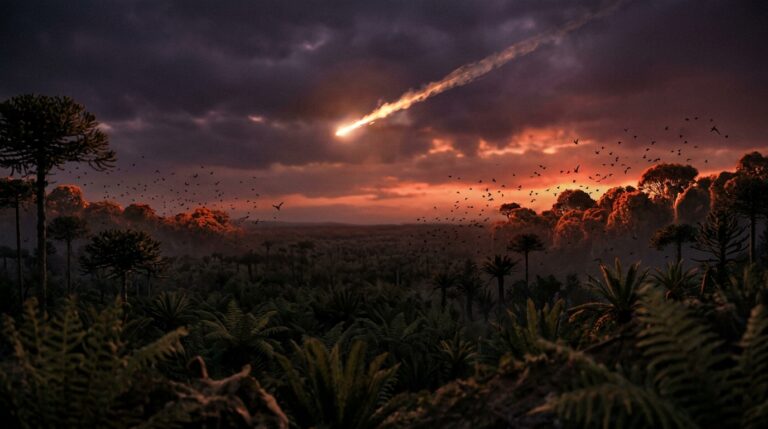
The early Earth was not a peaceful place. During the heavy bombardment period, the surface was relentlessly struck by asteroids and comets.
Each impact released enormous energy, often melting parts of the surface again. Any early crust that formed could be destroyed in an instant.
Visual interpretations of this time show a chaotic world—explosions, lava seas, and massive craters forming and disappearing. Despite its destructive nature, this bombardment delivered important materials to Earth and influenced its chemical composition.
Cooling of the Early Earth
Eventually, the rate of impacts began to decrease. Earth started to cool, though very slowly.
This cooling was essential. As temperatures dropped, molten rock began to solidify. Small patches of solid surface appeared, only to be melted again by volcanic activity or impacts.
This cycle of melting and solidifying repeated countless times. Gradually, however, stable regions began to persist longer. This marked the beginning of a major transition in Earth’s evolution.
Formation of Primordial Crust
The formation of the primordial crust was a breakthrough moment.
As the magma ocean cooled below critical temperatures, minerals began to crystallize. These crystals formed the first solid rocks on Earth’s surface.
This early crust was thin and unstable. It was very different from modern continental crust and was likely basaltic in composition.
Visual models often depict a dark, fractured surface with glowing lava still visible beneath. Steam and volcanic gases filled the atmosphere. Despite its instability, this crust represented the first step toward a stable planetary surface.
The Role of Water and Early Oceans
One of the most fascinating aspects of this period is the possible presence of water.
Water may have been delivered to Earth by comets and water-rich asteroids. As the planet cooled, water vapor in the atmosphere condensed.
This led to the formation of the first oceans. These early bodies of water played a crucial role in stabilizing the crust.
Water helped cool the surface more efficiently. It also enabled chemical processes that would later become essential for the origin of life.
Why the First Crust Matters
The formation of Earth’s first crust was a turning point in planetary history.
Without it, there would be no continents, no oceans, and no stable environment for life to develop. The crust provided a foundation for all future geological processes.
It allowed the surface to stabilize, supported the formation of oceans, and created conditions where complex chemistry could occur.
Even though it was primitive and unstable, this first crust was the beginning of everything that followed.
Modern Scientific Insights and Discoveries
Today, scientists study ancient zircon crystals that are over 4 billion years old. These tiny minerals provide valuable clues about early Earth.
They suggest that solid crust and liquid water may have existed earlier than previously believed.
Modern computer simulations and high-quality visualizations help us understand these processes in greater detail. Videos often bring these ancient events to life, combining science with powerful imagery.
Summary
The formation of Earth’s first crust was a violent yet essential process.
Hadean Formation of the Earth How the First Crust Was Created reveals the origins of a stable planet.
Without this phase, life on Earth would never have been possible.
FAQ
1. What is the Hadean eon?
It is the earliest period of Earth’s history, characterized by extreme heat and constant impacts.
2. How did the first crust form?
Through the cooling and solidification of the global magma ocean.
3. Why was the early crust unstable?
Due to intense asteroid impacts and high internal temperatures.
4. Did water exist during the Hadean?
Yes, likely first as vapor and later as early oceans.
5. Why is this topic important?
It explains how Earth became a habitable planet.
CTA
Want to truly visualize this incredible transformation?
Watch the video and explore stunning reconstructions of early Earth in motion.
Visit the blog for more deep insights into science, space, and the origins of our world.