Befrey
The world of plants vs zombies gameplay has captivated millions of players worldwide thanks to its addictive tower-defense mechanics, strategic depth, and iconic humor. Whether you’re completely new to Plants vs Zombies or looking to refine your advanced strategies, this in-depth guide will give you everything you need to dominate every level, survive every wave, and build the perfect lawn defense.
In this complete gameplay guide you’ll learn how the game works, why certain plants outperform others, which mistakes players repeatedly make, and how to develop both early-game and late-game strategies that guarantee victory. You will also discover expert tips, resource-management techniques, the best plant combinations, and proven methods for defeating the toughest zombie types.
The phrase plants vs zombies gameplay and its synonyms—PVZ gameplay, plants vs zombies strategy, plants vs zombies guide, and plants vs zombies tips—will be used throughout this article to help you find the most comprehensive and valuable insights possible.
Understanding the Core Mechanics of Plants vs Zombies Gameplay
To become a master of plants vs zombies gameplay, it’s essential to fully understand the mechanics that make the game unique. Plants vs Zombies is not simply a tower-defense title; it is a resource-driven strategy game that rewards planning, anticipation, and adaptability.
Every level presents different obstacles. These range from changing environments, shifting enemy patterns, nighttime challenges, fog mechanics, roof levels, and the introduction of new zombies with special abilities. Mastering the intricacies behind each environment is the key to consistent progress.
The Importance of Sun Production
Sun is the lifeblood of plants vs zombies gameplay. Without a stable sun economy, players cannot plant enough defenses to withstand later waves. New players often underestimate how many Sunflowers or Twin Sunflowers they need. A typical recommendation is:
-
Early game: 8–12 Sunflowers
-
Mid game: Replace some with Twin Sunflowers
-
Late game: Maintain strong production while planting offensive units
In advanced strategy, sun production becomes an economy system where timing matters. Planting sun producers early maximizes long-term gains. Planting them too late restricts your firepower.
Zombie Patterns and Behavior
Knowing zombie behavior is a massive advantage. Some zombies move faster, some jump, some dig, and some ride vehicles. Identifying their patterns helps you place the right defensive plants at the right place.
Key zombie types include:
-
Standard Zombies – slow but numerous
-
Conehead Zombies – stronger defense
-
Buckethead Zombies – much tougher
-
Pole-Vaulting Zombies – leap over first plant
-
Gargantuars – mini-bosses with huge durability
Each of these threats demands a different response. A beginner might panic when seeing a Conehead Zombie early in the game, but a skilled strategist understands that a Peashooter paired with well-timed support is enough to neutralize it.
Building the Perfect Strategy for Plants vs Zombies Gameplay
To truly master plants vs zombies gameplay, building a reliable strategy is key. The best players follow patterns that maximize efficiency and give them enough flexibility to adapt to unexpected waves.
Below are the most important aspects of developing a winning strategy.
Start With a Strong Sun Economy
Every match begins with one priority: build sun production plants. Most experts agree that the faster you set up sun production, the easier the rest of the level becomes.
Recommended order for beginners:
-
Start with Sunflower
-
Add another Sunflower
-
Defend early lanes with either Peashooters or Puff-shrooms (night levels)
-
Continue planting Sunflowers until you reach your target number
-
Add Twin Sunflowers once stable
This approach ensures you never run out of resources during heavy zombie waves.
Create Early Lane Stability
Lane stability refers to creating consistent firepower across all lanes before zombies swarm. Players who ignore this often lose because they focus too heavily on one lane.
A stable early lane typically includes:
-
One Peashooter or Puff-shroom
-
A defensive plant like a Wall-nut or Tall-nut
-
Backup plants ready to be placed when tougher enemies appear
Learn Plant Synergy
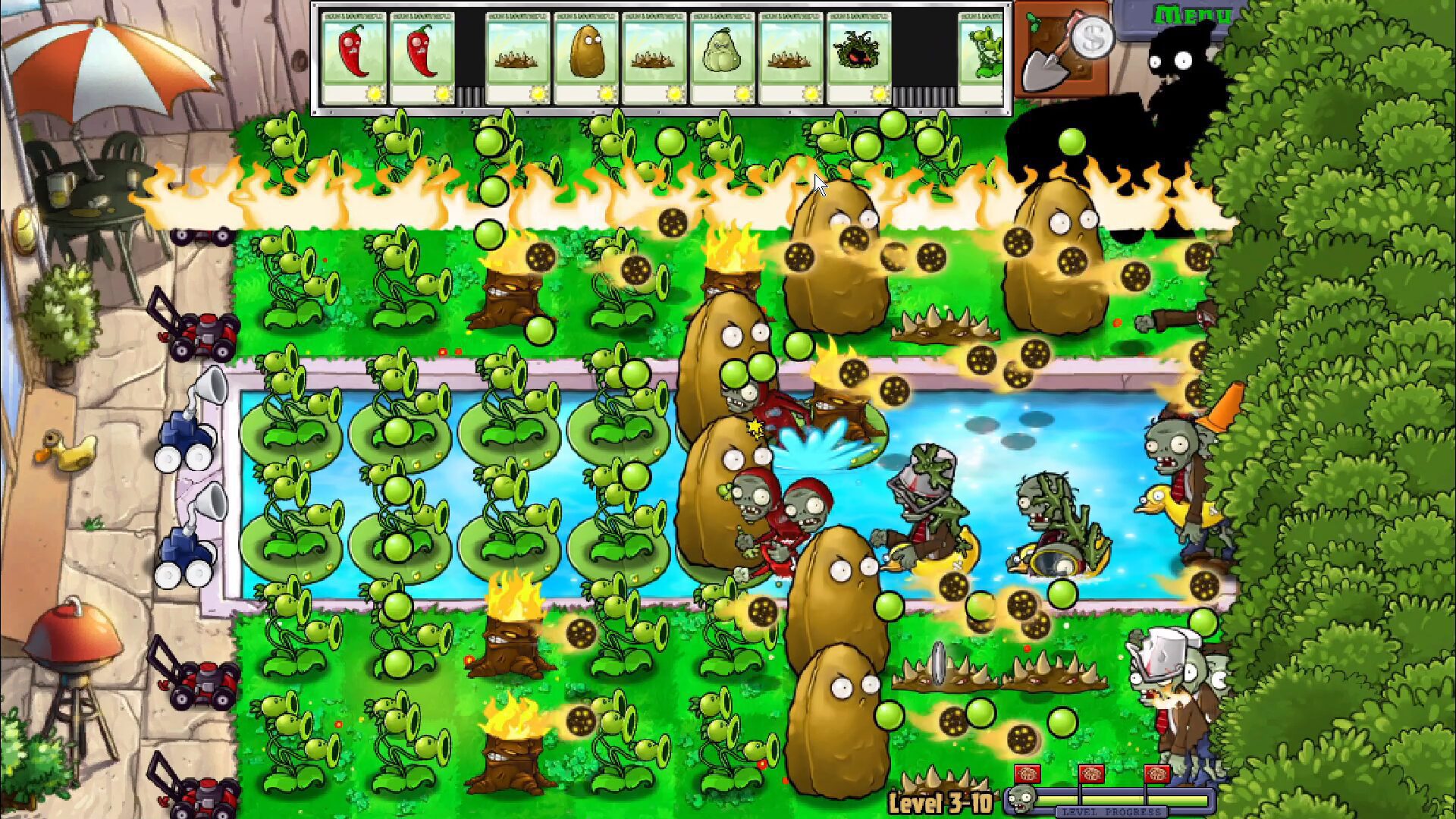
The best plants vs zombies gameplay strategies revolve around plant synergy. Certain plants complement each other exceptionally well.
Examples of high-value combinations:
-
Peashooter + Snow Pea = slow + consistent damage
-
Torchwood + Peashooter = boosted fire damage
-
Ice-shroom + Doom-shroom = area control + massive wipeout
-
Fume-shroom + Coffee Bean (night levels on daytime maps)
Understanding these synergies drastically increases damage output and lane control.
Mastering Game Modes in Plants vs Zombies Gameplay
Plants vs Zombies offers several modes, each requiring different tactics. To maximize your skills, you need to understand how gameplay changes within each mode.
Adventure Mode
Adventure Mode is the core experience in every PVZ title. It gradually introduces new plants and new zombies while increasing difficulty across environments.
Challenges you’ll face include:
-
Day levels
-
Night levels
-
Pool levels
-
Fog levels
-
Roof levels
Each environment demands tactical adjustments. For example, roof levels require lobbed or high-arc plants such as Cabbage-pults or Kernel-pults due to the angle of the roof tiles.
Survival Mode
Survival Mode tests long-term strategy. Instead of a single wave, players must survive multiple waves with limited resources.
Key Survival Mode tips:
-
Avoid fragile plants that cannot withstand long battles
-
Use Magnet-shrooms to deal with metal zombies
-
Build layered defenses
-
Keep emergency plants ready for unexpected threats
Mini-Games
Mini-games provide alternative types of plants vs zombies gameplay, including puzzle-based levels, bowling mechanics, and themed challenges. These levels are excellent for practicing niche strategies because they often restrict which plants you can use.
How to Use Defensive Plants Effectively
Some plants are designed for offense, while others shine best in defense. Defensive plants are the backbone of every successful strategy.
Wall-nut and Tall-nut
These plants act as frontline tanks. Their health pool buys you time to build stronger defenses. Tall-nuts prevent jumping enemies from passing through, making them essential for dealing with Pole-Vaulting Zombies.
Pumpkin
Pumpkins allow players to protect offensive plants. This combination—damage inside a Pumpkin—is a signature move in high-level plants vs zombies gameplay.
Magnet-shroom
One of the most underrated defensive plants. It removes metal items like buckets and shields, dramatically reducing zombie durability.
Offensive Plant Strategies for Maximum Damage
Offense wins battles in Plants vs Zombies. Choosing the right offensive plants is key to surviving waves efficiently.
Peashooters and Upgrades
Basic Peashooters provide early damage but become less effective later. Upgrades like the Repeater or Gatling Pea dramatically increase damage output.
Area-Damage Plants
Area damage plants such as Fume-shrooms, Melon-pults, and Winter Melons provide superior coverage. They shine during late waves and in Survival Mode.
Instant Plants
Cherry Bombs, Jalapeños, and Doom-shrooms are lifesavers. These instant-effect plants provide emergency solutions when your lane is overwhelmed. Managing these plants wisely elevates your gameplay to professional levels.
Advanced Resource Management in Plants vs Zombies Gameplay
Expert players know that every sun point counts. Resource management is one of the biggest factors separating beginners from advanced players.
Know When to Save and When to Spend
Overspending early can cripple your ability to defend later. A good rule:
If the wave is light, focus on economy. If heavy, switch to defense.
Use Cheap Plants for Early Pressure
On night levels, Puff-shrooms and Sun-shrooms reduce your early-game costs. They allow you to save sun for powerful mid-game plants.
Maintain Backup Sun Reserves
Always keep 150–300 sun available late-game. Emergencies happen frequently during final waves.

Environmental Challenges and How to Beat Them
Every environment introduces unique gameplay variations.
Day and Night Differences
Night levels offer free plants like Puff-shrooms but restrict vision. Sun production is less efficient, so smart spending becomes more important.
Fog Levels
Fog hides zombies. Use Planterns or Blover to see enemies. Positioning is crucial here because zombies can appear unexpectedly.
Roof Levels
Roof levels require lobbed plants. Straight-shooting plants struggle because of the slope. Planning placement and using the right offensive plants is essential.
Common Mistakes Players Make in Plants vs Zombies Gameplay
Even experienced players make repeated mistakes. Avoid these to improve quickly.
Too Few Sun Producers
This is the number one reason players lose. Without sun, you cannot defend properly.
Poor Plant Placement
Misplaced plants ruin synergy. Offensive plants should sit behind tanks, not in front.
Ignoring Zombie Types
Treating every zombie the same is a recipe for failure. Bucketheads need more firepower. Pole-vaulters need Tall-nuts. Know your enemies.
Overusing Instant Plants
Instant plants are powerful but limited. Using them too early leaves you vulnerable when big waves hit.
The Psychology Behind Plants vs Zombies Gameplay
Plants vs Zombies attracts players because it balances challenge and humor. The zombies are funny, the plants adorable, but the strategy remains deep. Understanding this psychological balance helps you appreciate why the game feels satisfying.
Progression and Rewards
Each new plant feels like an achievement. This creates excitement and motivates players to continue improving.
Increasing Difficulty Curve
The game gradually increases challenges, teaching new mechanics naturally. This makes the learning process enjoyable rather than overwhelming.
High-Level Tactics for Expert Players
Once you’ve mastered the basics, you can explore advanced gameplay techniques.
Lane Layering
Layering means combining multiple defensive and offensive plants in a single lane to create a near-indestructible barrier.
Sun Optimization
Experts use mathematical timing to maximize sun output. For example, planting Sunflowers in perfect intervals increases long-term production dramatically.
Pre-Planning Loadouts
Before each level, analyze what zombies appear and what plants work best. Never go into a level with random choices.
Summary
Mastering plants vs zombies gameplay requires strategy, planning, and knowledge of every plant, zombie, and environment. Build a strong sun economy, learn plant synergy, use defensive units wisely, and prepare for each level with intentional thinking. Whether you’re a beginner or a long-time fan, using these strategies will dramatically improve your performance.
FAQ
1. What is the best plant combination for beginners?
Peashooters, Snow Peas, and Wall-nuts create stable early defense.
2. How many Sunflowers should I plant?
Most players need 8–12 Sunflowers early, then upgrade to Twin Sunflowers.
3. What plant is best for dealing with armored zombies?
Magnet-shrooms are excellent for removing metal armor.
4. Which levels are the hardest?
Fog and Roof levels are considered the most challenging due to visibility and trajectory changes.
5. How often should I use instant plants?
Save them for emergencies or final waves to maximize efficiency.
Call to Action
If you want to master more games, upgrade your strategy skills, and explore deeper guides, visit my blog for more high-value gaming articles. Dive into new worlds, strengthen your gameplay, and stay one step ahead—start reading now!