Secret Truth Exposed – Trepang 2 is Clon Call Of Dutty ? The Shocking FPS Verdict
 Befrey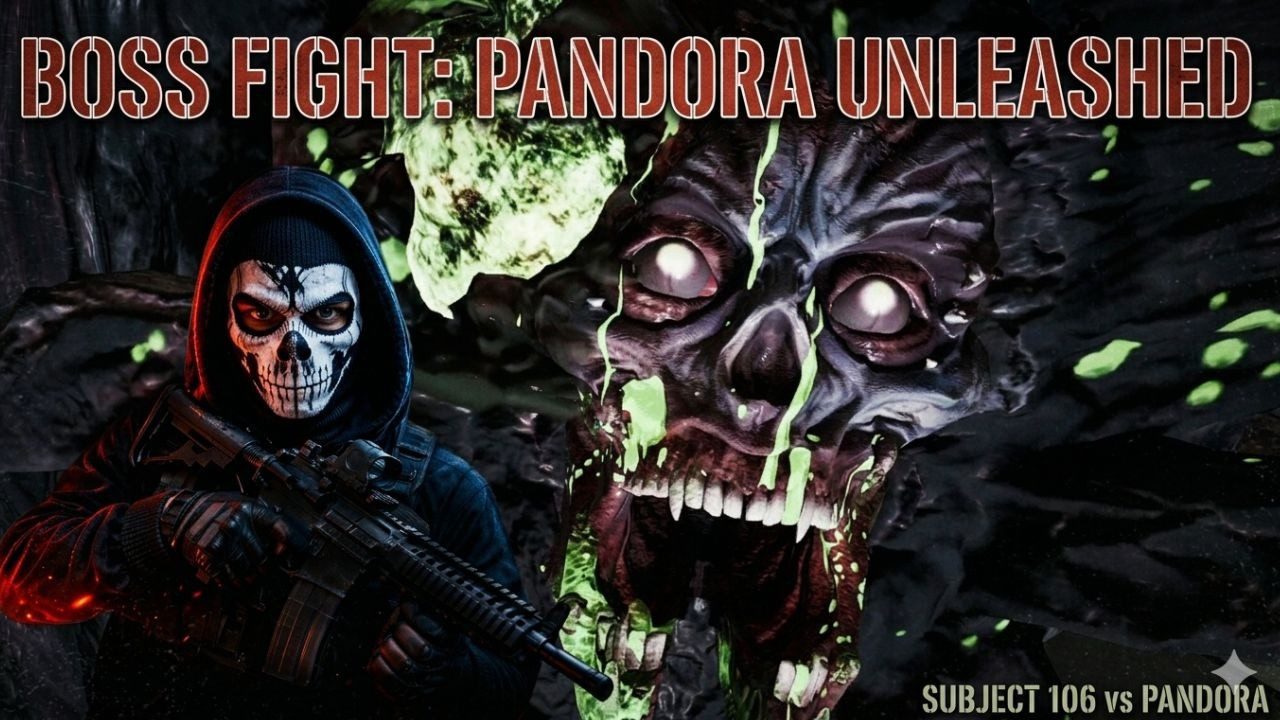
The modern first-person shooter market is heavily saturated with cinematic military campaigns, forcing many curious indie gamers to ask: Trepang 2 is Clon Call Of Dutty ? This persistent online question has sparked massive debates across gaming forums, Steam review pages, and specialized tactical subreddits worldwide. At first glance, a casual observer might easily confuse the two properties due to their shared focus on heavy firearms, tactical black gear, and highly classified black ops military installations. However, labeling this intense indie release as a simple carbon copy completely ignores its complex mechanical heritage and aggressive structural identity. While Activision’s flagship multi-billion dollar franchise emphasizes scripted cinematic set pieces and realistic contemporary warfare, this indie title charts a radically different path focused on supernatural empowerment, ultra-violence, and chaotic kinetic movement. To truly understand if Trepang 2 is Clon Call Of Dutty ?, we must pull back the layers of its design philosophy to analyze how it stands entirely on its own two feet.
Uncovering the Deep Roots of FEAR Inspired PC Games
To accurately categorize this chaotic shooter, one must step away from modern military simulators and examine the rich history of FEAR inspired PC games. The core mechanical identity of this title is a direct spiritual continuation of Monolith Productions’ legendary 2005 psychological horror action game. Instead of relying on rigid, boots-on-the-ground squad tactics, the gameplay loop revolves entirely around bullet-time reflexes, devastating sliding tackles, and superhuman speed. Players utilize a highly reactive focus meter that slows down time to a literal crawl, allowing you to track individual bullet paths and maneuver around elite enemy forces with terrifying surgical precision. The sheer architectural focus on corporate office buildings, subterranean research laboratories, and dark industrial complexes screams mid-2000s PC gaming rather than the modern globe-trotting theater of contemporary mainstream military campaigns.
-
Reflex Mechanics: Splaying out a hail of bullets while mid-air in slow motion completely redefines the pacing of standard tactical engagements.
-
Supernatural Elements: Encounters with terrifying anomaly entities and grotesque bio-engineered mutants split the campaign between military action and pure psychological horror.
-
Destructible Office Environments: High-powered shotgun blasts shred drywall, shatter glass partitions, and send endless clouds of loose paper flying realistically through the air.
This specific emphasis on isolated, atmospheric tension paired with hyper-violent close-quarters combat creates a fundamentally different psychological experience for the player. Mainstream military shooters focus heavily on global scale, massive set pieces, and cooperative squad dynamics where you follow a linear path behind AI squad leaders. Here, you are a lone, escaped weapon of mass destruction tearing through heavily armed corporate cleanup crews in pitch-black corridors. The mechanical DNA points directly backward to the golden era of PC-exclusive shooters where raw player agency, spatial awareness, and vertical mobility reigned supreme.
Analyzing the Complete Trepang2 Gameplay Mechanics Deep Dive
A granular look reveals that a Trepang2 gameplay mechanics deep dive is necessary to fully separate its combat loop from any mainstream competitor. The player character, known simply as Subject 106, possesses an incredibly advanced suite of biological and technological enhancements that break every rule of traditional military shooters. You are granted an active cloak camouflage ability that lets you turn completely invisible mid-combat to flank aggressive squads or escape deadly choke points. Furthermore, the movement suite allows you to execute massive power-slides that can slide-tackle enemies off their feet, launching them into the air where they can be dual-wielded or thrown back into their peers as improvised explosives.
| Gameplay Feature | Subject 106 Supernatural Capability | Mainstream Military Shooter Equivalent |
| Time Control | On-demand focus meter slows down time completely. | Rare scripted campaign set-pieces only. |
| Mobility | Extended power-slides, high jumps, and wall-kicks. | Rigid boots-on-the-ground sprinting mechanics. |
| Stealth | Active cloaking device renders user fully invisible. | Basic bush hiding or scripted stealth sequences. |
| Dual Wielding | Simultaneously fire two heavy shotguns or grenade launchers. | Strict single-weapon aiming down sights restrictions. |
The weapon handling itself rejects the contemporary trend of highly realistic recoil patterns and micro-management of attachments. Instead, it prioritizes arcade-style satisfying gunplay where hip-firing dual-wielded weapons is often far more effective than aiming down iron sights. The kinetic energy behind every single shot pushes the boundaries of gore and environmental destruction to an extreme degree. Enemies do not just drop to the floor; they are physically blasted backwards into concrete walls, disintegrating into highly detailed particle effects that cover the entire combat arena in crimson.
Evaluating the Indie Boomer Shooter Resurgence Impact
The creation and massive critical success of this game cannot be analyzed in a vacuum, as it sits directly at the center of the modern indie boomer shooter resurgence impact. Over the last few years, the gaming community has grown increasingly exhausted by corporate live-service models, endless microtransactions, and unskippable narrative cutscenes. This exhaustion birthed a massive movement of independent developers creating focused, single-player experiences that celebrate raw gameplay over corporate monetized loops. This title embraces that specific philosophy with immense pride, delivering a tight, highly replayable package that completely respects the player’s time and intelligence.
Developer Focus: The design team deliberately stripped away bloated open-world elements and repetitive side quests to focus purely on perfecting the single-player combat arenas, proving that a dedicated indie team can outperform AAA studios in raw fun factors.
This cultural shift toward older game design templates allows independent titles to take massive creative risks that multi-million dollar franchises simply cannot afford. You see this vividly in the game’s unapologetic difficulty spikes, complex level layouts that require exploration, and a completely unrestrained approach to violent spectacles. It does not attempt to appeal to every single mainstream demographic with simplified mechanics or sanitized content. By catering specifically to hardcore enthusiasts who crave mechanical depth and unrelenting speed, it has secured a permanent legacy within the modern PC action ecosystem.
Comparing Trepang2 vs Call of Duty Differences
When we lay the systems side by side, comparing Trepang2 vs Call of Duty differences exposes a complete divergence in fundamental design goals. The mainstream franchise treats single-player campaigns as a brief, highly polished, cinematic introduction to a massive multiplayer component. Its levels are carefully constructed roller-coaster rides where you are constantly pushed forward through strict corridors while watching movie-like sequences unfold around you. Conversely, this indie title functions primarily as a complex sandbox combat simulator where the story takes a back seat to player expression and tactical experimentation. The levels are designed as open combat bowls filled with smart, aggressive enemy AI that actively works to flush you out of cover and hunt you down using advanced flanking maneuvers.
-
AI Behaviorism: Enemies call out your last known location, flank aggressively using flashlight beams, and panic realistically when you activate your superhuman powers.
-
Storytelling Methods: Narrative elements are discovered organically through hidden text logs and environmental clues rather than long, unskippable cinematic monologues.
-
Weapon Diversity: The arsenal focuses on maximizing a few highly distinct, completely customizable firearms rather than offering dozens of identical military variants.
The multiplayer aspect also highlights a massive cultural divide between the two titles. While the mainstream competitor focuses entirely on competitive online match lobbies, weapon progression grinds, and seasonal battle passes, this indie game remains a completely pure, offline single-player experience. It features a robust combat simulator mode that lets you fight endless waves of enemies under custom parameters, encouraging you to perfect your movement combos and shooting accuracy. This absolute dedication to the single-player sandbox ensures that every mechanic is polished to a mirror sheen, free from the balance compromises required by competitive online multiplayer environments.
Examining Advanced Bullet Time Combat Mechanics in Single Player
To survive the brutal difficulty settings on the higher tiers, players must fully master the advanced bullet time combat mechanics in single player mode. Slowing down time is not merely a visual gimmick designed to make your actions look cool; it is an essential survival tool that must be managed as a resource. The focus meter drains incredibly quickly, forcing you to constantly earn refills by executing high-style kills, sliding into enemies, or pulling off precise headshots in rapid succession. This creates a brilliant, self-sustaining mechanical loop where aggressive, high-risk playstyles are directly rewarded with more supernatural capability.
When you enter a bullet-time state, your situational awareness expands exponentially, allowing you to catch incoming fragmentation grenades out of mid-air and throw them back at the throwing soldier. You can track the distinct white smoke trails of incoming rockets, sliding underneath them while blasting a cloaked enemy with an automatic rifle. This intense level of hyper-focused interaction transforms every minor room clearing into a highly stylized, cinematic piece of violent performance art. It demands high-level mechanical dexterity and rapid cognitive processing, offering a level of deep physical satisfaction that slower, cover-reliant military games can simply never match.
Summary
In conclusion, asking if Trepang 2 is Clon Call Of Dutty ? reveals a fundamental misunderstanding of what makes this indie shooter so profoundly special. While it wraps itself in the visual aesthetic of modern black ops military gear, its heart beats with the chaotic, supernatural blood of classic mid-2000s PC action titles like FEAR. Driven by the modern indie boomer shooter resurgence, it strips away corporate bloat to deliver a hyper-focused sandbox of superhuman mobility, advanced bullet-time combat, and staggering environmental destruction. It stands not as a clone, but as a brilliant, independent masterpiece that carves out its own unique territory in the modern FPS landscape.
Swamp Attack Offline Mobile Games Android/ IOS — The Ultimate Beginner-to-Pro Guide (2025 Update)
Ultimate Plants vs Zombies Gameplay Guide for Mastering Every Leve
Hitman Contracts Game Review: Dark Stealth Masterpiece Revisited
FAQ
1. Does Trepang2 feature an online multiplayer mode or cooperative campaign?
No, the game is strictly a dedicated, offline single-player experience. The developers chose to focus 100% of their resources on creating the best possible single-player campaign and combat simulator sandbox, completely avoiding the balancing issues and server costs associated with competitive online multiplayer.
2. Why do people constantly ask if Trepang 2 is a clone of other military games?
The comparison arises almost entirely due to visual aesthetics. Both games feature elite soldiers wearing modern black tactical gear, high-tech assault rifles, and gritty industrial environments. However, once you actually play the game, the supernatural powers and extreme movement mechanics immediately shatter that superficial comparison.
3. What are the primary system requirements to run the game smoothly on PC?
Because the game features an incredibly advanced physics engine with massive environmental destruction, dynamic lightning, and intense particle gore effects, it requires a relatively modern gaming setup. A solid mid-range quad-core processor paired with an NVIDIA GTX 1060 or AMD RX 580 is recommended for stable 1080p performance, though modern hardware is needed to maximize the chaotic particle systems.
4. How long is the main story campaign of Trepang2?
A standard playthrough of the primary story campaign takes roughly 5 to 7 hours to complete depending on your chosen difficulty setting. However, the game features massive replayability through its various hidden intel logs, high-tier difficulty modes, and an incredibly deep combat simulator wave survival mode.
5. Can you customize your weapons and upgrades throughout the campaign?
Yes, as you explore the hidden corners of the levels, you will uncover specialized weapon attachment parts. At designated weapon benches throughout the world, you can modify your firearms with attachments like silencers, laser sights, extended magazines, and even a devastating underbarrel shotgun attachment.
Call-to-Action
Are you ready to break free from the linear constraints of modern military shooters and unleash your inner supernatural warrior? Step into the boots of Subject 106 and experience the absolute peak of kinetic action by grabbing your copy of Trepang2 on Steam, Xbox, or PlayStation today! Slow down time, break some walls, and find out for yourself exactly why this indie powerhouse is taking the gaming world by storm.