
 Befrey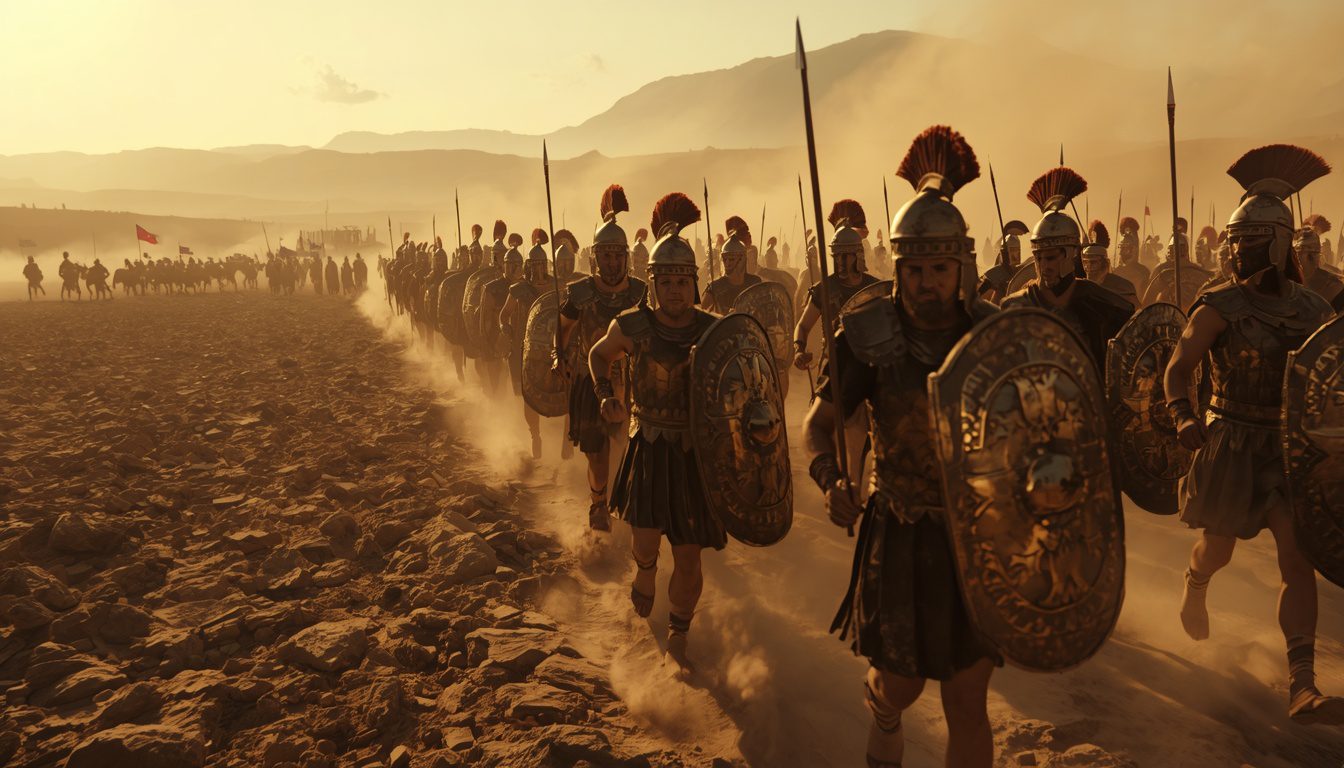
The Battle of Marathon (490 B.C.) is one of the most astonishing military upsets in recorded history. This ancient clash between a small Athenian army and the mighty Persian Empire has fascinated historians, soldiers, and storytellers for over 2,500 years. It was fought on a dusty coastal plain northeast of Athens, and it decided far more than a single battle. It decided whether Greek freedom would survive its first great test against an empire that had never lost. What happened that September day still echoes through Western culture, sport, and political thought today.
The Persian Invasion of Greece in 490 BC
The roots of this conflict trace back to a rebellion, not a single insult. Greek cities in Ionia, on the coast of modern-day Turkey, rose up against Persian rule a few years earlier. Athens and Eretria sent ships and soldiers to help these rebels, and together they burned the Persian regional capital of Sardis. King Darius I of Persia never forgot this act of defiance. He swore revenge on Athens specifically, reportedly asking a servant to remind him of the city three times before every meal. In 490 BC, Darius sent a massive naval expedition across the Aegean Sea under commanders Datis and Artaphernes. Their mission was brutally simple: punish Eretria, then crush Athens, and bring both cities to heel as vassals of the Persian throne.
The Persian fleet moved swiftly and mercilessly through the Greek islands. Eretria fell first, its population enslaved and deported as a warning to any other city that dared resist. The fleet then crossed to the mainland and landed at the bay of Marathon, a plain chosen partly on the advice of the exiled Athenian tyrant Hippias, who hoped to reclaim power. Modern historians estimate the Persian land force at Marathon numbered somewhere between 25,000 and 30,000 fighters, though ancient writers sometimes inflated the figure far beyond that. Whatever the true number, one fact remained certain. Athens now faced an empire that had conquered nearly everything in its path.
Athens Stands Alone: The Desperate Search for Allies
Athens knew it could not fight Persia by itself, so it sent a runner to beg Sparta for help. Sparta agreed in principle, since it respected Athenian courage and feared Persian expansion just as much. But Spartan law forbade the army from marching before the full moon during a sacred religious festival called the Carneia. This meant Spartan reinforcements simply could not arrive in time for the coming battle. Only one small city answered the call immediately: Plataea, a loyal ally that sent its entire fighting force despite its tiny size. This gesture of solidarity meant that roughly 10,000 Athenian hoplites were joined by about 1,000 Plataeans, creating a combined army of around 11,000 men. Against tens of thousands of Persian troops, these numbers looked hopeless on paper, yet the Greeks refused to surrender their independence without a fight.
Miltiades’ Battle Strategy at Marathon
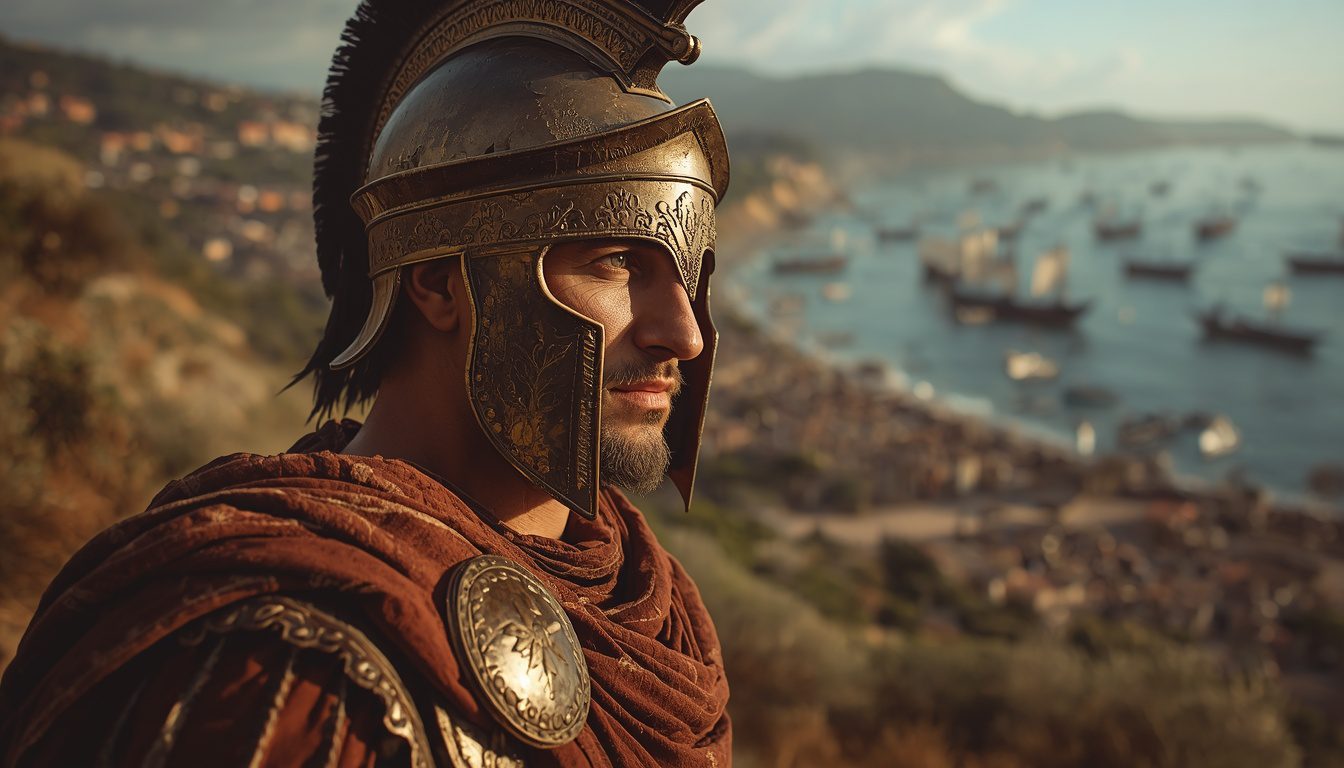
The Athenian army was led by ten generals who took turns commanding on different days, but one man’s judgment ultimately shaped the outcome. Miltiades had lived for years under Persian influence in Thrace, and he understood Persian tactics better than any other Greek commander present. He argued forcefully that the Athenians must attack immediately rather than wait behind their defensive position for a siege. Waiting, he warned, would only give traitors inside Athens time to negotiate a surrender with the approaching Persian fleet. His fellow generals eventually agreed, and command was effectively handed to him for the decisive day. Miltiades then made a brilliant tactical choice that history still studies closely. He deliberately weakened the center of his battle line while reinforcing both flanks with extra depth, gambling that the wings could win the fight even if the middle gave ground.
The Athenian Hoplites and Their Fighting Tactics
To understand why this strategy worked, you need to understand how a Greek hoplite actually fought. Each hoplite carried a large round shield called an aspis, a bronze helmet, and a long thrusting spear designed for close combat. These men fought shoulder to shoulder in a tight formation known as the phalanx, where every soldier’s shield partly protected the man beside him. This wall of bronze and wood was nearly impossible to break through with light infantry or arrows alone. Persian soldiers, by contrast, typically fought with lighter armor, wicker shields, and a heavy reliance on archers and cavalry to soften enemy lines before infantry contact. At Marathon, the open plain initially seemed to favor Persian cavalry and archers, since it gave them room to maneuver and fire freely. Miltiades understood this danger perfectly, which is exactly why his final plan involved something almost no army had attempted before.
The Battle Itself: Nine Miles of Fury
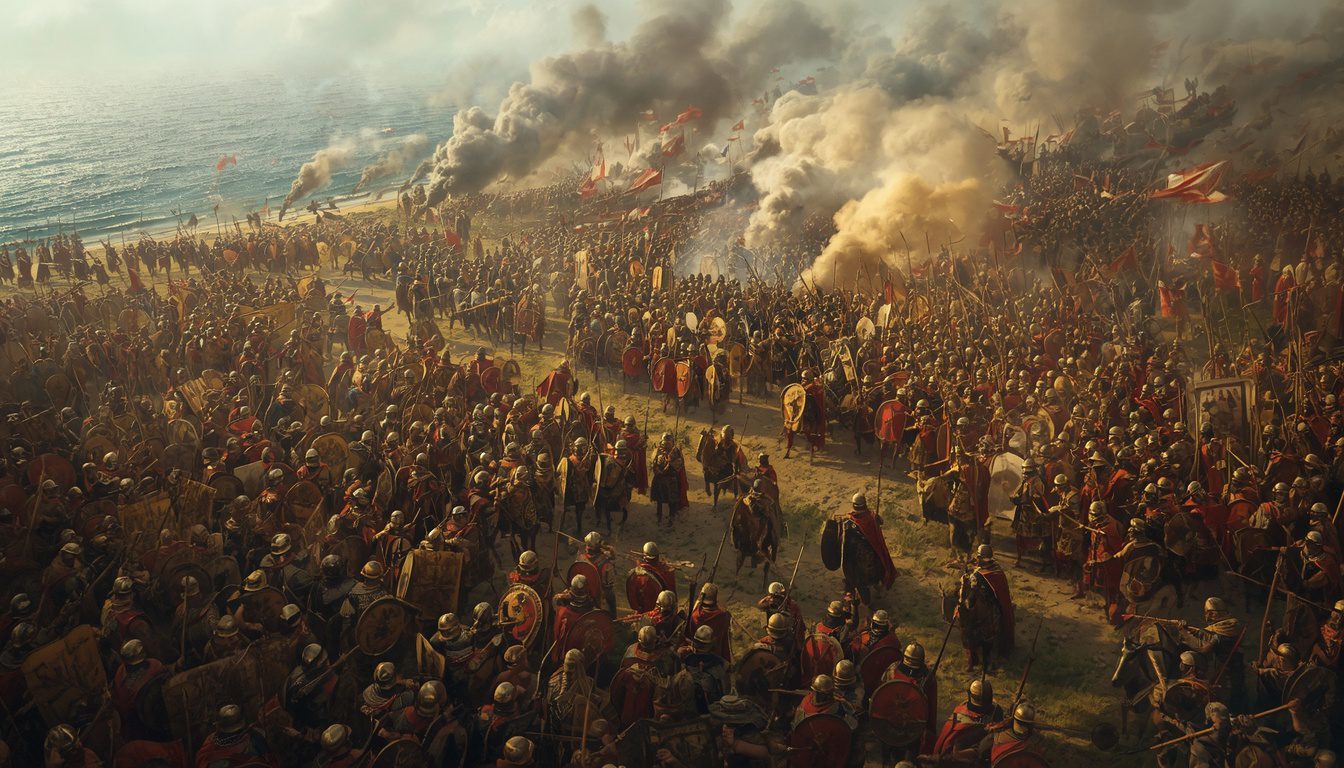
As the two armies faced each other across the plain, Miltiades gave an order that stunned the watching Persians. He commanded his hoplites to run, in full armor, across roughly one mile of open ground toward the enemy line. This charge minimized the time Persian archers had to fire volleys of arrows into the approaching Greeks. Historians still debate this detail, but some scholars believe Persian cavalry may have been away from the main line at that exact moment, perhaps re-embarking on ships, which made the timing of this charge especially clever. When the two sides finally collided, the fighting was ferocious and close. The weakened Athenian center buckled under pressure, exactly as Miltiades had anticipated, and the Persian troops there pushed forward triumphantly. But on both flanks, the reinforced Greek wings crushed their opposite numbers and then wheeled inward, trapping the advancing Persian center in a deadly pincer. Panic spread through the Persian ranks, and what began as an orderly retreat collapsed into a desperate scramble back toward the ships anchored in the bay.
The Legendary Run of Pheidippides
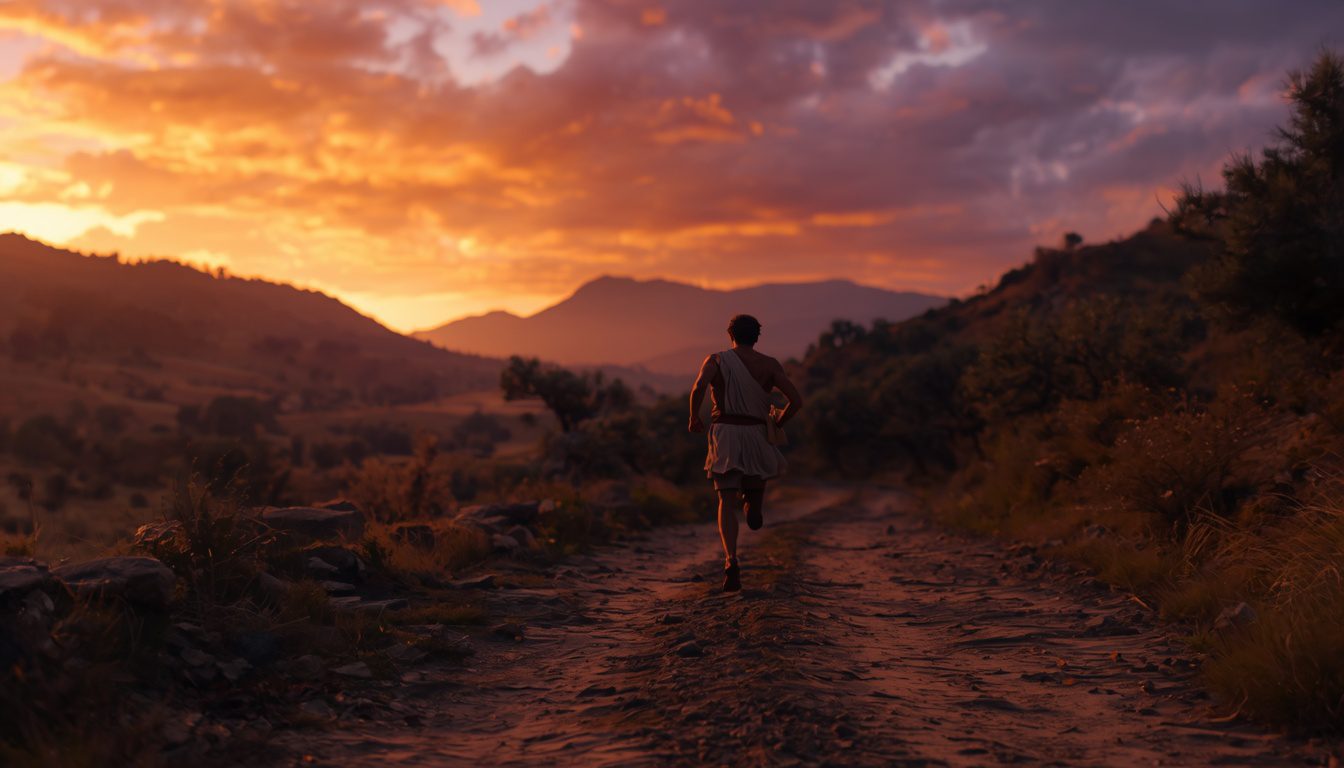
No account of this battle is complete without addressing its most famous myth, the story that inspired the modern marathon race. Popular legend claims a runner named Pheidippides sprinted about 26 miles from the battlefield to Athens, gasped out the word “Nike,” meaning victory, and then collapsed and died on the spot. It is a thrilling image, but the historian Herodotus, our earliest and most reliable ancient source, tells a very different story. According to Herodotus, Pheidippides was actually sent before the battle, not after it, running roughly 150 miles from Athens to Sparta in just two days to plead for military assistance. This grueling run happened during his journey, and he reportedly encountered the god Pan along the way, who complained that Athens had neglected his worship. The now-famous “26-mile run to Athens” version only appeared centuries later in the writings of authors like Plutarch and Lucian, long after Herodotus had already recorded the true events. Regardless of which version you find more compelling, the legend permanently linked human endurance to this single afternoon in Greek history.
Why the Battle of Marathon Mattered for Western Civilization
The immediate military result was staggering by ancient standards. Herodotus records that only 192 Athenians died in the fighting, compared to roughly 6,400 Persian casualties, though modern historians treat these figures with some healthy caution. Beyond the battlefield numbers, though, the psychological impact was even more significant. This victory proved, for the first time, that Persia’s seemingly invincible war machine could actually be beaten by free citizens defending their own homeland. Athenian democracy, still a fragile and radical experiment barely two decades old, gained enormous confidence and legitimacy from this triumph. Greek city-states began to believe that unity, discipline, and courage could overcome even the largest empire on earth. Many historians argue this single battle helped preserve the conditions that later allowed Greek philosophy, art, theater, and democratic government to flourish and eventually influence the entire Western world.
The Persian Wars Timeline and Aftermath
Marathon was a stunning victory, but it was far from the end of the conflict between Greece and Persia. After their defeat, the Persian fleet actually attempted to sail around Cape Sounion to attack an undefended Athens directly, hoping to seize the city while its army was still exhausted from battle. Miltiades anticipated this move and force-marched his weary hoplites back to Athens with remarkable speed, arriving just in time to make the Persians reconsider and withdraw entirely. Darius I began planning a much larger invasion to finally crush Greek resistance for good, but he died before he could launch it. His son Xerxes I inherited both the throne and the grudge, eventually invading Greece again in 480 BC with a far larger force. This second invasion produced legendary clashes at Thermopylae, Artemisium, Salamis, and finally Plataea, where Greek forces ultimately secured lasting independence from Persian control.
The Marathon Battlefield Today: Echoes of an Ancient Victory
Visitors to the plain of Marathon can still see the Soros, a large burial mound raised over the cremated remains of the Athenian dead. This quiet green hill stands as one of the oldest preserved war memorials anywhere in the world. Archaeological work in the area has uncovered arrowheads, weapon fragments, and other physical evidence that helps confirm details from the ancient written accounts. The legend of the running messenger eventually inspired the creation of the marathon race for the first modern Olympic Games in Athens in 1896. That original Olympic race actually followed a route from the town of Marathon into the city, deliberately echoing the ancient story. The now-standard distance of 26.2 miles wasn’t fixed until the 1908 London Olympics, based on the specific route between Windsor Castle and the Olympic stadium, though it happens to closely match the old legendary run. In this way, an ancient battle for survival quietly became one of the most beloved athletic traditions in the modern world.
Secrets Behind The Founding of Rome (traditionally dated 753 B.C.) That Changed Civilization Forever
Warning: The destruction of the city of Troy (according to legend, around the 12th century B.C.) Finally Explained
Summary
The Battle of Marathon (490 B.C.) remains one of history’s greatest underdog stories. A vastly outnumbered Athenian army, led by the brilliant general Miltiades, used a bold envelopment strategy to defeat a much larger Persian invasion force. This victory saved Athenian democracy in its infancy, humiliated the Persian Empire, and set the stage for the later, even larger conflicts of the Persian Wars. The legend of Pheidippides, though historically inaccurate in its most popular form, gave birth to the modern marathon race and permanently tied this battle to ideas of human endurance and sacrifice. More than two millennia later, Marathon still stands as a symbol of how determination and clever strategy can overcome overwhelming odds.
FAQ: The Battle of Marathon (490 B.C.)
1. How many soldiers actually fought at the Battle of Marathon?
The Athenians and their Plataean allies fielded roughly 10,000 to 11,000 hoplites, while the Persian force is estimated by modern historians at around 25,000 to 30,000 troops.
2. Why didn’t Sparta help Athens at Marathon?
Spartan religious law prevented the army from marching before the full moon during the sacred Carneia festival, so their reinforcements arrived only after the fighting had already ended.
3. Is the famous Pheidippides marathon story historically true?
Not exactly. Herodotus records that Pheidippides ran to Sparta before the battle to request help; the popular “26-mile run to Athens” story appeared in later writings, centuries afterward.
4. What happened to the Persians immediately after their defeat?
The Persian fleet attempted to sail around and attack undefended Athens directly, but the Athenian army marched back so quickly that the Persians abandoned the plan and sailed home.
5. Why is the Battle of Marathon still considered so important today?
It proved that free Greek citizens could defeat the Persian Empire, preserving Athenian democracy and helping set the stage for the cultural achievements of classical Greece.
Call-to-Action
Loved diving into this pivotal moment of ancient history? Share this article with fellow history lovers, drop your thoughts in the comments below, and subscribe for more deep dives into the battles, leaders, and legends that shaped our world.





