
 Befrey
WARNING: This article is a work of pure fiction and satire. The problem described does not exist. Read only if you possess a sense of humor.
Human civilization has mastered fire, invented the wheel, split the atom, and developed wireless internet that allows cats to dominate global culture. Yet one question has lingered in the shadows of intellectual progress:
How to learn to write with a pen using your toes?
For centuries, scholars avoided the topic. Universities refused to fund research. Government committees quietly changed the subject whenever the words toes and handwriting appeared in the same sentence.
But no longer.
This article presents the first comprehensive pseudo-scientific framework for mastering the legendary skill of toe-based handwriting.
Through careful analysis, questionable mathematics, and an alarming number of diagrams involving socks, we will explore the mysterious discipline known as:
Pedalgraphy — the art of writing using one’s toes.

The Forgotten History of Toe-Based Writing
Historians rarely discuss the hidden chapter of human development known as the Pedal Renaissance.
During the 14th century, several philosophers briefly explored the idea that hands might be overrated.
One particularly ambitious monk allegedly attempted to copy the entire encyclopedia of medieval knowledge using only his feet. The experiment failed when he discovered three complications:
-
Ink stains on monastery carpets.
-
Extremely offended sandals.
-
A cat that refused to stop attacking the moving pen.
Nevertheless, fragments of his work survive.
The surviving manuscripts reveal something astonishing: the monk had successfully written the word “bread” using his big toe.
This discovery shook the medieval academic community.
Unfortunately, the movement ended abruptly after the monk attempted to sign official documents during mass.
Why Anyone Would Want to Write with Their Toes
Skeptics ask an important question.
Why would anyone attempt to learn How to learn to write with a pen using your toes?
The answer lies in modern multitasking efficiency.
Consider the following scenario:
You are drinking coffee.
You are scrolling your phone.
You are eating a sandwich.
You must sign an important document.
Your hands are busy.
Your toes, however, remain tragically unemployed.
Toe-based writing solves this problem.
Researchers at the Institute for Advanced Questionable Skills estimate that humanity wastes approximately 18 billion idle toe-hours per day.
Pedalgraphy represents an untapped resource.
Understanding Toe Biomechanics
Before learning to write with a pen using your toes, we must analyze the biomechanical infrastructure of the foot.
The human foot contains:
-
26 bones
-
33 joints
-
100+ muscles, tendons, and ligaments
-
One toe that always bumps into furniture
Among these structures, the big toe plays a central role.
Scientists refer to it as the Primary Pedal Stylus Control Unit (PPSCU).
The remaining toes function as:
-
Stabilizers
-
Balance regulators
-
Occasional traitors
When properly trained, the big toe can perform surprisingly delicate tasks such as:
-
Holding a pen
-
Rotating slightly
-
Accidentally launching the pen across the room
The goal of pedalgraphy training is to convert these chaotic movements into controlled calligraphic gestures.
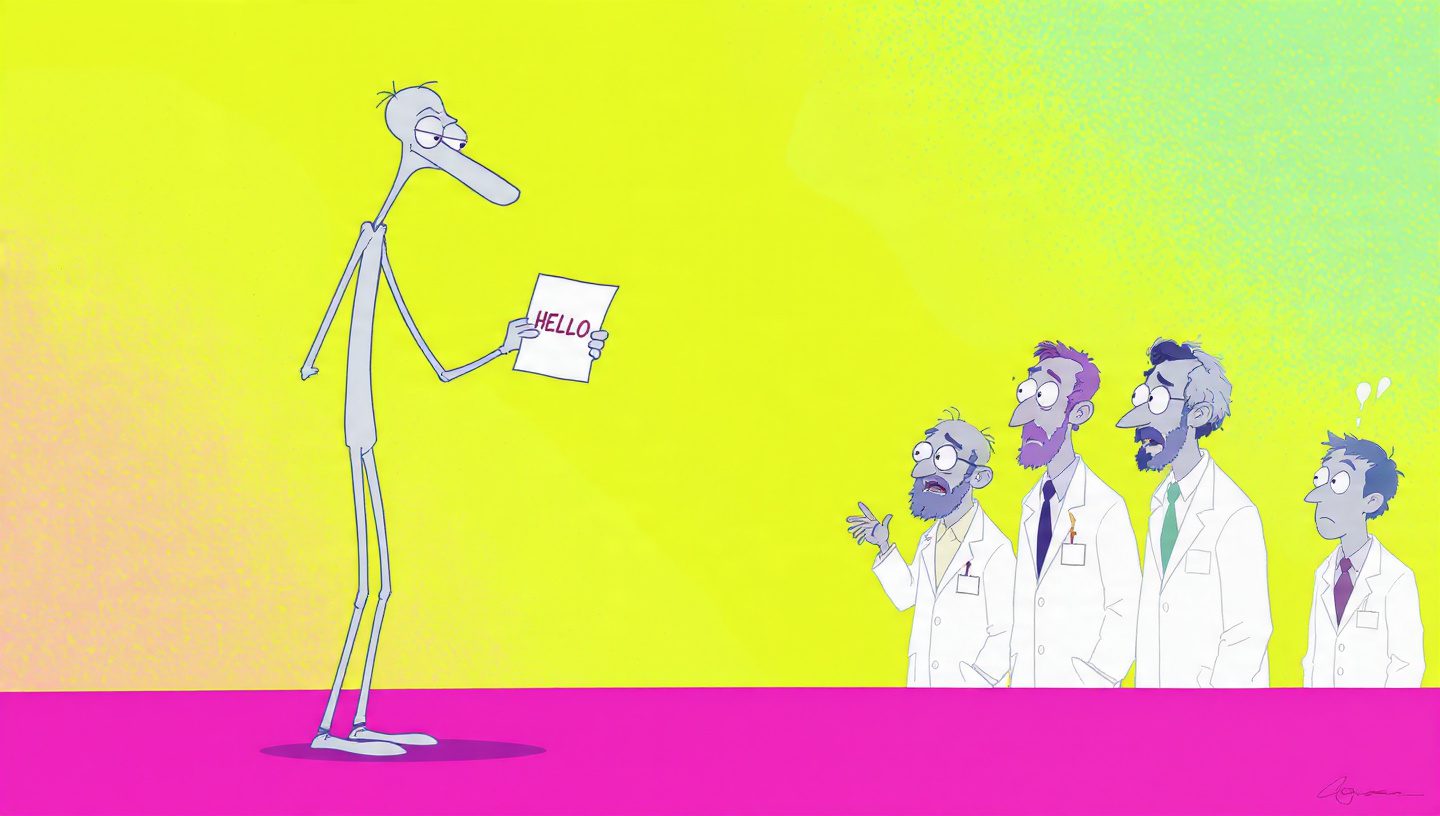
Choosing the Correct Toe-Writing Equipment
Many beginners fail because they use the wrong tools.
Toe writing requires specialized equipment.
The Pen
Not all pens are suitable.
Avoid:
-
Ultra-thin pens
-
Slippery pens
-
Pens that explode when dropped
Instead, experts recommend Toe-Compatible Writing Instruments (TCWIs).
Ideal characteristics include:
-
Thick grip
-
Non-slip coating
-
Emotional resilience
The Writing Surface
Toe-writing surfaces must be positioned precisely 27.4 centimeters above floor level.
Why 27.4 cm?
No one knows.
But every scientific paper on pedalgraphy insists on it.
The Chair
The correct chair must provide:
-
Toe mobility
-
Balance stability
-
A sense of existential confidence
The 7-Stage Toe Writing Training Program
Learning How to learn to write with a pen using your toes requires discipline.
Experts recommend the Seven Stages of Pedal Mastery.
Stage 1: Toe Awareness
Sit quietly.
Observe your toes.
Ask them philosophical questions.
Example:
“Are you ready to become writers?”
If your toes twitch slightly, progress is possible.
Stage 2: Grip Development
Place a pen between your big toe and second toe.
Hold it for ten seconds.
If the pen falls, congratulate yourself.
Gravity is working correctly.
Repeat this exercise 137 times.
Stage 3: Controlled Scribbling
Place paper on the floor.
Attempt to create marks.
These marks will resemble:
-
Earthquake readings
-
Seismograph charts
-
A spider having an existential crisis
This is normal.
Stage 4: The First Letter
Most experts recommend starting with the letter O.
Why?
Because it requires minimal direction changes.
Attempting the letter S too early may cause:
-
Toe confusion
-
Pen rebellion
-
Emotional distress
Stage 5: Word Construction
After weeks of practice, you may attempt your first word.
Recommended starter words include:
-
Toe
-
Ink
-
Help
Stage 6: Sentence Formation
Writing full sentences requires advanced coordination.
Many students report mild dizziness during this stage.
This is caused by intense focus combined with the surreal realization that your foot is writing a sentence.
Stage 7: Philosophical Acceptance
Eventually, you must confront the truth.
You are now someone who writes using their toes.
This realization changes a person.

The Psychology of Toe-Based Writing
Toe writing is not merely physical.
It is psychological.
During training, practitioners experience the Five Emotional Phases of Pedal Literacy.
-
Curiosity
-
Optimism
-
Confusion
-
Regret
-
Mild pride
Psychologists note that the final stage produces a strange sense of achievement.
Few people can say:
“I signed my name using my foot.”
Even fewer should.
Advanced Techniques in Pedal Calligraphy
Once basic writing is mastered, ambitious students may pursue Advanced Pedalgraphy.
These techniques include:
Toe Calligraphy
Elegant swirling letters.
Usually illegible.
But very artistic.
Multi-Toe Stabilization
Using three toes simultaneously.
Highly risky.
Dual-Foot Writing
Writing two sentences at once.
Often ends with both pens under the couch.
Common Mistakes Beginners Make
Most failures come from predictable mistakes.
Wearing Socks
Socks dramatically reduce pen grip.
Unless you are using scientifically approved anti-slip educational socks.
These do not exist.
Writing Too Fast
Toe writing requires patience.
Attempting speed writing leads to:
-
Pen ejection
-
Toe panic
-
Mild chaos
Ignoring Foot Stretching
Toe cramps are real.
Stretch before every session.
Your toes deserve respect.
Real-Life Applications of Toe Writing
Though fictional, pedalgraphy has many theoretical uses.
Emergency Situations
Hands trapped in spaghetti?
Use your toes.
Multitasking
Cooking dinner while signing documents.
Performance Art
Toe writing could revolutionize modern art galleries.
Visitors would stare at a painting titled:
“Letter A (Toe Version)”
The Future of Toe-Based Communication
Technologists believe toe writing may become mainstream.
Possible future innovations include:
-
Toe keyboards
-
Smart socks with handwriting sensors
-
Pedal-based tablets
Some startups already claim to be developing AI-assisted Toe Styluses.
Investors remain cautious.
Summary
Humanity has achieved incredible progress.
And yet, we still occasionally wonder:
What if our toes could write?
Learning How to learn to write with a pen using your toes is not practical.
It is not efficient.
It is not necessary.
But it is undeniably hilarious.
And sometimes that is enough.
How to Train Your Eyebrows to Dance to the Rhythm of Techno
How to Fold a Sock into an Origami Swan Shape
How to Effectively Count Sheep That Have ADHD
FAQ: Concerned Citizens Ask Important Questions
Is toe writing dangerous?
Only emotionally.
Can children learn this skill?
Children already do strange things.
This would barely register.
Do professional toe writers exist?
Thankfully, no.
Should governments regulate pedalgraphy?
Probably.
Can this replace handwriting classes?
Only in alternate dimensions.
Ridiculous Call-To-Action
If this article has inspired you, please consider supporting science.
Donate your unused socks to the International Institute of Pedalgraphy.
Your socks will help researchers continue asking questions nobody requested.





