Befrey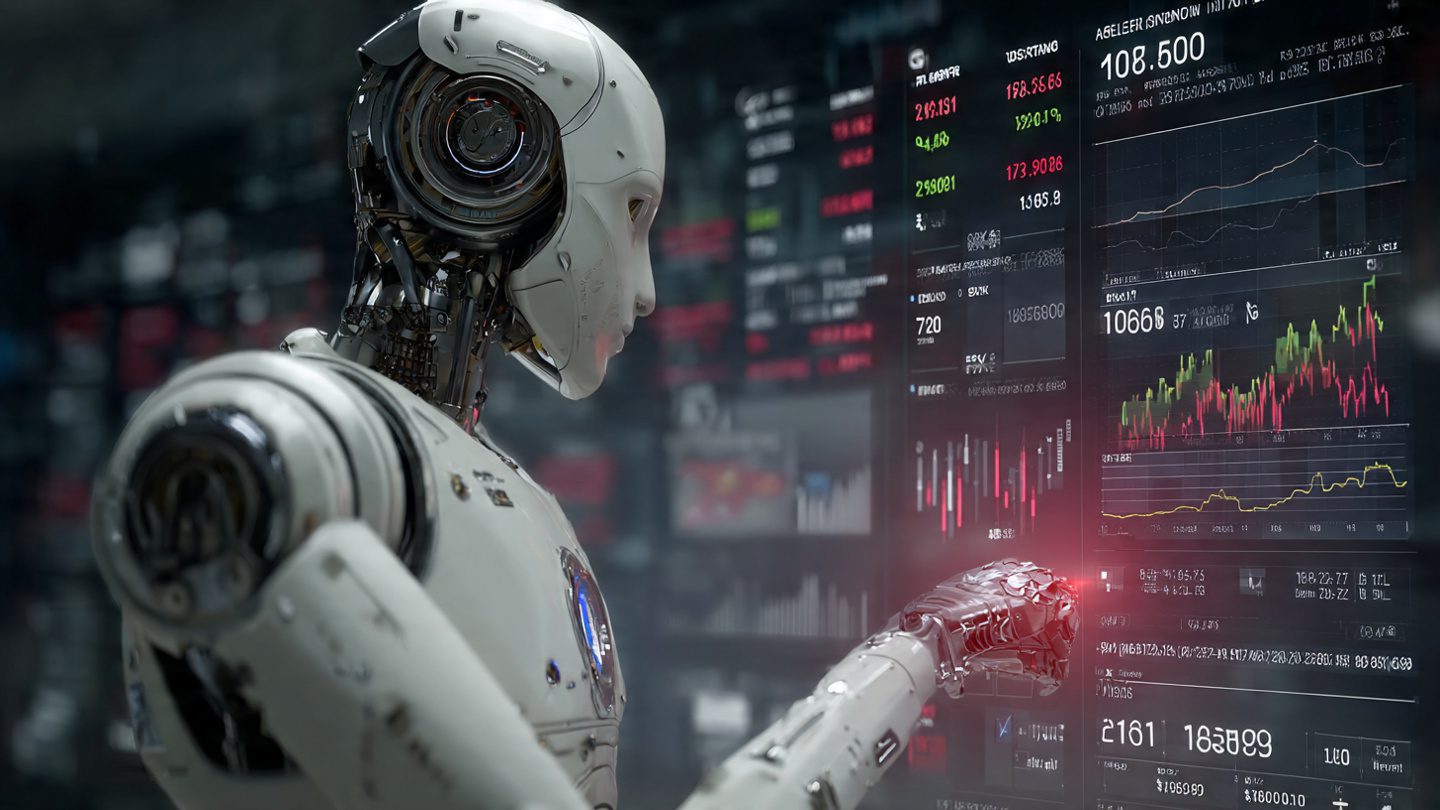
How AI is impacting investing and trading is one of the most important questions in modern finance. The rise of artificial intelligence in stock trading, AI-powered investment strategies, machine learning in financial markets, and automated decision-making systems is transforming how investors approach the market. From hedge funds to individual traders, AI-driven investing and algorithmic trading are reshaping the landscape. The impact of artificial intelligence on investing and trading goes far beyond speed. It introduces precision, data-driven insights, and the ability to process massive amounts of information in real time.
The Evolution of Investing: From Human Intuition to Artificial Intelligence
Investing has changed dramatically over the decades. It once relied heavily on human intuition and manual analysis. Traders would study charts, read financial statements, and make decisions based on experience. This process was slow and often biased.
With the introduction of computers, investing became more data-driven. Spreadsheets and financial software allowed for faster calculations. However, the real transformation began with artificial intelligence. AI systems can analyze millions of data points in seconds. They can detect patterns that humans cannot see.
This shift has reduced reliance on guesswork. Investors now use AI to support decision-making. It does not eliminate human involvement. Instead, it enhances it. Traders can focus on strategy while AI handles data analysis.
Another important change is accessibility. AI tools are no longer limited to large institutions. Retail investors can now access advanced technologies. This levels the playing field and increases competition.
The evolution of investing is ongoing. AI continues to push boundaries and redefine what is possible in financial markets.
AI-driven stock market prediction models
Predicting stock market movements has always been a challenge. Markets are influenced by countless variables. AI-driven stock market prediction models aim to solve this problem with advanced analytics.
These models use historical data, market trends, and even news sentiment. They process structured and unstructured data simultaneously. This includes financial reports, social media posts, and global events.
Machine learning algorithms continuously improve these models. They learn from past outcomes and adjust their predictions. This makes them more accurate over time.
One key advantage is speed. AI can analyze data in real time. This allows traders to react instantly to market changes. It also reduces the risk of missing opportunities.
However, prediction is not perfect. Markets are inherently unpredictable. AI improves probabilities but cannot guarantee outcomes. This is important for investors to understand.
Despite limitations, AI-driven prediction models provide a significant edge. They help investors make more informed decisions and reduce uncertainty.

machine learning algorithms in algorithmic trading
Algorithmic trading is not new. But machine learning algorithms in algorithmic trading have taken it to a new level. Traditional algorithms follow fixed rules. Machine learning models adapt and evolve.
These systems analyze market data continuously. They identify patterns and execute trades automatically. This happens within milliseconds. Speed is a critical advantage in trading.
Machine learning also improves strategy development. Algorithms can test thousands of strategies using historical data. They identify the most effective ones. This reduces trial and error.
Another benefit is emotion-free trading. Human traders often make decisions based on fear or greed. AI eliminates emotional bias. It follows data-driven logic.
Risk management is also enhanced. AI systems monitor market conditions and adjust strategies accordingly. They can reduce exposure during volatile periods.
Machine learning in algorithmic trading is transforming financial markets. It increases efficiency and creates new opportunities for profit.
AI for portfolio management and asset allocation
Portfolio management is a complex task. It involves balancing risk and return. AI for portfolio management and asset allocation simplifies this process.
AI systems analyze an investor’s goals, risk tolerance, and market conditions. They create optimized portfolios tailored to individual needs. This personalization is a major advantage.
Asset allocation becomes more dynamic. Traditional portfolios are often static. AI continuously adjusts allocations based on market changes. This improves performance.
Diversification is also enhanced. AI identifies correlations between assets. It ensures that portfolios are well-balanced. This reduces risk.
Another key feature is automation. Investors can rely on AI to manage their portfolios. This saves time and reduces the need for constant monitoring.
AI-driven portfolio management is especially useful for beginners. It provides professional-level strategies without requiring deep expertise.
Overall, AI makes investing more efficient and accessible.
predictive analytics in financial markets
Financial markets generate vast amounts of data. Predictive analytics in financial markets helps make sense of this data.
AI analyzes historical trends and current conditions. It identifies patterns that indicate future movements. This provides valuable insights for investors.
Predictive analytics is used in various areas. It helps forecast stock prices, assess risk, and identify investment opportunities. It also supports macroeconomic analysis.
Another advantage is scenario analysis. AI can simulate different market conditions. It shows how investments might perform under various scenarios.
This improves decision-making. Investors can plan for both best-case and worst-case situations. It reduces uncertainty and enhances confidence.
Predictive analytics also supports regulatory compliance. It helps detect unusual trading activities and potential fraud.
In a data-driven world, predictive analytics is essential. It turns raw data into actionable insights.
automated trading systems using artificial intelligence
Automation is a key component of modern trading. Automated trading systems using artificial intelligence execute trades without human intervention.
These systems follow predefined strategies. They monitor market conditions continuously. When certain conditions are met, they execute trades instantly.
Speed is a major advantage. Automated systems can react faster than human traders. This is crucial in high-frequency trading.
Consistency is another benefit. AI systems follow rules without deviation. This ensures disciplined trading.
Automation also reduces workload. Traders do not need to monitor markets constantly. They can focus on strategy and analysis.
However, there are risks. Automated systems can amplify market volatility. If many systems react to the same signals, it can lead to rapid price movements.
Despite risks, automated trading systems are widely used. They are a cornerstone of modern financial markets.
risks and benefits of AI in investing
The use of AI in investing comes with both advantages and challenges. Understanding the risks and benefits of AI in investing is essential.
On the positive side, AI improves efficiency. It processes data quickly and accurately. It reduces human error and enhances decision-making.
AI also increases accessibility. More people can participate in investing. Advanced tools are no longer limited to institutions.
However, there are risks. One major concern is over-reliance on technology. Investors may trust AI blindly without understanding its limitations.
Data quality is another issue. AI systems depend on accurate data. Poor data can lead to incorrect decisions.
There is also the risk of market manipulation. Advanced AI systems can exploit market inefficiencies. This raises ethical concerns.
Cybersecurity is another challenge. Financial data is sensitive. AI systems must be protected from attacks.
Balancing risks and benefits is crucial. Investors must use AI responsibly and remain informed.
The Impact of AI on Retail Investors and Financial Inclusion
AI is not only transforming institutional investing. It is also impacting retail investors. This is one of the most significant changes in the financial industry.
Retail investors now have access to tools that were once exclusive. AI-powered apps provide insights, recommendations, and automated trading options.
This democratization of investing increases financial inclusion. More people can participate in financial markets. This creates new opportunities for wealth creation.
Education is also improving. AI tools provide personalized learning experiences. Investors can understand complex concepts more easily.
However, there are challenges. Retail investors may misuse AI tools. They may take excessive risks without proper knowledge.
Despite this, the overall impact is positive. AI is making investing more accessible and inclusive.
Ethical Considerations and Regulation in AI-driven Trading
As AI becomes more prevalent, ethical considerations are becoming important. AI-driven trading raises questions about fairness and transparency.
One concern is algorithmic bias. AI systems may favor certain outcomes based on data. This can create unfair advantages.
Transparency is another issue. Many AI models are complex. It is difficult to understand how they make decisions. This lack of transparency can be problematic.
Regulation is evolving to address these challenges. Governments and financial institutions are working to ensure fair practices.
Compliance is becoming more important. AI systems must adhere to regulatory standards. This ensures accountability.
Ethical AI is not just a technical issue. It is a responsibility. Businesses must ensure that their systems are fair and transparent.

The Future of AI in Investing and Trading
The future of AI in investing and trading is incredibly promising. Technology is advancing rapidly. AI systems are becoming more sophisticated.
One major trend is the integration of AI with big data. This will provide even deeper insights. Investors will have access to more accurate information.
Another trend is personalization. AI will create highly customized investment strategies. This will improve outcomes for individual investors.
Automation will continue to grow. More processes will be handled by AI. This will increase efficiency and reduce costs.
AI will also play a role in sustainability. It will help identify environmentally responsible investments. This aligns with global trends.
The future is not about replacing humans. It is about collaboration between humans and AI. This combination will drive innovation in financial markets.
Conclusion: The True Impact of AI on Investing and Trading
How AI is impacting investing and trading is clear. It is transforming every aspect of the financial industry. From prediction models to automated systems, AI is driving innovation.
It improves efficiency, accuracy, and accessibility. It enables better decision-making and reduces risks. However, it also introduces new challenges.
Investors must understand both the opportunities and limitations. AI is a powerful tool, but it is not infallible.
The key to success is balance. Combining human expertise with AI capabilities creates the best results.
AI is not just changing investing. It is redefining the future of finance.
Automation vs Human Touch: Finding the Right Balance for Success
Top 5 AI Trends That Every Entrepreneur Should Follow
How AI is Changing the Future of Business
Summary
AI is revolutionizing investing and trading by introducing automation, predictive analytics, and advanced data analysis. It enhances decision-making, improves efficiency, and makes investing more accessible. While challenges exist, the overall impact of AI is highly positive and transformative.
FAQ
1. Can AI predict stock market movements accurately?
AI improves prediction accuracy but cannot guarantee outcomes due to market unpredictability.
2. Is AI trading better than human trading?
AI is faster and more data-driven, but human oversight is still essential.
3. Are AI investing tools safe for beginners?
Yes, but beginners should understand the basics before relying on AI tools.
4. What are the risks of AI in trading?
Risks include over-reliance, data issues, and potential market volatility.
5. Will AI replace financial advisors?
No, AI will enhance their capabilities rather than replace them.
CTA (Call-to-Action)
Ready to elevate your investing strategy? Start exploring AI-powered tools today and combine them with your financial knowledge to stay ahead in the evolving world of trading.