
 Befrey
The Flat Earth conspiracy theory is one of the most widely known and debated conspiracy beliefs in modern culture. According to this theory, the Earth is not a rotating sphere but instead a flat plane surrounded by ice walls and covered by a dome-like sky. Supporters of the Flat Earth conspiracy theory often argue that governments, scientists, and space agencies are hiding the “true shape of the Earth” from the public. Variations of this belief include claims that satellite images are fabricated, that space missions are staged, and that modern astronomy is part of a global deception. The theory is also connected to ideas such as the flat world model, Earth dome hypothesis, and anti-globe movement, all of which challenge the scientific consensus that Earth is an oblate spheroid. Understanding why the Flat Earth conspiracy theory continues to attract followers requires examining its historical roots, the arguments presented by believers, the scientific evidence about Earth’s shape, and the psychological and social dynamics that allow such ideas to persist.
The Historical Origins of the Flat Earth Idea
The belief that Earth is flat is far older than modern conspiracy culture. In ancient civilizations, people naturally assumed that the ground beneath their feet extended outward in a flat surface. This assumption seemed reasonable because the curvature of Earth is not easily visible at human scale. Early mythologies often described the world as a flat disk floating in a cosmic ocean or supported by mythical structures. Many ancient cultures, including some early Mesopotamian and Norse traditions, imagined the Earth as a flat land surrounded by vast waters.
However, even in ancient times, scholars began to challenge these ideas through observation and mathematics. Greek philosophers were among the first to systematically argue that Earth must be spherical. They noticed that ships disappear hull-first when sailing over the horizon. They also observed that different constellations appear at different latitudes. These observations suggested that Earth’s surface is curved rather than flat.
One of the most remarkable early demonstrations came from the Greek scholar Eratosthenes in the third century BCE. By measuring the angle of sunlight in two different cities at the same time, he calculated the circumference of Earth with surprising accuracy. His results strongly supported the idea that Earth is a sphere. Over time, this understanding spread through the scientific traditions of Greece, Rome, the Islamic world, and later medieval Europe.
Despite this long history of spherical Earth knowledge, the Flat Earth conspiracy theory re-emerged in the modern era. During the nineteenth century, several writers began promoting alternative cosmologies that rejected mainstream astronomy. These early movements laid the groundwork for the modern flat Earth revival.
How the Modern Flat Earth Conspiracy Theory Emerged
The modern version of the Flat Earth conspiracy theory gained momentum during the nineteenth and twentieth centuries. One influential figure was Samuel Rowbotham, an English writer who promoted a model known as “Zetetic Astronomy.” He claimed that Earth was a flat plane and that scientific institutions were promoting false ideas about a spherical planet. His experiments, which involved observing water surfaces and horizon lines, were presented as evidence that Earth has no curvature.
Rowbotham’s ideas were widely criticized by scientists. However, they inspired the formation of early flat Earth societies that promoted the belief through pamphlets and lectures. These groups argued that modern science had become corrupt and that ordinary people should rely on direct observation rather than scientific authority.
The rise of the internet dramatically amplified the spread of these ideas. Online video platforms and social media allowed individuals to share alternative interpretations of scientific data with global audiences. Within a few years, the Flat Earth conspiracy theory transformed from a fringe belief into an online phenomenon with millions of views and active communities.
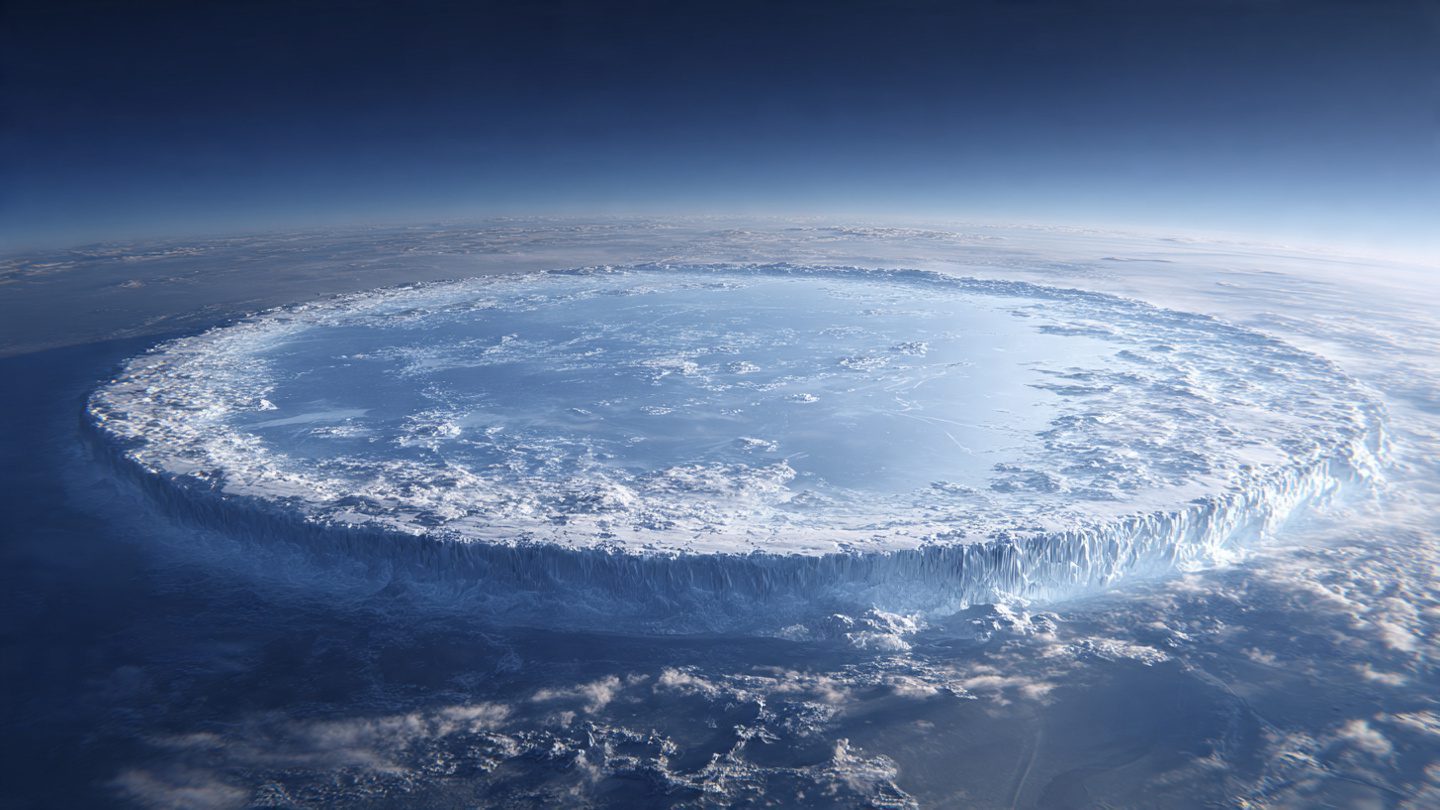
Many modern flat Earth proponents claim that space agencies such as NASA fabricate satellite images of Earth. Others argue that the International Space Station does not exist or that astronauts are participating in staged missions. Some versions of the theory suggest that Antarctica forms a giant ice wall surrounding the flat Earth, preventing people from reaching the edge of the world.
These claims are often supported by amateur experiments, reinterpretations of scientific data, and discussions about perceived inconsistencies in official explanations. The internet provides a platform where these interpretations can circulate rapidly and attract new followers.

Common Arguments Used by Flat Earth Believers
Supporters of the Flat Earth conspiracy theory present a variety of arguments to challenge the spherical Earth model. One of the most common claims is that the horizon always appears flat when viewed from the ground or from airplanes. Flat Earth proponents argue that if Earth were truly curved, the curvature should be easily visible to the naked eye.
Another frequently cited argument involves long-distance photography. Some flat Earth advocates claim that photographs showing distant mountains or buildings prove that Earth’s surface is flat. They argue that if Earth were curved, these objects should be hidden below the horizon. In reality, atmospheric refraction and optical conditions can make distant objects visible even when they are partially below the geometric horizon.
Flat Earth supporters also question the authenticity of satellite images. They often claim that photographs of Earth from space are computer-generated or manipulated. According to the Flat Earth conspiracy theory, governments allegedly maintain this deception to control public perception and maintain power over global populations.
Another argument involves airline flight routes. Some believers claim that certain long-distance flights would be impossible on a spherical Earth but make sense on a flat Earth map. However, these interpretations usually rely on inaccurate map projections or misunderstandings about how flight paths are calculated.
Finally, flat Earth advocates often emphasize the idea of personal observation. They encourage people to “trust their senses” rather than scientific institutions. This appeal to intuition can be persuasive because the curvature of Earth is not immediately obvious in everyday life.
Scientific Evidence That Earth Is a Sphere
Despite the claims made by the Flat Earth conspiracy theory, there is overwhelming scientific evidence demonstrating that Earth is spherical. This evidence comes from multiple independent fields of science, including astronomy, physics, geodesy, and satellite technology.
One of the simplest demonstrations involves observing ships at sea. When a ship travels away from the observer, the lower parts disappear before the upper parts. This effect occurs because the ship is moving over a curved surface. If Earth were flat, the entire ship would simply appear smaller without gradually disappearing from the bottom up.
Another clear piece of evidence comes from lunar eclipses. During a lunar eclipse, Earth passes between the Sun and the Moon, casting a shadow on the Moon’s surface. This shadow is always circular. The only shape that consistently produces a circular shadow from every angle is a sphere.
Modern satellite technology provides even stronger evidence. Thousands of satellites orbit Earth and continuously capture images of the planet. These satellites are used for weather forecasting, navigation systems, telecommunications, and scientific research. The data collected from these systems would be impossible to explain if Earth were flat.
Global positioning systems (GPS) also rely on precise calculations based on Earth’s spherical geometry. The signals transmitted by GPS satellites must account for the curvature of Earth in order to provide accurate location data. If Earth were flat, these systems would not function correctly.
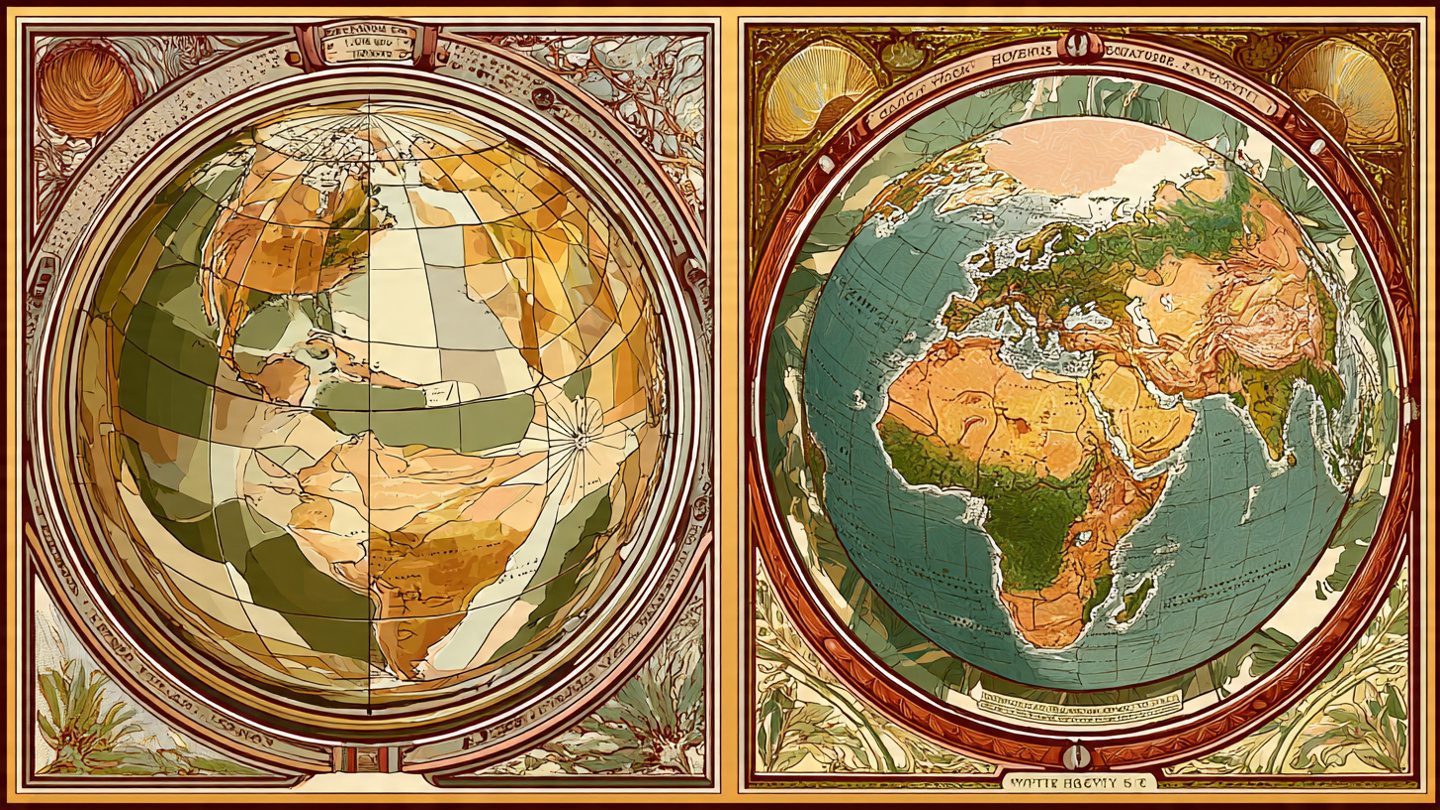
Astronauts aboard spacecraft and space stations have repeatedly photographed Earth from orbit. These images clearly show the curvature of the planet and its spherical shape.
Psychological and Social Reasons the Flat Earth Conspiracy Theory Persists
The persistence of the Flat Earth conspiracy theory cannot be explained solely by misunderstandings about science. Psychological and social factors play a significant role in why people adopt and maintain these beliefs.
One important factor is the human tendency to distrust large institutions. Governments, scientific organizations, and media outlets sometimes lose public trust due to historical mistakes or scandals. When trust decreases, alternative explanations for complex phenomena can become more appealing.
Another factor is the desire for belonging. Online communities built around conspiracy theories often provide strong social support networks. Members share ideas, conduct experiments, and encourage each other’s beliefs. This sense of community can make it difficult for individuals to reconsider their views.
Cognitive biases also contribute to the persistence of conspiracy beliefs. Confirmation bias leads people to seek information that supports their existing views while ignoring contradictory evidence. Once someone becomes deeply invested in the Flat Earth conspiracy theory, they may interpret new information in ways that reinforce their belief.
The internet accelerates this process by creating algorithm-driven information environments. Users who watch or read conspiracy-related content are often recommended similar material, creating an echo chamber where alternative perspectives are rarely encountered.
In addition, the dramatic narrative of a hidden global deception can be psychologically compelling. Believing that one has discovered secret knowledge can create a sense of empowerment and intellectual independence.
The Cultural Impact of the Flat Earth Movement
Although the Flat Earth conspiracy theory is rejected by the scientific community, it has had a significant cultural impact in recent years. Documentaries, podcasts, and viral videos have explored the movement from both critical and sociological perspectives. These media productions often examine how modern communication technologies influence the spread of unconventional beliefs.
Flat Earth conferences have been organized in several countries, bringing together believers, content creators, and curious observers. These events typically feature presentations about alternative cosmology, experimental demonstrations, and discussions about perceived flaws in mainstream science.
The movement has also become a subject of satire and humor in popular culture. Comedians, television shows, and internet memes frequently reference flat Earth ideas as examples of extreme skepticism toward scientific knowledge.
At the same time, the movement has sparked broader discussions about science education and critical thinking. Educators often use the Flat Earth conspiracy theory as a teaching example to illustrate how scientific evidence is evaluated and how scientific consensus develops over time.
This cultural conversation highlights an important challenge of the modern information era. Access to vast amounts of information does not automatically lead to accurate understanding. Instead, it requires strong skills in critical analysis, scientific literacy, and evidence evaluation.
Spirit or Entity – A Being Without a Physical Body, Considered the Soul of the Deceased
EVP Recordings and Spirit Communication: Exploring the Unseen World
What Are Intelligent Spirits and How Do They Manifest Themselves?
Summary
The Flat Earth conspiracy theory claims that Earth is a flat plane rather than a spherical planet. Although this belief has ancient roots, the modern version emerged through alternative cosmology movements and expanded dramatically with the growth of the internet. Supporters of the theory question satellite images, space missions, and scientific institutions. However, overwhelming evidence from astronomy, physics, satellite technology, and direct observation demonstrates that Earth is spherical. The continued popularity of the theory is largely driven by psychological factors, social dynamics, and the powerful influence of online communities.
FAQ
Why do some people believe the Earth is flat?
Many supporters of the Flat Earth conspiracy theory distrust scientific institutions and believe that governments or space agencies are hiding the truth about Earth’s shape.
What is the main scientific evidence that Earth is round?
Evidence includes satellite images, GPS technology, lunar eclipse shadows, and observations of ships disappearing over the horizon.
When did the modern flat Earth movement begin?
The modern movement began in the nineteenth century with alternative cosmology ideas and gained major popularity in the internet era.
Do any scientists support the Flat Earth theory?
No credible scientific institutions or peer-reviewed research support the Flat Earth conspiracy theory.
Why does the theory spread so easily online?
Social media algorithms, echo chambers, and viral content make it easy for alternative explanations to reach large audiences.
Call to Action
If you enjoy exploring fascinating topics about science, myths, and conspiracy theories, keep reading and learning. Understanding how evidence works is the best way to separate scientific reality from viral misinformation.





