
 Befrey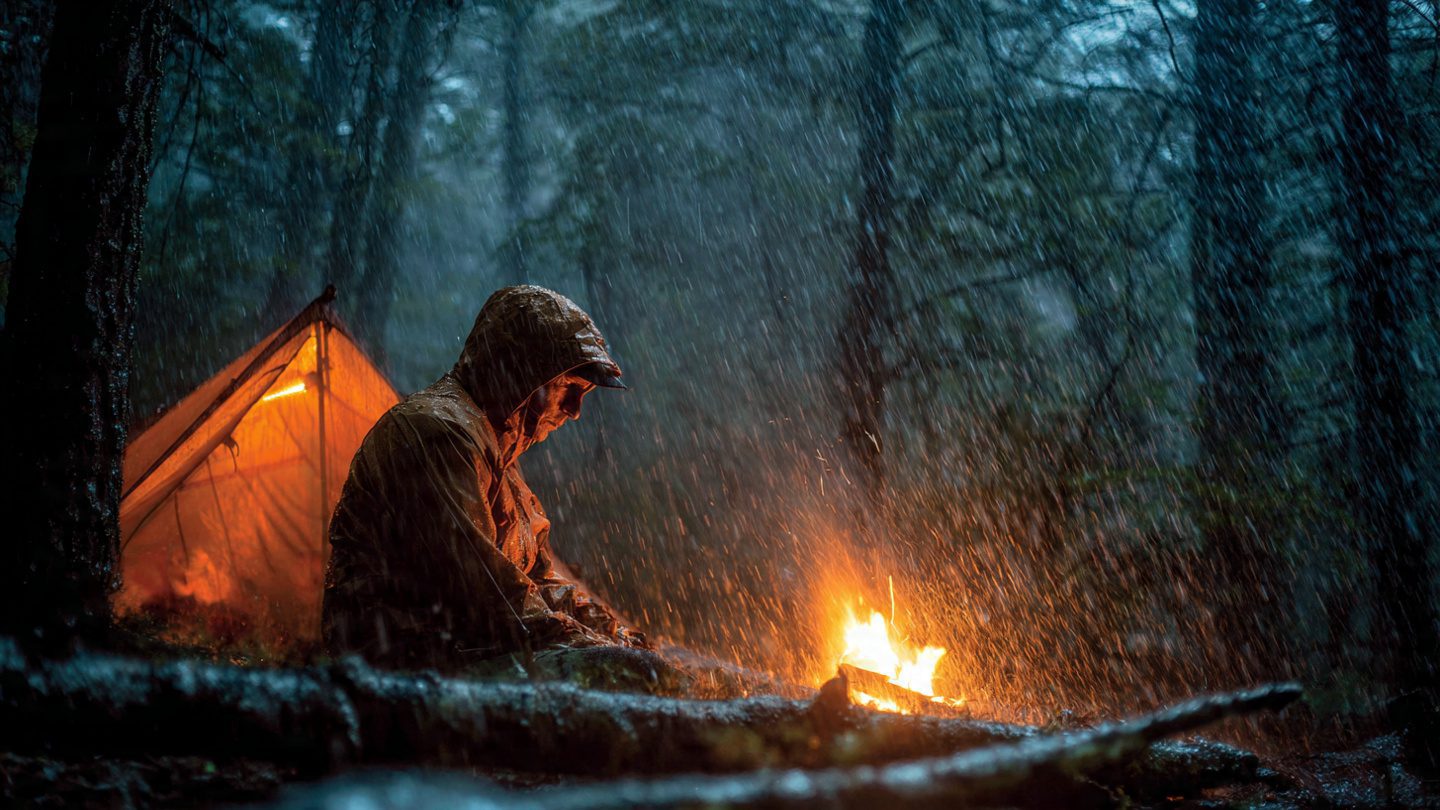
Mastering fire in adverse conditions is a vital skill for any outdoor enthusiast, hiker, or survivalist. Understanding the best ways to start a fire when it’s wet can be the difference between comfort and danger. Rain, snow, high humidity, or damp wood can make traditional fire-building frustrating, but with the right techniques and knowledge, fire can still be reliably ignited. This guide covers everything you need to know—from selecting wet-resistant tinder and mastering advanced fire-starting methods to building effective shelters and fire structures in wet conditions. By applying these strategies, you will confidently tackle fire-making challenges even in the most adverse environments.
Selecting Wet-Resistant Tinder and Kindling
One of the first considerations when learning the best ways to start a fire when it’s wet is finding the right materials. Tinder and kindling must ignite easily even when moisture is present. Natural materials such as birch bark, dry moss, cattail fluff, or fatwood are highly effective. These substances contain oils or fibers that allow ignition despite dampness. When collecting kindling, focus on pieces that have been sheltered from rain, like the inner layers of fallen logs or dead branches still attached to trees.
Proper preparation of wet tinder is essential. Peel off bark to expose dry inner layers. Splitting small sticks to reach dry cores increases your chances of success. Combining these materials with modern fire starters such as waterproof matches, magnesium blocks, or chemical fire starters creates a reliable ignition system. Knowledge of wet-resistant tinder ensures that your fire-building efforts will succeed under challenging conditions.
Building a Fire Shelter to Protect Against Moisture
A critical aspect of knowing the best ways to start a fire when it’s wet involves creating a fire shelter. Fire shelters prevent wind, rain, and snow from extinguishing your flame. A simple shelter can be built using a tarp, branches, or an overhanging rock. Position your fire in a sheltered area, such as beneath dense tree cover, a natural rock overhang, or a makeshift lean-to. Avoid open areas where precipitation can continuously douse your materials.
The shelter should allow airflow while protecting the fire. Adequate ventilation is necessary for combustion. Arrange the roof and walls to block wind and rain but leave a gap for smoke to escape. Layering materials on the ground, such as dry leaves or bark, provides insulation and prevents moisture from soaking the base of your fire. A well-constructed fire shelter dramatically increases success in wet conditions.
Advanced Fire Structures for Wet Conditions
When starting a fire in wet environments, the structure of your fire is crucial. Certain fire configurations increase efficiency and burn time. The teepee fire, log cabin fire, and lean-to fire are the most effective. In wet conditions, the lean-to fire is particularly useful. Place a large wet-resistant log as a windbreak, and lean kindling against it at an angle to catch sparks more easily.
Another advanced technique is the Japanese inverted teepee. Stack larger logs on top and kindling underneath. The heat rises through the structure, drying the upper logs and creating a self-sustaining flame. Wet fire-building success depends not only on materials but also on the careful arrangement of the fire to maximize airflow and heat concentration.
Using Modern Fire Starters Effectively
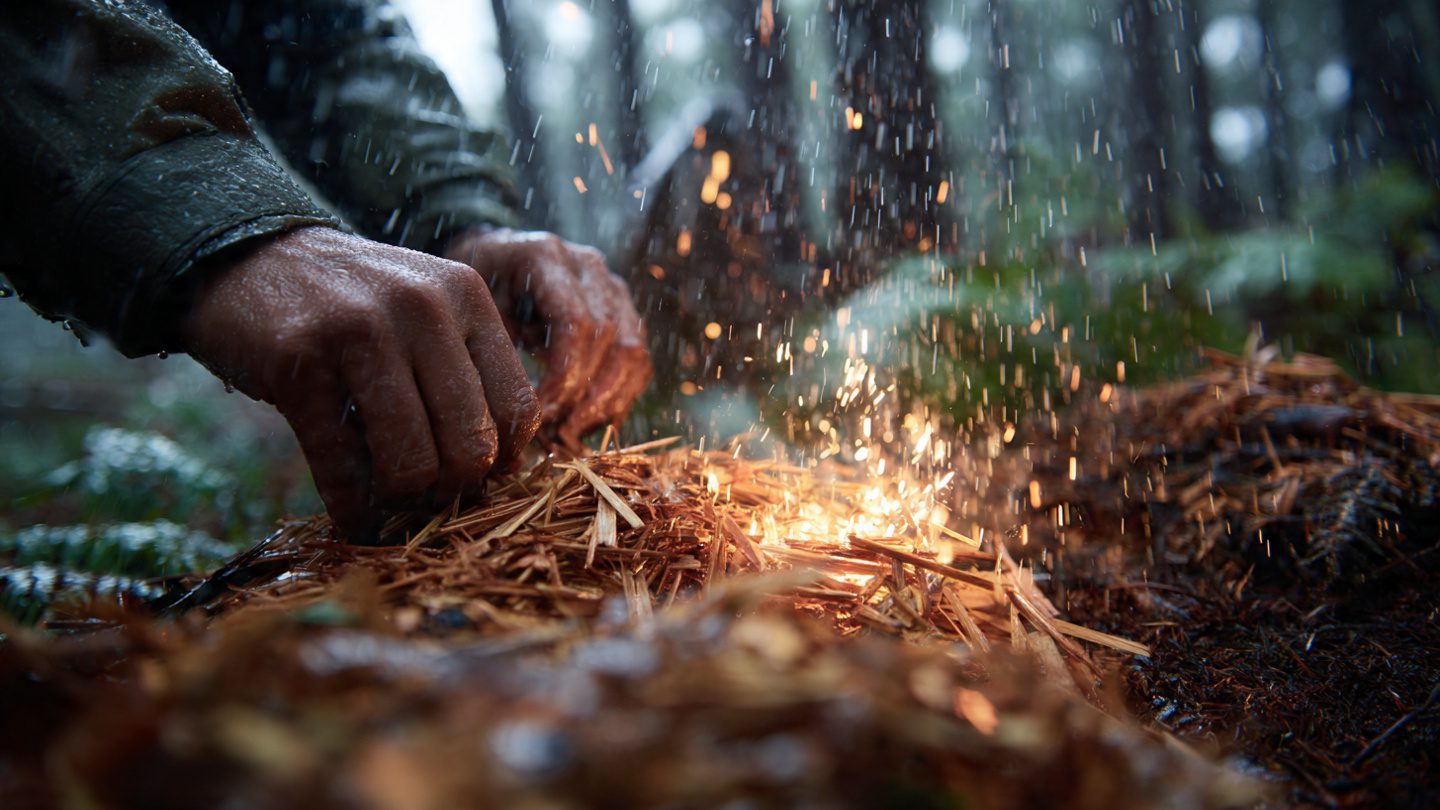
While natural methods are essential, using modern fire starters in wet conditions can be a lifesaver. Waterproof matches, ferrocerium rods, and magnesium blocks are designed to work under high moisture. When using a ferro rod, scrape fine shavings of magnesium onto the tinder and ignite the spark. This method creates a high-temperature flame that can penetrate damp materials.
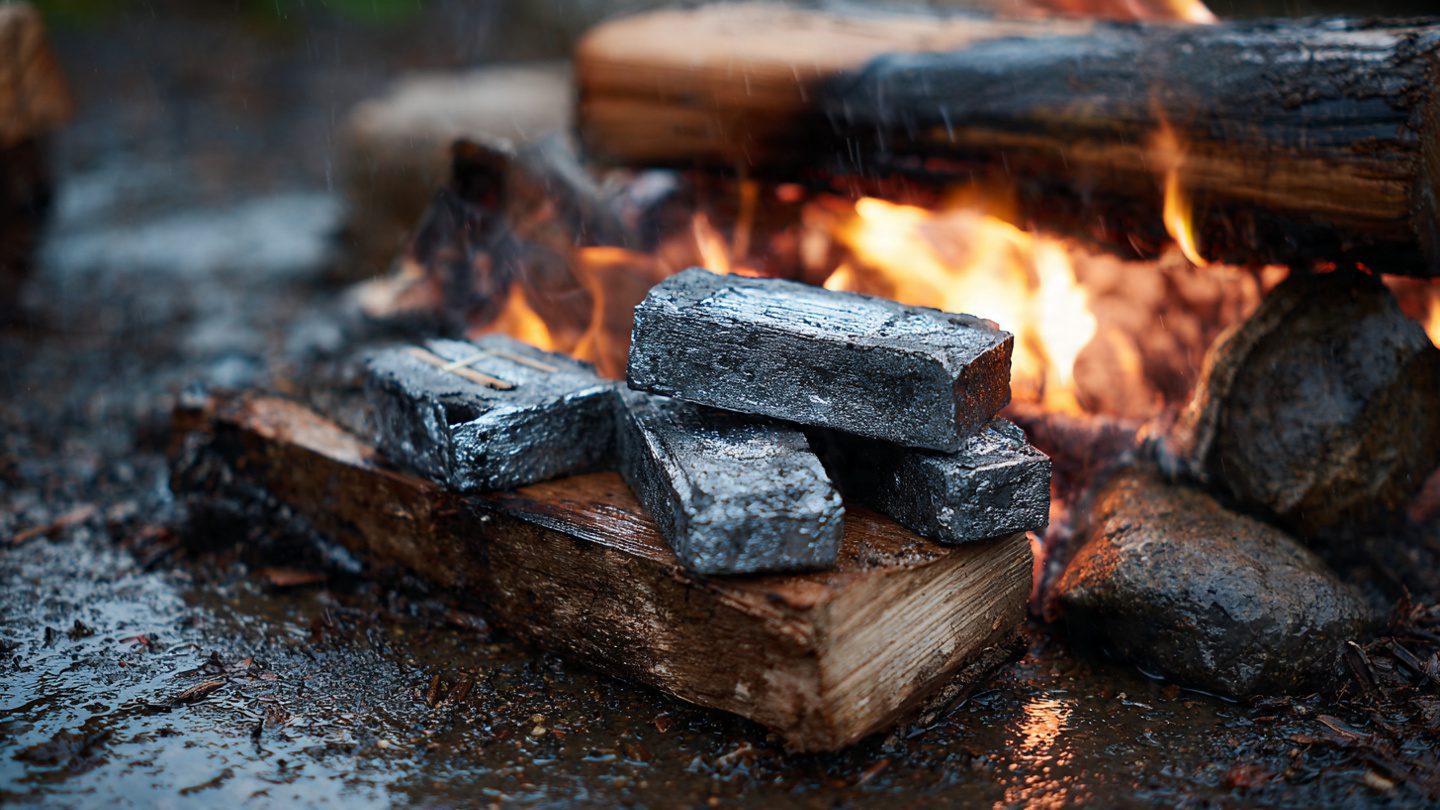
Chemical fire starters or gel fuel tablets are especially effective in extreme wet conditions. Place these directly on dry inner layers of kindling or in a makeshift fire container to protect the flame. Modern fire starters complement traditional techniques and ensure that fire can be produced even in heavy rain or snow.
Preparing and Drying Wet Wood for Combustion
Wet wood is a major obstacle when building fire in damp conditions. Learning how to prepare and dry wet wood for combustion is key. Begin by collecting dead branches that are off the ground or protected by natural cover. Split larger logs to expose dry cores. Place these pieces near your fire or under a tarp to dry partially before full ignition.
Shaving thin strips of wood from the interior can produce dry shavings that ignite quickly. Even slightly damp wood can burn when combined with strong tinder and strategic fire placement. Knowledge of drying and preparing wood ensures a steady fuel supply and maintains your fire throughout the night or trip.
Maintaining Fire in Rain and High Humidity
Knowing how to maintain fire in rain or high humidity is just as important as starting it. Continuous monitoring and management are required. Shield the fire using improvised walls or rocks. Add small, dry pieces of wood first, gradually introducing larger logs as the fire strengthens. Always keep spare dry tinder and kindling nearby for emergencies.
Airflow is critical. A fire smothered by excessive moisture or improper ventilation will struggle to sustain. Rotate logs to expose dry surfaces and use thin wood strips to feed the flame gradually. Proper fire maintenance prevents it from dying prematurely in challenging environments.
Safety Considerations When Starting Fire in Wet Conditions
Safety cannot be overstated. Even in wet conditions, fire is dangerous if mishandled. Use non-flammable barriers and keep a water source or dirt nearby to extinguish the fire quickly if needed. Understanding fire safety in wet conditions also includes avoiding building fires under unstable branches, near flammable debris, or in areas prone to flash flooding.
Keep children and pets at a safe distance. Smoke inhalation can be more pronounced in wet, dense environments due to limited airflow. Following strict safety protocols ensures that your wet-weather fire provides warmth, light, and comfort without creating hazards.
Outdoor Survival Strategies Related to Fire
Fire is central to outdoor survival. Knowing outdoor survival strategies for wet environments improves your chances of remaining warm, cooking food, and signaling for help. Prioritize dry shelter creation, water purification, and thermal management in conjunction with fire-making. A fire provides psychological comfort in adverse conditions, reducing stress and improving decision-making. Combining fire skills with general survival strategies creates a holistic approach to safety in wet wilderness conditions.
Psychological Aspects of Fire-Making in Difficult Conditions
The mental challenge of building fire in wet conditions is often overlooked. Fear of failure, frustration, and fatigue can impact your ability to succeed. Embrace patience and resilience. Focus on small, incremental steps: gathering dry tinder, constructing shelters, and lighting kindling. Visualize success and remain calm. Psychological preparation and determination are as critical as technical skills when mastering the best ways to start a fire when it’s wet.
How to Spend the Night in the Woods Without a Tent
Summary
Mastering the best ways to start a fire when it’s wet requires preparation, knowledge, and adaptability. From selecting wet-resistant tinder, using modern fire starters, and preparing damp wood, to constructing advanced fire structures and maintaining the flame in rain, every detail contributes to success. Safety, psychological resilience, and outdoor survival strategies complement these skills. By following this comprehensive guide, anyone can achieve reliable fire in even the wettest conditions.
FAQ
1. Can I start a fire with completely soaked wood?
Yes, by using wet-resistant tinder, splitting logs to reach dry cores, and employing modern fire starters like ferro rods or chemical tablets.
2. What is the easiest fire structure for wet conditions?
The lean-to fire is highly effective. It shields the flame from wind and rain while allowing airflow for combustion.
3. Are chemical fire starters safe for beginners?
Yes, when used according to instructions. They are particularly useful in wet conditions for reliable ignition.
4. How can I keep a fire going during heavy rain?
Construct a fire shelter, use dry tinder and kindling, add fuel gradually, and maintain proper airflow.
5. Can natural shelters improve fire success in wet conditions?
Absolutely. Overhanging rocks, dense trees, or leaf canopies protect the fire from rain and wind, increasing ignition success.
Call-to-Action
Master the art of fire, rain or shine! Learn the best ways to start a fire when it’s wet and elevate your outdoor skills. Share your fire-making experiences and techniques in the comments to help fellow adventurers thrive in any weather!





