Befrey
Choosing your first fishing setup often feels like an impossible task when you are confronted with rows of shiny equipment. Novice anglers constantly waste time and money purchasing gear that actively fights against their learning curve. Understanding spinning vs casting reels key differences every beginner must know will completely transform your performance on the water and save you endless frustration. The design philosophy behind these two reel types could not be more distinct from one another. One relies on an open stationary spool that lets line uncoil naturally, while the other utilizes a revolving spool that requires mechanical tuning and manual thumb control. By discovering how each mechanics system operates under real conditions, you will immediately know which tool belongs in your hands.
Mechanical Spool Mechanics and How Line Released Under Load
The structural core of any fishing reel comes down to how line leaves the spool during a cast. On a spinning reel, the spool remains completely fixed parallel to the rod blank, allowing line to uncoil freely in wide loops without any rotational resistance. A baitcasting reel operates on a perpendicular axis where the spool itself spins rapidly to release line as the lure flies through the air. This fundamental engineering split changes everything about how you cast and control lures. Fixed spools eliminate momentum-based tangles, making them virtually foolproof during violent overhead swings. Rotating spools require precise balancing between the lure weight and internal braking tension to prevent the spool from spinning faster than the flying lure.
Understanding Fixed Spool Line Uncoiling
Because spinning spools do not rotate during a cast, line flows off the lip in loose spiral coils. The line travels upward toward the first stripper guide on the rod, which catches and tames these large loops. This passive release mechanism requires zero thumb intervention while the lure travels toward its target.
Rotating Spool Dynamics and Inertia
Baitcasting spools create rotational momentum that works both for and against the angler. When you launch a heavy lure, the spool accelerates instantly to match the lure speed in flight. However, as wind resistance slows the lure down, the heavy aluminum spool wants to keep spinning at top speed due to kinetic inertia.
Master Baitcaster Thumb Control and Brake Tuning Mechanics
To conquer a casting reel without creating infuriating tangles, you must understand mechanical spool braking systems. Modern baitcasters employ magnetic, centrifugal, or dual braking systems alongside a mechanical tension knob to regulate spool speed. The tension knob controls spool side-play, adjusting physical friction against the spool shaft based on your lure weight. Magnetic brakes apply contactless electromagnetic resistance to curb high-speed spool rotation right when the lure leaves the rod tip. Centrifugal brakes use tiny plastic shoes that push outward against a race ring to manage mid-cast spool velocity. Neglecting to adjust these mechanical settings every single time you tie on a different lure weight will cause instant line overruns.
Dialing In the Mechanical Tension Knob
You must calibrate mechanical tension whenever you switch lures on a casting setup. Hold your rod at a forty-five-degree angle, press the thumb bar release, and watch how fast the lure drops to the ground. The ideal tension setting lets the lure fall smoothly and stops the spool the exact second the lure touches the dirt.
Fine-Tuning Magnetic and Centrifugal Brake Systems
Magnetic dials mounted on the exterior palm plate allow quick adjustments against changing wind conditions. Turning the magnetic dial higher increases magnetic drag on the spool, shortening your total cast distance slightly but offering a massive safety net against sudden gusts of wind.
Eliminate the Nightmare of Catastrophic Line Backlashes
Every beginner fears the dreaded bird’s nest, which is a tangled mess of overlapping line loops caused by spool overrun on a baitcasting reel. When a flying lure hits the water, the lure stops moving instantly, but an unbraked revolving spool continues dumping line inside the frame. The resulting explosion of line binds around itself, often forcing frustrated anglers to cut out dozens of yards of ruined line. Spinning reels are mechanically immune to traditional backlash overruns because their fixed spools never develop rotational momentum. While spinning gear can occasionally produce wind knots if loose line wraps around the bail, these simple loops take seconds to pull out compared to a buried baitcaster tangle.
How Line Dig and Overruns Devastate Your Fishing Day
Line dig occurs when heavy drag pressure pulls thin line deep down into the lower spooled layers of a casting reel. On your subsequent cast, the outgoing line catches on those buried threads, stopping the spool instantly in mid-air. This sudden stop snaps your line and sends your expensive lure flying straight into the horizon.
Selecting Heavy Cover Gear for Pulling Monster Fish
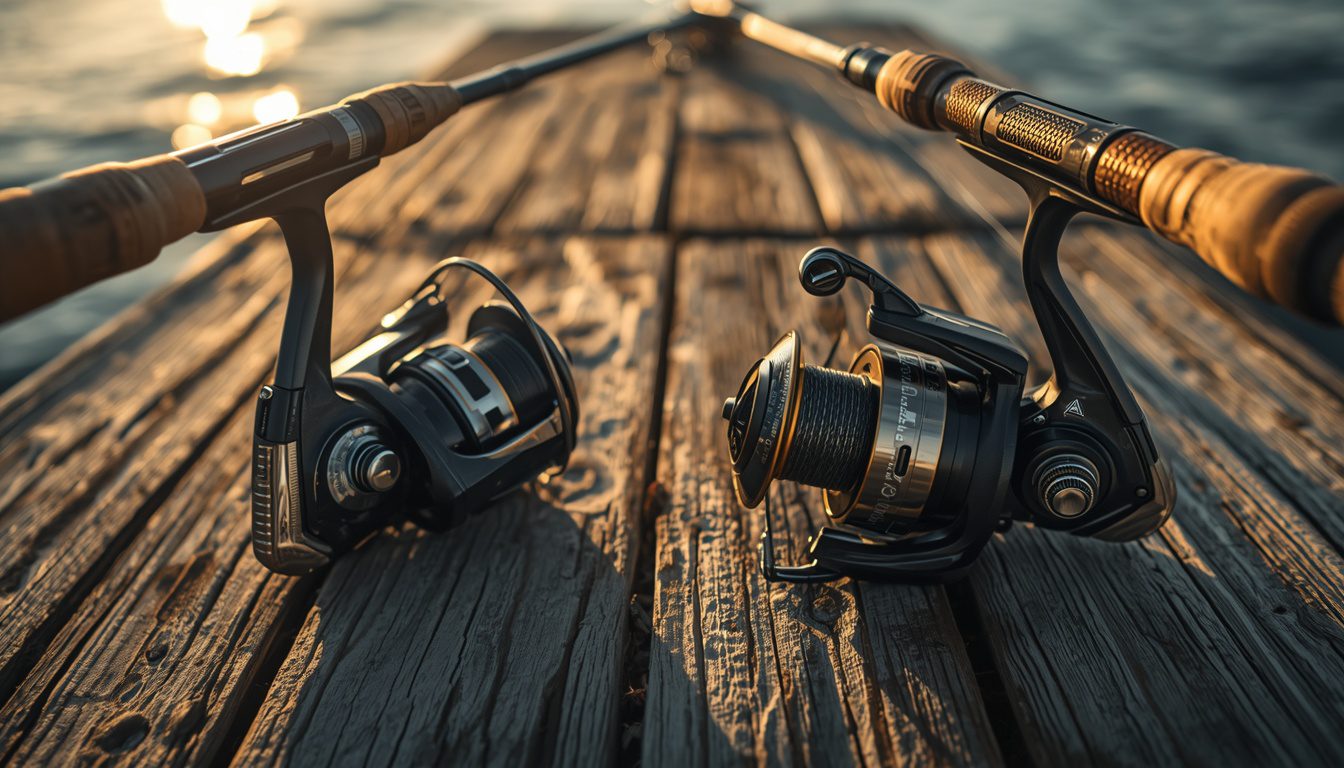
When pulling giant fish out of thick vegetation, submerged timber, or heavy lily pads, casting tackle reigns supreme. Baitcasting reels sit directly on top of specialized trigger rods, placing the drive gears directly in line with the rod backbone for unmatched winching power. The direct-drive gear alignment provides extreme mechanical leverage when cranking against heavy resistance under full drag pressure. Spinning reels mount underneath the rod, placing heavy pressure on a smaller main shaft and oscillating slider gear that can flex under extreme loads. If your primary goal involves flipping heavy jigs into thick brush or punching heavy weights through matted grass, the structural strength of a casting setup is non-negotiable.
Straight-Line Pulling Power and Gear Frame Torque
Casting reels feature low-profile, rigid aluminum frames that do not twist or flex when fighting fifty-pound fish. The drive gear meshes directly with the spool spindle, transferring every ounce of handle torque into direct line retrieval without wasting energy through right-angle gear transitions.
Light Lure Finesse Applications in Open Water Environments
If your fishing style relies on light lines, tiny soft plastics, small hair jigs, or weightless finesse rigs, spinning gear is the undisputed winner. Attempting to cast an eighth-ounce lure on a standard baitcaster requires an ultralight spool setup and expert thumb control to avoid instant backlashes. On a spinning setup, a tiny lure easily pulls light line off the open spool face without needing to overcome spool weight or mechanical brake friction. This makes spinning tackle essential for clear-water finesse tactics where skittish bass or trout demand subtle presentations on fluorocarbon lines under eight pounds test.
Why Finesse Lures Stoppage Destroys Casting Efficiency
Light lures lack the physical mass required to pull a revolving metal spool up to high speed during your forward cast. Forcing a light lure onto a casting reel requires soft, slow casting strokes that severely limit distance and accuracy. A spinning reel eliminates this hurdle entirely by removing spool rotation friction from the equation.
Gear Ratio Recovery Speeds and Line Retrieval Rates
Understanding gear ratios allows you to pick the exact retrieval speed required for specific lure presentations. A reel gear ratio indicates how many times the internal spool completes a full revolution for every single turn of the handle grip. A 6.3:1 ratio means the spool turns 6.3 times per handle rotation. Baitcasting reels dominate high-speed applications, offering blistering gear ratios ranging from 7.1:1 up to 10.1:1 for ripping topwater lures or picking up slack quickly during a long-distance hook set. Spinning reels generally cap out between 5.2:1 and 6.2:1 ratios because larger internal drive gears would make the reel body far too bulky and heavy to fish comfortably all day.
High-Speed Ratios Versus Slow-Speed Torque
High-speed ratios above 8.1:1 retrieve line at extreme speeds, making them ideal for burning deep crankbaits or working walking topwater frogs. Low-speed ratios around 5.1:1 offer deep-cranking torque, acting like a low gear in a truck to pull high-resistance lures without straining your wrist muscles.
Ergonomic Rod Mounting Positions and All-Day Angler Comfort
The physical orientation of a reel on its matching rod drastically influences wrist fatigue and casting control over a full day on the water. Spinning reels hang underneath the rod blank, allowing gravity to hold the rod balanced naturally in your hand. This bottom-mounted design prevents the rod from trying to twist or rotate during a hard cast, reducing wrist strain for beginner anglers. Casting reels sit on top of the rod blank, which forces you to palm the reel body with your off-hand while maintaining thumb contact over the line. This top-mounted orientation requires a firm grip to prevent the weighted setup from twisting sideways during long casting sessions.
Hand Placement and Palming Technique for Casting Rods
To fish a casting reel comfortably, you must cup your hand entirely around the reel body, cradling the frame against your palm. Your thumb rests naturally on the spool release bar and line spool, giving you immediate feathering control during every cast.
Braided Line Versus Monofilament Compatibility and Management
Line selection plays a massive role in how smoothly your chosen reel performs during real-world fishing scenarios. Monofilament line features high stretch and memory, making it ideal for forgiveness on spinning reels but prone to springing off the spool if left unmanaged. Fluorocarbon offers high abrasion resistance and invisibility underwater, but its stiff structure can cause jumpy loops on small spinning spools. Super-thin braided line shines exceptionally well on both reel platforms, offering zero stretch and massive strength. However, thin braid on a casting reel can dig down into lower spool layers during hard hook sets, whereas braid on a spinning reel practically eliminates coil memory and boosts casting distance dramatically.
Managing Line Memory and Spool Coiling Issues
Stiff fluorocarbon lines hold memory shapes like a coiled slinky when stored on small-diameter spinning spools. To prevent spring-offs, always spool line under firm tension and soak stiff fluorocarbon spools in warm water prior to heading out on your fishing trip.
How to Choose Your Very First Fishing Rod Without Overspending
Summary
-
Fixed spools on spinning reels allow line to uncoil freely, making them effortless for beginners to operate without tangles.
-
Rotating spools on casting reels require careful thumb control and mechanical brake adjustments to prevent bird’s nest overruns.
-
Casting reels provide superior winch power and frame leverage for pulling big fish out of thick aquatic vegetation.
-
Spinning reels excel at casting light finesse lures and small baits on light monofilament or fluorocarbon lines.
-
Casting setups offer much faster gear ratios above 8.1:1 for rapidly gathering slack line after a long-distance hook set.
-
Spinning reels hang underneath the rod blank, using natural gravity to reduce wrist fatigue during long fishing sessions.
Frequently Asked Questions
Which reel type is easier for a complete beginner to learn with?
A spinning reel is far easier for a beginner because its fixed spool mechanics eliminate catastrophic backlash tangles. You can learn to cast a spinning reel accurately within ten minutes without worrying about complex mechanical brake adjustments or thumb friction control.
Can I put a spinning reel on a casting rod or vice versa?
You should never put a spinning reel on a casting rod or a casting reel on a spinning rod. Casting rods feature smaller line guides close to the blank and a trigger grip, while spinning rods feature large stripper guides designed to catch wide line loops leaving a fixed spool.
Why do professional bass anglers prefer baitcasting reels?
Professional anglers prefer baitcasters because they offer superior casting accuracy, precise distance control via thumb braking, faster line retrieval rates, and heavy-duty cranking power when pulling bass out of dense wooden or grassy cover.
How do I stop my baitcaster from tangling every time I cast?
To prevent tangles on a casting reel, adjust the mechanical tension knob so your lure drops slowly to the ground without causing spool overrun when it hits. Set your magnetic or centrifugal brakes to maximum resistance until your casting mechanics improve over time.
Is braided line good for beginner spinning reels?
Braided line is fantastic for beginner spinning setups because it has zero coil memory, soft flexibility, and high strength. Running a ten-to-fifteen-pound braid main line with a monofilament leader eliminates spooled line coiling and improves your overall casting distance.
Take Action and Pick Your Perfect Reel Setup Today
Stop second-guessing your gear choices and feeling intimidated by technical tackle shop displays. If you want a frustration-free experience casting light lures in open water, grab a quality medium-power spinning combo spooled with ten-pound braid today. If you are ready to tackle heavy thick cover, throw heavy lures, and master advanced casting techniques, invest in a quality low-profile baitcasting setup and practice your brake tuning. Get out on the water, build your muscle memory, and turn your new knowledge into landed fish!