
 Befrey
Creating a study blueprint requires more than a casual calendar entry or a quick list of tasks written on a napkin. Learning how to create a study plan that works demands an intentional system designed around your cognitive limits, psychological drivers, and personal schedule. Most students fail not because they lack dedication, but because they build rigid, unrealistic schedules that ignore human fatigue and cognitive overload. To craft a dynamic routine, you must replace wishful thinking with evidence-based strategies, precise time-blocking, and clear strategic goals. By adopting an adaptable, structured framework, you transform overwhelming academic demands into manageable daily steps while completely protecting your mental well-being.
How to Create a Study Plan That Works for College Success
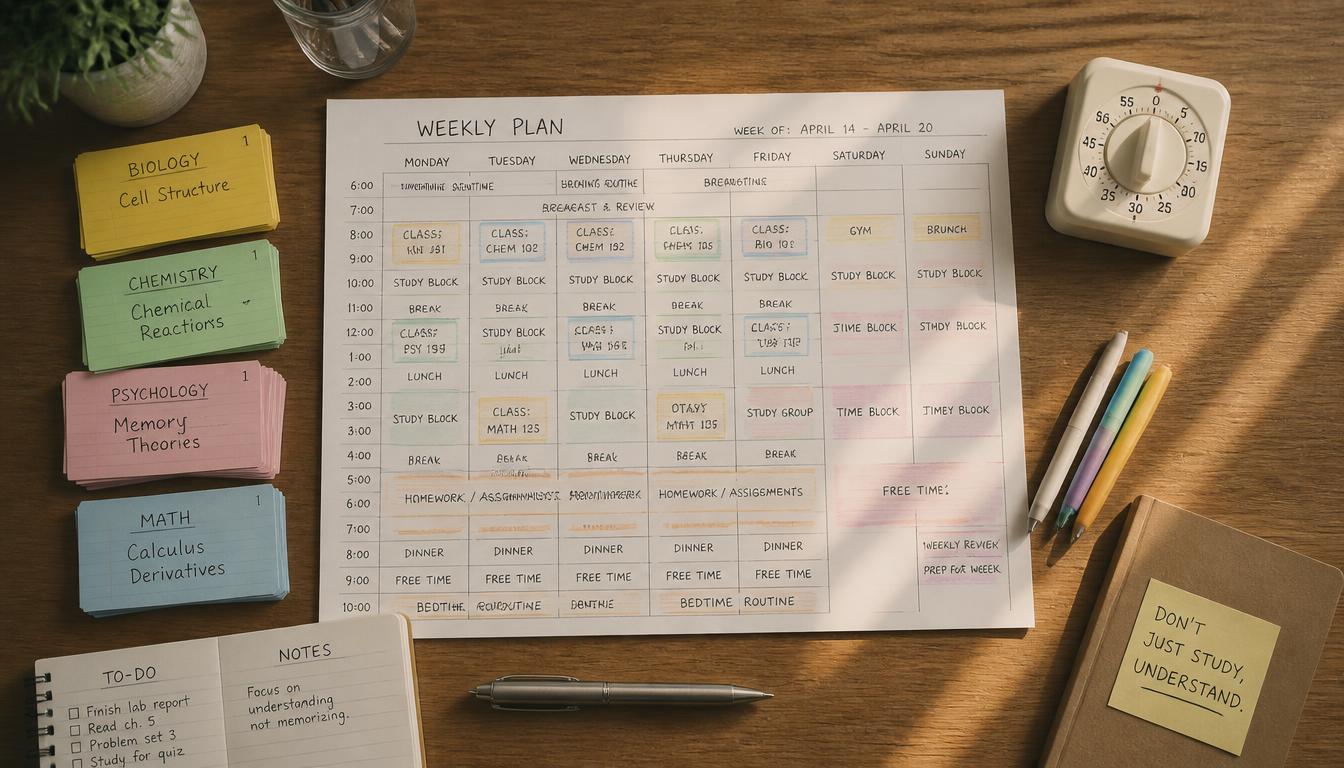
Building an effective academic routine requires a realistic assessment of your weekly schedule and personal energy patterns. College courses demand deep intellectual focus, which means you cannot treat your academic schedule like a simple checklist. You must map out fixed commitments, including lectures, lab work, commuting, and part-time jobs, to identify your true free hours. Once your base schedule is visible, audit your natural circadian rhythms to determine when your analytical brain peaks. Night owls should not force intensive calculus sessions at six in the morning, just as early risers should not leave complex reading assignments for late at night. Aligning your most difficult subjects with your highest energy windows prevents early burnout and speeds up information retention.
Successful college execution relies on breaking down broad course syllabi into tiny, actionable learning milestones. Instead of blocking out three generic hours for history, define exact output targets like outlining chapter four or solving ten chemistry problems. This specificity reduces task aversion and eliminates the wasted time spent deciding what to do next. Furthermore, build buffer zones directly into your weekly template to absorb unexpected delays, urgent errands, or social events. A schedule without flexibility breaks at the first disruption, while a resilient schedule absorbs chaos without throwing your entire week off track. Treat your routine as an evolving system, reviewing your progress every Sunday to adjust time allocations based on upcoming exams and project deadlines.
Step-by-Step Guide to Effective Time Management for Students
Mastering your daily schedule begins with establishing strict boundaries using proven time-blocking techniques. Effective time management for students means assigning a single, non-negotiable task to every dedicated block of your day. Start by dividing your day into distinct focus windows ranging from forty-five to ninety minutes, followed by planned rest breaks. During these working windows, remove all external distractions by placing your phone in another room, closing unnecessary browser tabs, and turning off notifications. Treating these study blocks with the same non-negotiable commitment as a physical job shift builds strong psychological discipline. When you protect your focus time, you complete tasks in half the time it takes during a distracted session.
Another crucial component of mastering your time involves using priority matrixes to separate urgent tasks from genuinely important long-term goals. Group your academic demands into four distinct zones based on their deadlines and overall impact on your grades. Highly urgent and high-impact tasks must be handled immediately during your peak focus hours, while low-impact administrative tasks should be consolidated into short late-afternoon blocks. Never spend your prime intellectual energy organizing files, replying to emails, or color-coding notes. By constantly triaging your workload, you ensure that high-value projects and major exam preparations receive continuous attention long before panic sets in.
How to Build a Personalized Study Schedule for Exams
Preparing for major examinations demands an aggressive back-planning method that works backward from the test date. When learning how to build a personalized study schedule for exams, begin by pinpointing the exact test date and counting the total days available for preparation. Divide your total course content into logical, self-contained study units, assigning specific topics to individual days across your timeline. Reserve the final three to four days before the examination purely for comprehensive review, high-stakes practice testing, and targeted error analysis. This structure avoids the panic of last-minute cramming by guaranteeing full content coverage well before you step into the test center.
Your exam outline must also prioritize targeted active recall sessions over passive visual re-reading of textbooks. Allocate explicit daily time slots for self-testing, flashcard retrieval, and solving timed practice problems without reference materials open. Actively pulling information out of your memory creates durable neural pathways and quickly exposes hidden knowledge gaps. Track your score metrics on practice questions to continuously adjust your schedule, spending more time on weak topics and less time re-studying material you have already mastered. Integrating full-length, timed mock exams under real testing conditions builds mental stamina and eliminates test anxiety.
Realistic Daily Habit Tracker for Student Productivity
Sustaining high academic output over an entire semester depends heavily on building consistent, friction-free daily routines. Optimizing student productivity requires you to track key behavioral habits that support cognitive function alongside your academic assignments. Simple habits like maintaining consistent sleep schedules, staying hydrated, engaging in daily movement, and starting work at identical times create a stable environment for deep thinking. Using a habit tracker gives you immediate visual feedback, reinforcing your identity as an organized learner. When basic healthy routines become automatic, you free up tremendous mental energy for complex problem-solving and critical analysis.
Maintaining high output also requires learning how to manage your internal motivation and prevent mental fatigue. Divide large, intimidating assignments into tiny, micro-steps that require minimal effort to initiate. Taking the first small action breaks through executive dysfunction and builds positive momentum. Pair difficult study sessions with rewarding post-task activities to reinforce positive behavior pathways in your brain. Monitor your daily energy levels and adjust your output targets when physical exhaustion sets in, recognizing that sustainable progress beats brief bursts of extreme effort followed by complete burnout.
Master Active Learning Techniques for Better Retention
Passive reading and highlighting notes give a false sense of mastery without creating deep memory storage. Incorporating active learning techniques for better retention transforms passive reading into an active, mentally engaging process. Implement the Feynman Technique by attempting to explain complex scientific or historical concepts in simple language as if teaching a beginner. When you struggle to explain a concept without using complex jargon, you locate an exact gap in your understanding. Document these gaps, revisit your primary source materials, and refine your explanation until it becomes simple, accurate, and completely clear.
Another powerful active method is the Cornell Note-Taking System combined with immediate self-testing. Divide your page into a primary note-taking column, a left cue column for keywords and questions, and a bottom summary block. Within twenty-four hours of taking notes, fill out the cue column with challenging self-test questions based on the lecture material. Cover the main note area and use the cues to test your recall out loud. This process forces your brain to actively process, organize, and retrieve information, transforming fragile short-term memories into permanent conceptual understanding.

Beat Procrastination and Optimize Pomodoro Technique Sessions
Procrastination is rarely a time-management issue; it is primarily an emotional regulation challenge caused by task-related anxiety or overwhelm. To overcome this hurdle, you must optimize Pomodoro technique sessions to bypass the psychological friction of getting started. The traditional approach uses twenty-five minutes of absolute focus followed by a five-minute rest break. However, you can tailor these working intervals to match your personal focus limit and task difficulty. If a subject feels terrifying, lower the entry barrier by setting a timer for just fifteen focused minutes, giving yourself permission to stop when the timer rings.
To maximize focus during these dedicated work blocks, strictly eliminate all context-switching and digital interruptions. Every single time you check a text message or switch tabs, your brain pays an attention penalty that disrupts deep focus for minutes afterward. Use specialized site blockers to silence notifications, clear your workstation of clutter, and clearly define the exact outcome of the current cycle before starting your timer. Use your short rest breaks to stand up, stretch, get water, or rest your eyes rather than scrolling through social media, which keeps your brain in a state of sensory overload.
What Are Effective Memory Techniques for Students ?
How to Prepare for Important Exams Without Stress
The Best Methods for Learning a Foreign Language
Summary
Creating a study routine that delivers consistent results requires combining clear time management with active learning practices. By aligning your hardest subjects with your peak biological energy, setting targeted output goals, and using time-blocking, you eliminate daily confusion and maximize productivity. Moving away from passive review methods in favor of active retrieval, practice testing, and focused work blocks builds long-term retention and reduces exam anxiety. Sustainable academic success is not built on exhausting cram sessions, but on building resilient daily habits, maintaining clear schedule flexibility, and consistently taking care of your mental well-being over time.
FAQ
-
How many hours should I study each day? Focus on quality over raw time. For most students, three to four hours of deep, uninterrupted focus per day yields far better results than eight hours of distracted studying.
-
What should I do if I fall behind on my schedule? Do not panic or attempt to double your workload the next day. Use your planned buffer zones to absorb the missed tasks, or recalibrate your schedule by prioritizing high-impact topics.
-
How do I stay focused when a subject is boring? Break the material down into tiny ten-minute micro-sessions using active learning strategies like self-testing or teaching the material out loud to make the topic engaging.
-
Is it better to study early in the morning or late at night? It depends entirely on your personal biological clock. Schedule your most demanding subjects during the hours when your focus peaks, whether that is early morning or late evening.
-
How often should I take breaks during long sessions? Take a five-to-ten-minute break every twenty-five to fifty minutes. Physical movement and stepping away from screens during breaks helps clear mental fatigue and keeps your mind sharp.
Start Building Your Plan Today
Stop relying on dynamic motivation and start building a systematic routine that guarantees results. Choose one strategy from this guide today—whether mapping your weekly schedule, using active recall, or setting up focused work blocks—and implement it immediately. Your academic potential is limited only by the systems you put in place. Take control of your time, protect your focus, and build the foundation for lifelong success right now.






